Time Zone Differences Across the USA
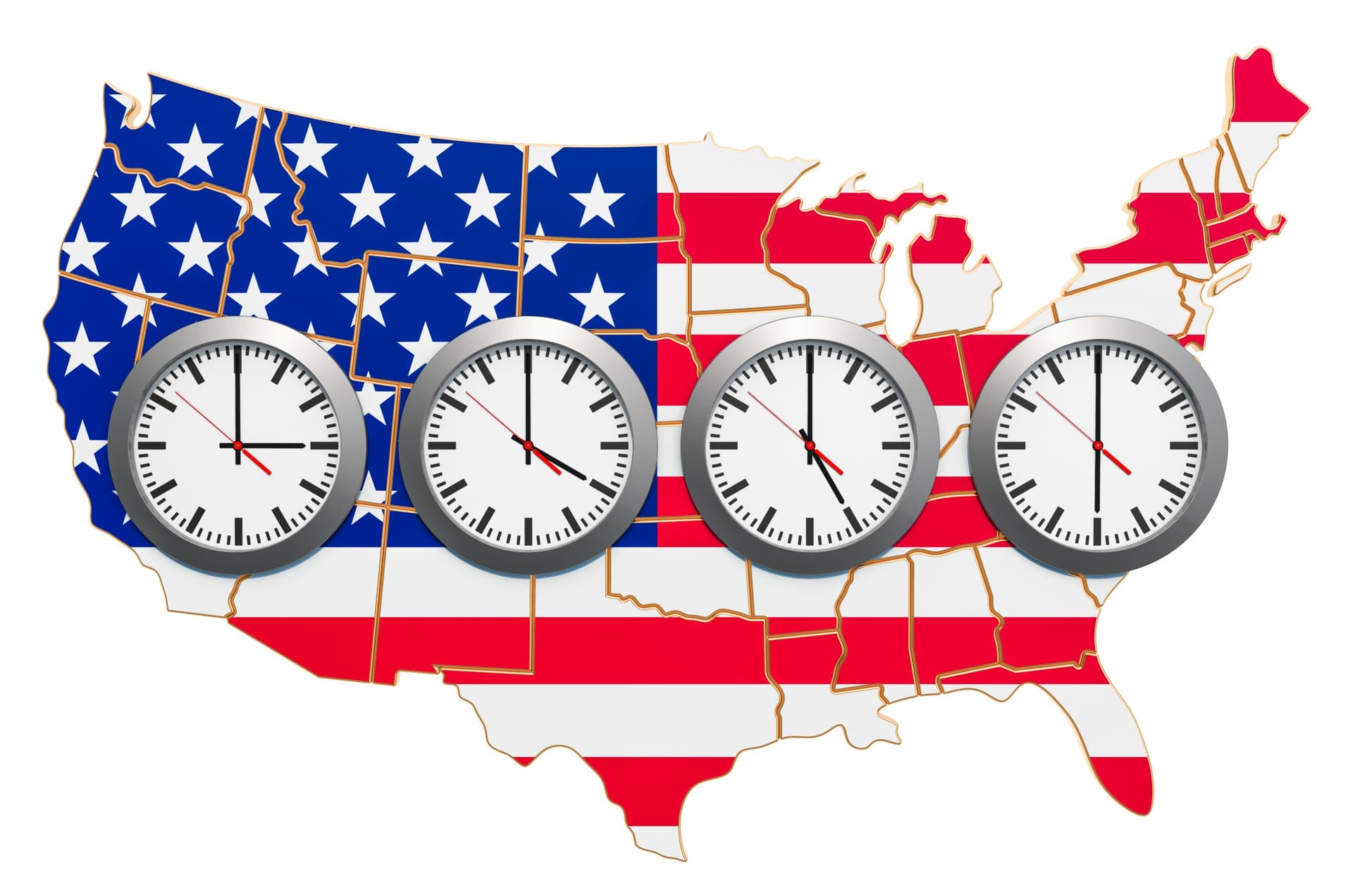
The United States, 17 times larger than France, spans multiple time zones. American territory covers 6 main time zones, including Alaska and Hawaii. For English-speaking travelers, the time difference ranges from -6 hours on the east coast to -9 hours on the west coast. Understanding these differences becomes essential for planning activities and avoiding confusion during an American stay.
The United States, 17 times larger than France, spans multiple time zones. American territory covers 6 main time zones, including Alaska and Hawaii. For English-speaking travelers, the time difference ranges from -6 hours on the east coast to -9 hours on the west coast. Understanding these differences becomes essential for planning activities and avoiding confusion during an American stay.
How Many Hours' Difference with the United States?
Here are the different time zones across the United States based on their respective regions:
- For the Eastern Time Zone (New York): count -6 hours difference, meaning when it's 12pm (noon) in Paris, it's 6am in New York.
- For the Central Time Zone (Chicago): count -7 hours difference, meaning when it's 12pm (noon) in Paris, it's 5am in Chicago.
- For the Mountain Time Zone: count -8 hours difference, meaning when it's 12pm in Paris, it's 4am in Denver.
- For the Pacific Time Zone: count -9 hours difference, meaning when it's 12pm in Paris, it's 3am in Las Vegas.
- For the Alaska Time Zone: count -10 hours difference, meaning when it's 12pm in Paris, it's 2am in Alaska.
- For the Hawaii Time Zone: count -11 hours difference, meaning when it's 12pm (noon) in Paris, it's 12am (midnight) in Honolulu.
Do the United States Observe Daylight Saving Time?
Like France, the majority of American states observe daylight saving time between summer and winter. The transition to daylight saving time occurs on the second Sunday in March (clocks move forward 1 hour), and the return to standard time is set for the first Sunday in November (clocks move back 1 hour).
However, Hawaii, Arizona (except the Navajo Nation), and parts of Indiana never change their clocks. This can create an additional one-hour difference compared to other states depending on the time of year.
Can a Single State Have Multiple Time Zones?
Yes, several American states span more than one time zone. Some are split by different time zones, which can be surprising during a trip. Examples include:
- Idaho: straddles both the Pacific and Mountain time zones.
- Tennessee: the eastern part is in Eastern Time, while the western part is in Central Time.
- Florida: most of the state is in Eastern Time, but the far northwestern Panhandle is in Central Time.
Remember to check the local time if you cross a state during a road trip.
What Time Is It in the United States?
To find out the exact time in a US city (or anywhere else in the world), simply consult a reliable website or app, such as:
- timeanddate.com
- worldtimebuddy.com
- Or simply type the city name into Google ("current time New York")
There are also free mobile apps like Time Buddy, World Clock, or Clocks – Widget & Alarm.
Planning Your Activities and Appointments
To avoid any time mix-ups, follow these tips:
- Always check the local time on your flight, train, or bus tickets.
- On a road trip, allow buffer time if you're crossing time zones.
- For calls or meetings with France, use WorldTimeBuddy to easily visualize the times in both countries.
Using Time Zones in Google Calendar
Google Calendar also makes managing time zone differences easy:
- Enable the "secondary time zone" option in settings.
- Add, for example, "Paris" and "Los Angeles" to see both times side by side.
- Your events will automatically adjust to your phone's or computer's local time.
Daylight Hours in America
Daylight duration across the United States varies greatly depending on the region and season, due to the country's vast size. In summer, days are long, especially in the north: the sun can set after 9pm in New York or Seattle. Conversely, in winter, darkness falls as early as 4:30pm in some areas. The further south you travel (such as Florida or California), the more moderate the day/night variation becomes.
In extreme areas, like Alaska, the contrasts are spectacular: the sun may barely set in summer and barely rise in winter. Before departing, remember to check sunrise and sunset times to best adapt your visits and travel plans.
How to Manage Jet Lag During a Trip to the United States?
With 6 to 12 hours of time difference, your body may take time to adjust. Here are some simple tips to limit the effects of jet lag (fatigue, insomnia, headaches):
- Before departure, gradually adjust your sleep and wake times to match your destination's schedule (1 hour earlier or later each day).
- During the flight, sleep and eat according to your destination's local time.
- Upon arrival, expose yourself to natural light: it helps reset your internal clock (especially in the morning for westbound flights).
- Avoid alcohol, caffeine, and long naps, especially during the first two days.
- Stay well hydrated: dehydration amplifies fatigue.
- For short trips, it may be wiser to maintain your usual schedule if you're staying for less than 3 days.