Demography of the United States
According to the latest census conducted in December 2017, the United States was home to nearly 325 million residents. Statistical data reveals that the nation ranks 3rd among major countries in terms of population size. Three-quarters of these inhabitants live in urban areas, with 30% concentrated in major metropolitan centers.
According to the latest census conducted in December 2017, the United States was home to nearly 325 million residents. Statistical data reveals that the nation ranks 3rd among major countries in terms of population size. Three-quarters of these inhabitants live in urban areas, with 30% concentrated in major metropolitan centers.
Over the past decade, the United States has recorded its slowest population growth rate at just 0.5%. This phenomenon is driven by multiple factors including declining birth rates, reduced immigration flows, and deficiencies in the healthcare system.
An Overview of Demographic Growth Rates
Historically, the country emerged from the union of thirteen colonies that declared independence in 1776. This successful revolution led to the creation of the United States of America. The influx of immigrants from around the world subsequently generated robust demographic growth. This expansion largely compensated for lower birth rates. More recently, however, natural population increase has shifted downward due to a rising death rate relative to births. This shift is slowing the nation's annual growth rate. Life expectancy currently stands at 76 years for men and 81 years for women.
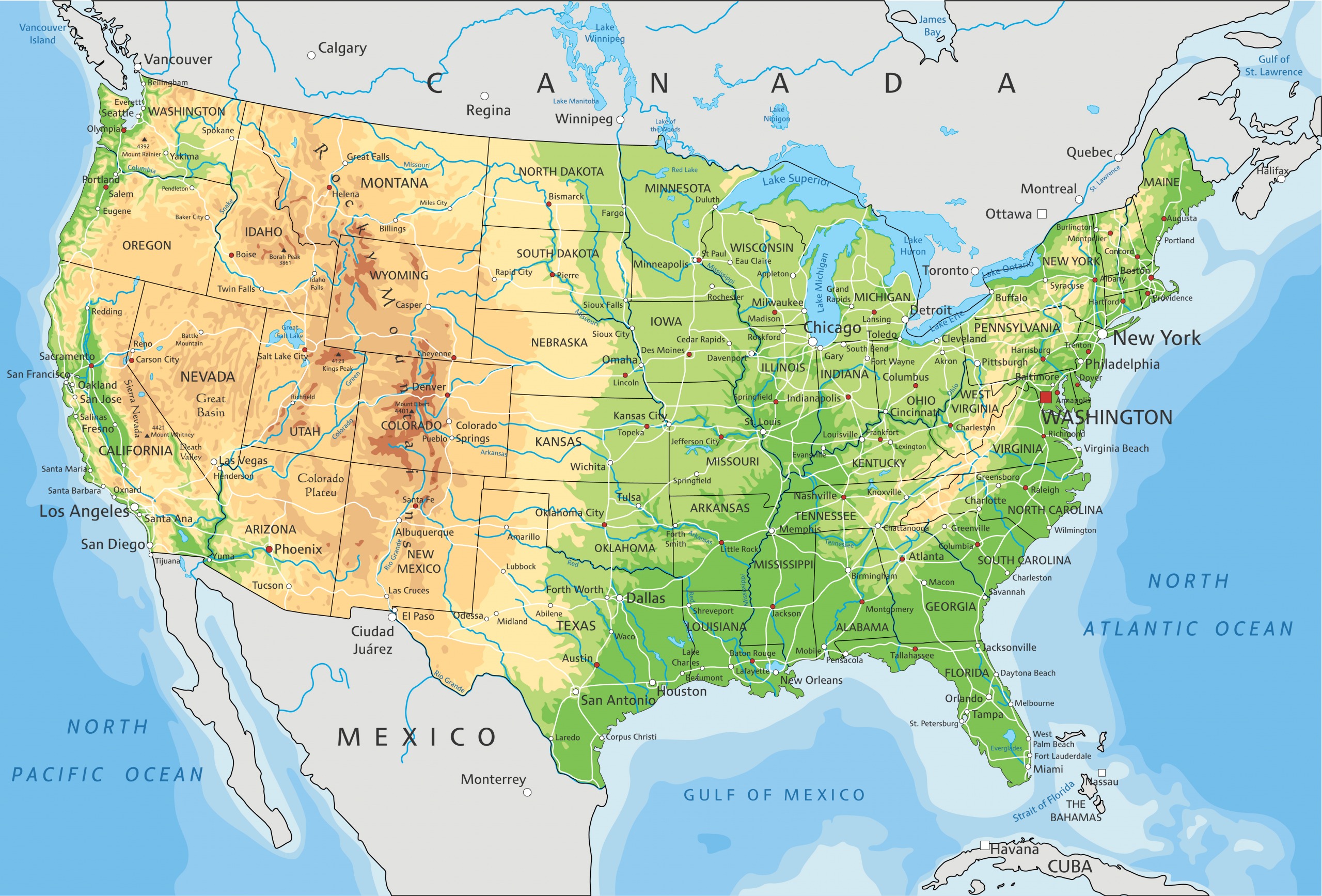
The majority of the population concentrates in major metropolitan areas such as New York, Los Angeles, San Francisco, Seattle, and Miami, drawn by their globally recognized advantages. Within the megalopolis known as "BosWash" (stretching from Boston to Washington), approximately 60 million inhabitants occupy 1,000 km², including suburbs that sprawl across more than ten kilometers.
In Nevada, Arizona, and Texas, demographic growth rates show significant expansion. Similar patterns are observed in California, Florida, and throughout the western and southern regions of the United States. In contrast, West Virginia has experienced an inevitable decline in population.
The Most Populous Cities in the USA
Here is the ranking of the 5 most populous cities in the United States:
- New York (NYC): the most influential and largest city in the United States. Nicknamed the "Big Apple," it covers an area of 1,214 km² and is home to approximately 8 million New Yorkers;
- Los Angeles: also known as the "City of Angels," this California city is the world's film capital. Spanning 1,290 km², it has a population of nearly 4 million inhabitants;
- Chicago: located in Illinois. With an area of 606 km², the city welcomes over 2.5 million residents;
- Houston: this sprawling Texas city extends across approximately 1,500 km² and houses more than 2 million inhabitants within city limits. The broader metropolitan area reaches a total population exceeding 6 million citizens;
- Philadelphia: situated in Pennsylvania, its 350 km² area is home to nearly 1.5 million residents.
Ethnic Origins Comprising the American Population
The nation's society has always been distinguished by its cosmopolitan character. Since 1978, the U.S. federal government issued "Federal Directive No. 15," which officially recognized four racial and ethnic minorities that have shaped the American population. Their classification is demonstrated across these distinct categories:
- Native Americans (American Indians), including Alaskan Natives: this community encompasses all persons descended from indigenous tribes of North America who wish to maintain their cultural identities through tribal affiliation. They are also referred to as First Americans, Original Americans, Indians, Amerindians, Amerinds, Aboriginal, Indigenous, or Red Indians. Traces of their civilization can be found in the regions of Minnesota, Nebraska, the Dakotas, and Connecticut;
- Asian Americans, including Pacific Islanders: these individuals originate from peoples of East Asia, the Pacific Islands, and Southeast Asia. Countries such as China, India, Japan, Korea, the Philippines, the Samoan Islands, and others fall within this citizen category;
- Blacks (African Americans): comprising persons descended from various African peoples. According to statistics revealed in 2013, approximately 41 million Americans have African ancestry;
- Hispanics: they formed the first minority to establish itself in the United States. A 2014 survey indicated that 17.4% of the population is of Hispanic origin. Most of them hold American citizenship. Comprising an ethnic group, Hispanics are distributed into two categories:
- White Hispanics;
- Hispanics of color, called "Latino," including English-speaking Brazilians, Haitians, and citizens from Puerto Rico, Cuba, Central America, as well as Chicanos—Hispanics of Mexican origin living in the United States.