What to Do in Miami: Essential Activities and Getaways!
Miami is a city that is both highly urban and blessed with idyllic landscapes. Architecture, beaches, parks and gardens, street art: venture out to discover its Art Deco streets, emblematic neighborhoods and must-see attractions.
Miami is a city that is both highly urban and blessed with idyllic landscapes. Architecture, beaches, parks and gardens, street art : venture out to discover its Art Deco streets, its emblematic neighborhoods and its must-see attractions… From the heart of the city to its surroundings : here's what you need to see and do in Miami and Miami Beach !
Miami at a Glance... Here's an overview of what awaits you! ● Architecture and Art Deco : stroll through South Beach, Lincoln Road and Millionaire's Row. ● Street art and culture : explore Wynwood Walls, Little Havana, Design District, the PAMM and Frost Museum – and why not catch an NBA game! ● Nature and escape : discover Miami Zoo, parks and gardens, the Everglades or enjoy a cruise in Biscayne Bay. ● Beaches and relaxation : savor Miami Beach and South Beach with its famous colorful lifeguard huts. |
Strolling Through the City's Emblematic Neighborhoods

Nearly every neighborhood in Miami has its own identity! Exploring them allows you to discover the many facets of the city through the history and influences of its emblematic neighborhoods.
The Business District (Downtown – Brickell)
Separated by the Miami River, Downtown and Brickell form the city's business district. Downtown Miami, the historic center, is home to several emblematic public buildings, including the Freedom Tower.
This Art Deco-style building is one of the city's major monuments, as it once housed refugees during the Cuban revolution. Today, the building houses a museum dedicated to this era. You'll also find the Bayside Marketplace, an open-air shopping center located by the marina, where restaurants, shops, and entertainment blend together.
On the other side of Miami River, Brickell is the modern version of the business district. More contemporary, it's dotted with glass towers (and their rooftops that offer breathtaking views of Biscayne Bay).
Little Havana
Little Havana is considered the "Cuban heart of Miami". Formed in 1959, after the arrival of refugees, it displays a marked identity, with its beautiful colorful facades. Calle Ocho, the main artery, is renowned for its lively atmosphere, the scent of cigars and musical notes resonating throughout the day. During your visit, don't miss the Walk of Fame: the avenue lined with stars, like the one in Hollywood, which pays homage to Cuban celebrities.
Little Haiti
Still relatively untouristed, Little Haiti is a neighborhood in full evolution (as Wynwood was in the early 2000s). This residential area reflects Haitian culture, where English mingles with Kreyòl (Haitian Creole). You can admire colorful facades, but also numerous street art works, typical small restaurants and numerous music shops.
Coconut Grove
Located along Biscayne Bay, Coconut Grove is Miami's oldest neighborhood! It's prized for its bohemian atmosphere, marinas, sailing clubs and cozy chic cafés. This fairly upscale residential area is also renowned for its lush surroundings and parks, where it's not uncommon to spot peacocks roaming freely!
For shopping? The neighborhood is renowned for its Cocowalk, an open-air shopping center – but be aware, it's not exactly a must-see, just a nice stop if you're passing through.
Design District
North of Wynwood, you'll find Design District. Once rundown, this neighborhood is now one of Miami's must-see spots. In the early 2000s, investor Craig Robins decided to revive this area by transforming it into a design-focused destination.
A successful gamble! Fashion, contemporary works, art galleries: creative disciplines make Design District an atypical neighborhood. As you stroll, you can admire emblematic works such as Buckminster Fuller's ultra-modern sphere Fly Eye Dome or the glass facade imagined by Sou Fujimoto.
For museums, don't miss the Institute of Contemporary Art (ICA). Spread over three floors, it allows you to discover the work of recognized or emerging artists, with exhibitions and installations that are sometimes intriguing or provocative.
Its other advantage? The museum is free! However, it's advisable to reserve your ticket on the ICA's official website, at the risk of not being able to enter in case of high attendance.
Admiring the Street Art Works of Wynwood Walls
Do you love street art? Then don't miss the trendy Wynwood neighborhood and its open-air museum! A former industrial area, the neighborhood was revamped in 2009 under the leadership of Tony Goldman, a visionary real estate developer, who transformed this abandoned place into a creative hub.
Today, Wynwood attracts renowned graffiti artists, such as Shepard Fairey and Okudart, whose numerous murals you can admire. The theme of freedom of expression is also displayed on alleyway walls…
To see them, let yourself wander at random! Your perambulations will also lead you to nice little spots, boutique shops, art galleries and trendy restaurants.
Good to Know |
Stopping in Miami Beach and South Beach
Before exploring Miami Beach, it's useful to know that it's a distinct city from Miami, though they're often confused due to their name and proximity. Miami Beach is a coastal municipality located on a barrier island, across Biscayne Bay from Miami, while Miami sits on the mainland.
South Beach
The Art Deco Quarter and Lincoln Road
South Beach is undoubtedly the most well-known neighborhood in Miami Beach. Famous for its palm-lined promenades and Art Deco architecture, recognized by its pastel colors and geometric curves.
Facing the ocean, Miami Beach's Art Deco district is one of the city's symbols. Recalling the golden age and grandeur of the 1930s, you'll find many historic buildings in pastel colors, with bold and eccentric lines.
In the heart of Miami Beach, you'll find Lincoln Road Mall, a very pleasant pedestrian street for strolling and shopping. From small boutiques to major chains, you'll definitely find your souvenirs!
This emblematic thoroughfare is also lined with Art Deco-style buildings, as typical as the Colony Theater and Lincoln Theatre (built in 1934 and 1935). If you pass by 1111 Lincoln Road, pause for a moment to admire the atypical and contemporary architecture of the parking garage at this address (built in the early 2010s). Our tip? Avoid the restaurants on this street, which are mostly of poor quality and expensive.
South Beach
But South Beach is also known around the world thanks to its namesake beach – often featured in film and television. On its vast stretch of white sand, you can admire its famous colorful lifeguard huts; symbols of the place. With a tropical climate, South Beach enjoys pleasant temperatures year-round and allows for swimming in every season.
Española Way
Our tip? Don't leave without making a stop at Española Way! This pedestrian street (nicknamed the "Spanish village" of Miami) features Mediterranean-style architecture that stands out from the rest of the city. It's also a good spot to go out in the evening.
Millionaire's Row
Millionaire's Row is an upscale neighborhood in Miami Beach, where you can admire some of the city's most beautiful properties. To take in its luxurious villas, opt for a cruise in Biscayne Bay. An opportunity to take a break far from urban hustle and bustle and discover the different architectural styles, blending Art Deco, Modern style and tropical gardens.
How to Get to Miami Beach from Miami? Miami Beach and Miami are connected by several bridges crossing Biscayne Bay, including MacArthur, Julia Tuttle and Venetian Causeway, which quickly link the great metropolis to the beach resort. Expect about 20 minutes of driving or Miami Dade Transit bus service. |
Discovering Vizcaya Museum and Gardens
North of the Coconut Grove neighborhood, you'll find the Vizcaya villa, a superb edifice erected between 1914 and 1922 at the request of industrialist James Deering, who wanted a winter residence inspired by the Italian Renaissance.
The style of the mansion reflects Deering's fascination with Europe and his taste for refined architecture – the villa has 34 furnished rooms with rococo furniture, Roman sculptures, early 20th-century paintings, Renaissance tapestries…
Outside? The estate is dotted with lovely green spaces, fountains and a labyrinth, for an enchanted retreat in the heart of urban life.
But the site is not limited to the villa and its gardens. Indeed, the venues offer educational programs, as well as artistic and cultural activities and art exhibitions, performances and original works.
Practical Information Address : 3251 South Miami Ave. Opening hours : Wednesday through Sunday from 9:30am to 4:30pm (last entry) Admission : $21/adult ; $8.50/child (ages 6-12), free under 5. |
Visiting Miami's Major Museums in Florida

Miami is home to many museums that all deserve a visit. Among the main museums to discover in Miami, we can mention:
Phillip and Patricia Frost Museum of Science
The Phillip and Patricia Frost Museum of Science is a major Miami museum and one of the rare science museums in the world to house both an aquarium and a planetarium in the same location.
The building stands out in Miami's urban landscape with its spherical planetarium and conical aquarium of nearly 1,900 cubic meters, which immediately catch your attention! The museum is spread over six floors and offers breathtaking views of Biscayne Bay and downtown Miami.
The Frost Museum is dedicated to space exploration, meteorology, the world's different ecosystems and the singularities of animal life and aims to introduce visitors to different aspects of science through interactive exhibitions and educational programs.
Its strong point? Its three-level aquarium, which recreates different habitats and depths of the underwater region. You can see hammerhead sharks, Manta rays. Exhibitions also allow you to discover local biodiversity.
Practical Information Address : 1101 Biscayne Blvd, Miami, FL 33132 Opening hours : daily from 10:00am to 6:00pm Visit duration : approximately 3 hours Admission : $35/adult ; $29/child (free under 3) |
Pérez Art Museum Miami
Right next to the Frost Museum, by the bay, you'll also find the PAMM, also known as Pérez Art Museum Miami. It's a contemporary art gallery housing masterpieces by European and Asian artists from the 19th and 20th centuries, as well as works of Latin American, Cuban and Caribbean influences. This modern three-story building is also a cutting-edge venue that highlights young local artists.
Practical Information Address : 1103 Biscayne Blvd, Miami, FL 33132, États-Unis Days and opening hours : Monday from 11am to 6pm, Thursday from 11am to 9pm, Friday through Sunday from 11am to 6pm (closed Tuesday and Wednesday) Admission : $21/adult, $16.50 (seniors age 62+ and children 7-18), free under 6. Note : last ticket sales 30 minutes before museum closure |
History Miami Museum
History Miami Museum is South Florida's largest history museum. Through temporary and permanent exhibitions, the museum traces the entire history of Miami.
Practical Information Address : 101 W Flagler St, Miami, FL 33130, États-Unis Days and opening hours : Thursday through Sunday from 12pm to 5pm (closed Monday through Wednesday) Note : when a new exhibition is being installed, the museum (or certain parts of the museum) may be closed Admission : $17.50/adult ; $12/child (free the second Saturday of the month) |
Attending an NBA Game
Whether you're a sports fan or not, attending a basketball game in Miami is an experience to have at least once in your lifetime. A true institution of the region, the Miami Heat team plays its opponents at the American Airlines Arena.
Let yourself be swept up by the crowd chanting the famous "D.E.F.E.N.S.E" or "Let's go Heats" and admire the spectacle of the cheerleaders. The NBA season runs from October to April, with playoffs and finals held from May to June. If you're lucky enough to visit Miami during this time, don't miss these events, which are true institutions and known for their atmosphere.
Exploring Miami Aboard a Hop-On Hop-Off Bus
If you get a bit tired between two city visits, don't hesitate to board a Hop-On Hop-Off bus. Admittedly, this is an ultra-touristy activity, but it allows you to see Miami's main highlights. An interesting option in case of a short stopover in the city or a trip with little ones.
Visiting Miami Zoo
Opened in 1980, Miami Zoo is one of the largest zoological parks in the États-Unis. Spanning nearly 380 hectares, it is home to amphibians, birds, mammals and reptiles. In total? More than 3,000 animals live on its grounds, including elephants, tigers, oryx, monkeys and the atypical tapirs!
Miami Zoo is also one of the first to have cared about the well-being of its residents, with a progressive approach – by limiting cages and enclosures in favor of arranged areas designed to replicate species habitats. The zoo also features a botanical garden, exhibitions and interactive games for children.
Practical Information Address : 12400 SW 152nd St, Miami, FL 33177, États-Unis |
Relaxing in Parks and Gardens
Want to take a break? Picnic with the family? The city of Miami has wonderful public parks and gardens where it's nice to wander. Among our favorites, we can cite the Fairchild Tropical Botanic Garden, a huge botanical garden with rare exotic plants where you can see magnificent colorful butterflies, or Maximo Gomez Park, renowned for its authentic Cuban atmosphere; where you can see famous domino players as well as a mural signed by Oscar Thomas.
Taking a Cruise on Biscayne Bay
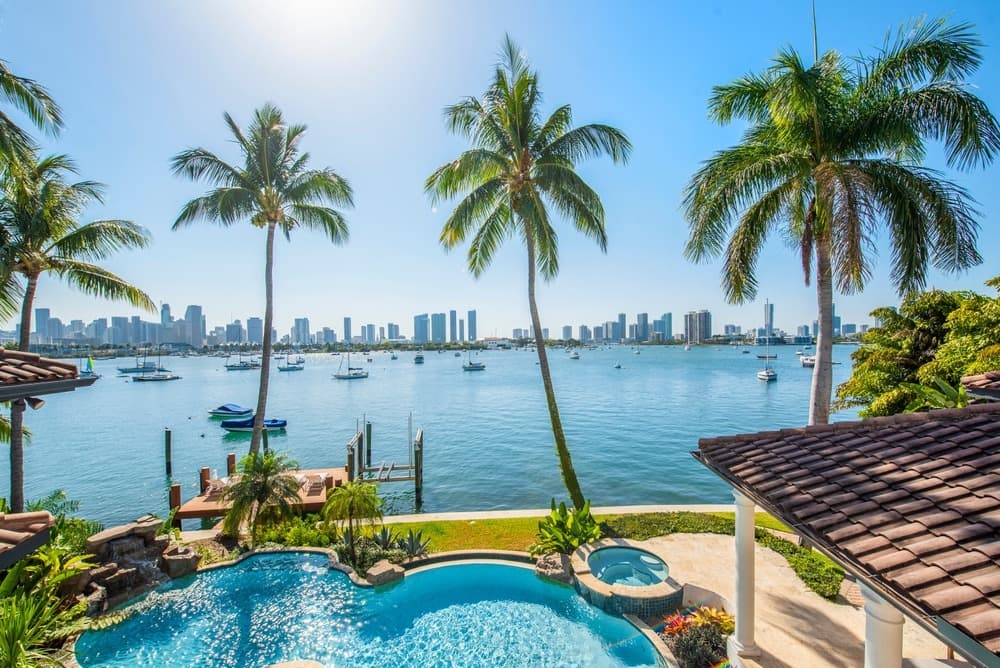
Biscayne Bay is a must-visit during a trip to Miami. Stretching for 50 km, this is where you'll find Miami's main artificial islands where celebrities live (such as Palm Island, Hibiscus Island and Star Island).
On a cruise in Biscayne Bay, you can see Miami's skyline from the sea and get closer to celebrity residences such as Al Capone, Gloria Estefan, Jennifer Lopez, P.Diddy, Shakira, and Matt Damon. If you enjoy water sports, know that it's also possible to jet ski in the bay.
What to Do in the Surrounding Area for Day Trips from Miami?

The areas surrounding the city also offer many opportunities for getaways! Islands, paradise beaches, parks, cultural sites: there are beautiful things to see and do in the Miami area!
Discovering Watson Island
About 15 minutes offshore from Downtown Miami lies Watson Island, an artificial island (created in the 1920s as part of the Miami port development). Its main points of interest are:
Jungle Island : a park that's part zoo, part adventure with playgrounds, zip lines, animal exhibits, flamingos, etc. Count on 2-3 hours for a visit. Ideal for a little break in nature, but quite expensive (nearly $35 for ages 10+ and $23 for ages 3-9).
Miami Children's Museum : this is a museum-playground with themed areas. The venue isn't essential, but could be a backup option in case of bad weather and a family trip.
How to get there? You can take bus 100 from Downtown Miami or from Lincoln Rd in Miami Beach. Both routes allow you to cross the MacArthur Causeway bridge.
Exploring the Underwater World of Biscayne National Park
Located just an hour's drive from downtown Miami, Biscayne National Park is Florida's premier aquatic park. Composed of several islands, you'll find coral reefs – known for their abundance of marine fauna and flora.
You can see notably Caribbean manatees, dolphins, sea turtles and American crocodiles. One thing is certain, it's THE best diving and snorkeling spot in the region!
Visiting the Everglades
Located 45 minutes from Miami, the Everglades National Park is the Nature destination not to miss in Florida. This natural gem contains mangroves, lagoons, salt marshes and swamps where the famous alligators, American crocodiles, turtles, manatees and numerous birds live. You can take a boat trip (hydrofoils or "airboats"), hiking or biking, or even kayaking.
Going to Bimini Island
About 80 km east of Miami Beach (and 2 hours by ferry) lies the Bimini Islands archipelago. This district of the Bahamas has two main islets: North Bimini and South Bimini. It's an ideal destination for diving enthusiasts. Indeed, the archipelago is renowned for its coral reefs.
Taking a Road Trip on the Overseas Highway
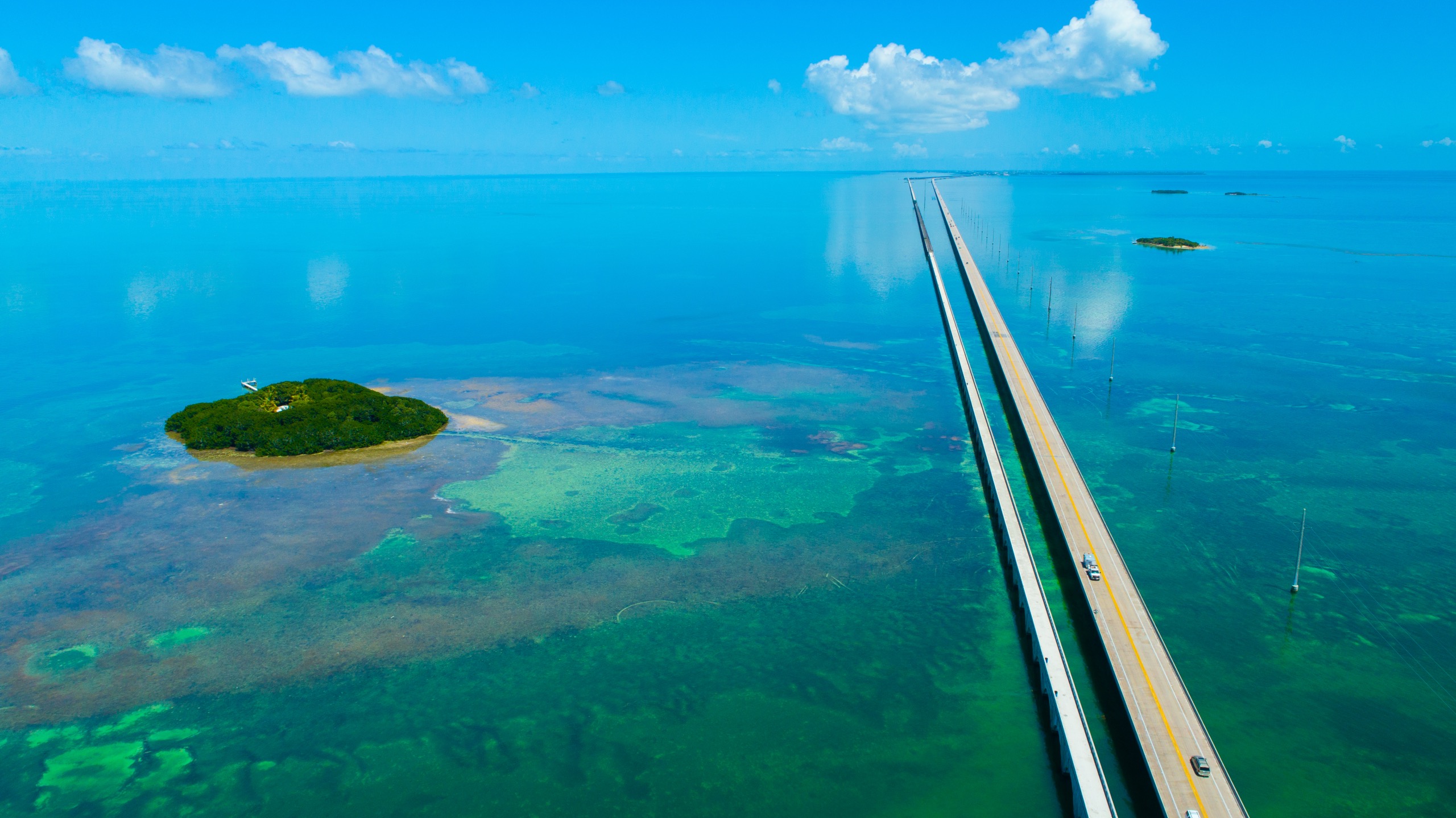
Located at the extreme south of États-Unis territory, the Keys form an archipelago with paradise landscapes. To discover them, we recommend planning a road trip on the Overseas Highway, a road connecting Miami to Key West Island and which allows you to drive over the turquoise waters of the Caribbean Sea.
Over 182 km, the road crosses the 44 islands of the archipelago via a succession of 42 suspension bridges. You'll get the feeling of driving over the turquoise waters of the Caribbean Sea. Want more? Discover our circuit to visit the best of Florida.
Exploring Key West Island
If your stay allows, make a stop on the island of Key West, the southernmost island of the Keys archipelago. In addition to having a great coastline, the island has several must-see attractions. Among them? Ernest Hemingway's house!
Nestled in the heart of a palm grove, this early 20th-century colonial-style building allows you to dive into the world and daily life of the famous author of The Old Man and the Sea. Expect about 2 hours for the visit.
Frequently Asked Questions
How Many Days to Visit Miami?
To discover the essentials of Miami, a minimum of 4 to 5 days is recommended. This timeframe allows you to see the main neighborhoods, enjoy the beaches and visit a few museums. If you want to extend your trip and explore the surroundings — such as the Everglades or the Keys — plan for 2 to 3 additional days, depending on the destinations and travel time.
What is the Best Time to Visit Miami?
The best time to visit Miami is between November and April, when the climate is sunny (without too much rain) and temperatures are pleasant (without heat peaks or high humidity). From May onwards, the heat becomes more intense and showers more frequent. While the humid season doesn't prevent you from discovering the city, conditions remain more comfortable during the dry season.
What Are Miami's Must-See Beaches?
Downtown Miami has no beaches, as the bay is occupied by marinas, waterfront paths and parks. To swim, you need to head to Miami Beach (and particularly South Beach or Lummus Park Beach) or further afield, off the mainland. You'll find notably the beautiful Crandon Beach on Key Biscayne Island.
Frequently asked questions
The best time to visit Miami is from November to April, during the dry season. Temperatures are pleasant (between 68 and 82°F) and hurricane risks are virtually nil. Avoid the June-October period, which corresponds to hurricane season, characterized by heavy rains and stifling heat.
Plan at least 3 to 4 days to visit Miami's essentials: the Art Deco neighborhoods of South Beach, Wynwood, Little Havana and the main museums. Allow 5 to 7 days if you want to include day trips to the Everglades, the Keys or Biscayne National Park.
Miami and Miami Beach are connected by several bridges (MacArthur, Julia Tuttle and Venetian Causeway). You can reach Miami Beach by car in about 20 minutes, by Miami-Dade Transit bus, by bike via the bike paths on the bridges, or by taxi/Uber. Bus 150 (Miami Beach Express) is an economical option from downtown.
Access to the outdoor street art walls in the Wynwood neighborhood is free and accessible at any time. However, Wynwood Walls, the official open-air museum with its indoor gardens, is paid. Art galleries in the neighborhood are generally free but may require a reservation. Every 2nd Saturday of the month, the 'Wynwood Art Walk' animates the neighborhood with open galleries and food truck stands.
Yes, Everglades National Park is just 45 minutes from Miami by car. It's one of the most popular day trips from the city. You can see alligators, American crocodiles, manatees and exceptional wildlife in an environment of mangroves and swamps. Organized tours from Miami are also available.
Yes, Miami Beach is a distinct city from Miami, though they're often confused. Miami is on the mainland, while Miami Beach is a coastal municipality on a barrier island, across Biscayne Bay. The two cities are connected by several bridges. Miami Beach is particularly known for its Art Deco district, South Beach and its festive atmosphere.
The Institute of Contemporary Art (ICA) in Design District is one of the rare entirely free museums in Miami. However, you should reserve your ticket in advance on the official website. History Miami Museum also offers free admission the second Saturday of the month. Art galleries in Wynwood and Design District are often free, especially during the Wynwood Art Walk on the 2nd Saturday of the month.