Arizona Road Trip: 9 Must-See Attractions in the American West
Renowned for its stunning landscapes and iconic Grand Canyon, Arizona is the emblem of the American Far West... Lace up your hiking boots (or your trail shoes)
Renowned for its stunning landscapes and iconic Grand Canyon, Arizona is the emblem of the American Far West... Lace up your hiking boots (or your trail shoes) as we take you on the roads of the Western United States, to discover the must-see destinations to experience in Arizona!
Arizona at a Glance Spanning over 295,200 km², Arizona is the sixth largest state in America. Located in the western part of the country, it borders the states of Nevada, Utah, Baja California, and New Mexico. Crossed by the Colorado River, it is known for its rock formations and desert landscapes. ● Capital of Arizona: Phoenix ● Population: 7,171,646 inhabitants (including 1,660,000 in Phoenix)*. ● Area: 295,254 km²*. ● Rank of most populated cities: Phoenix, Tucson, Mesa, Chandler |
1. The Grand Canyon (Arizona's Flagship Attraction!)
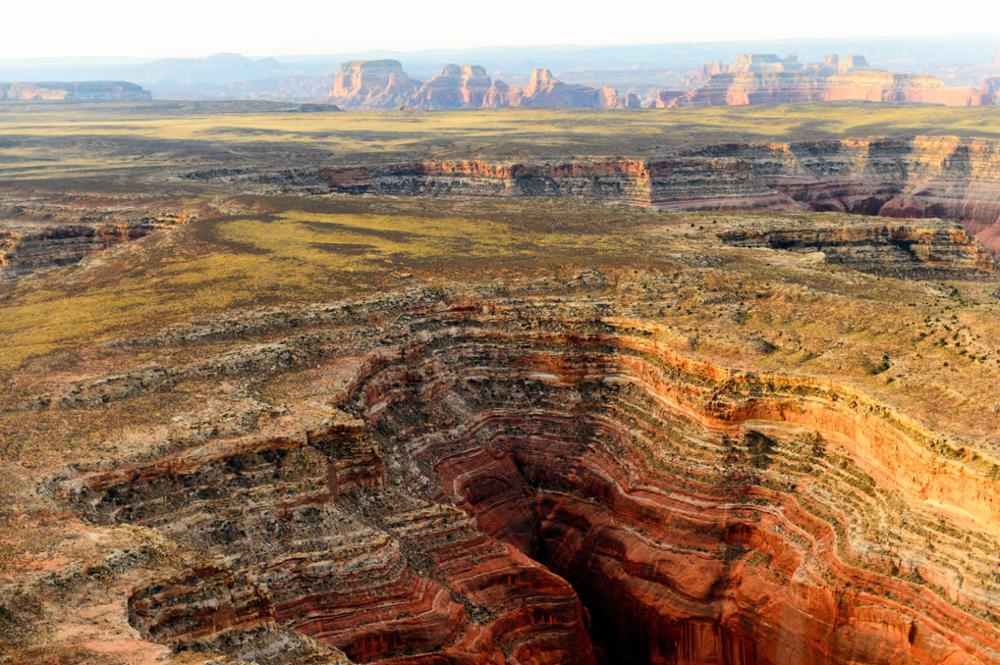
Carved across 30 km in width and 455 km in length, the Grand Canyon is a natural jewel – born from millions of years of erosion and geological activity. It ranks among the top 10 national parks in the États-Unis!
Discovering a UNESCO World Heritage Site
Since 1979, it has been listed as a UNESCO World Heritage site due to its beauty. According to UNESCO, it is "considered one of the most visually powerful landscapes in the world." Among its must-see spots:
● the Bright Angel Trail (located on the South Rim),
● the panoramic views of Mather Point and Point Imperial,
● the Grand Canyon Skywalk (a glass platform suspended above the canyon).
Exploring Pristine Nature
Composed of plains, forests, cliffs, and waterways, the Grand Canyon is an exceptional destination for nature lovers. It can be explored:
● on foot (the site features about a dozen hiking trails),
● by car (routes dotted with panoramic viewpoints),
● by helicopter!
If you're considering this last option, head to Tusayan (a small town just a stone's throw from the Grand Canyon), where most helicopter flights depart.
To Know The gorges are located in the Grand Canyon Park. There are two entrances (accessible via Highway 64): one in the South (from Arizona), the other in the East (from Utah). Park entry is paid. The price depends on your mode of exploration: ● $35/vehicle, ● $20/person (on foot or by mountain bike).
Note: the park entry ticket does not grant access to Grand Canyon West – the Hualapai reservation where approximately 1,600 members of this Native American tribe live self-sufficiently. To access this area, you'll need to pay a separate entrance fee through the tribe's official website.
|
2. Antelope Canyon
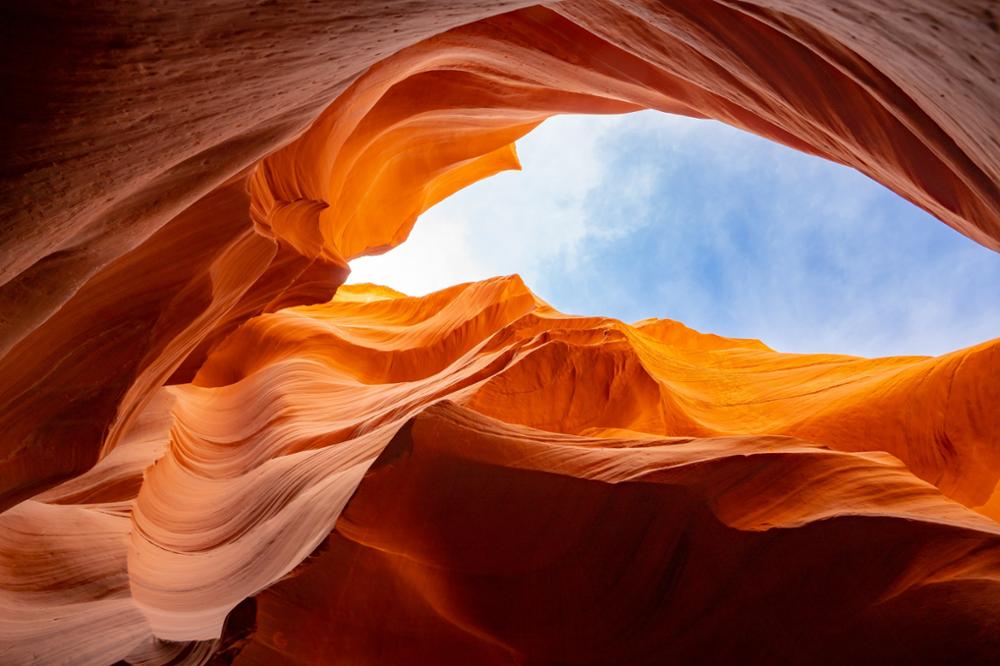
In northern Arizona, you'll find Antelope Canyon, a crater renowned for its deep gorges and narrow walls – but also for its spectacular light displays, when sunlight filters through the rock formations...
The canyon owes its distinctive shapes to the grooves carved by water over the centuries. It is divided into two sections:
● The Upper Antelope Canyon: also called The Crack, this part of the canyon is the most touristy, as it's the most accessible. This slot canyon extends 200 meters in length.
● The Lower Antelope Canyon: also called The Corkscrew, this section is composed of natural arches and stretches 400 meters.
Both slots allow for stunning photography. It's recommended to schedule visits between 10:30 AM and 1:30 PM to enjoy the best lighting.
To Know ● Regardless of which zone you visit (Upper or Lower), Antelope Canyon requires a guide, as these natural wonders are located within a reservation managed by the Navajo people. ● To access it, you'll need to pay an entrance fee. Prices vary depending on the agency and time of visit (those with the best light beams being more expensive)... ● Prioritize morning excursions, as temperatures can reach 95-104°F (35-40°C) in the afternoon (and there's no shade in the park). ● Also remember to bring plenty of water and sturdy hiking shoes. |
3. Monument Valley
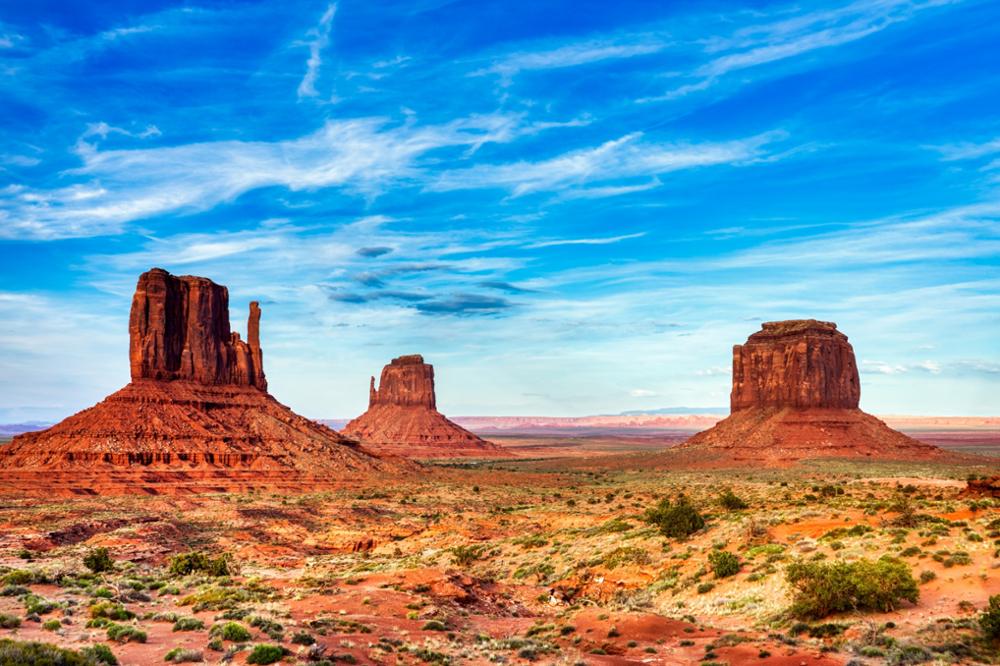
In northeastern Arizona, discover Monument Valley. The site – which means "the valley of rocks" – designates a wild territory dotted with stone monuments and monoliths shaped over millennia through rock erosion.
Once overlooked, Monument Valley gained renewed interest in the 1940s thanks to Hollywood films shot in the American Far West.
The site features numerous panoramic viewpoints. Among the iconic vistas not to miss: Monument Valley, Taylor Rock, and John Wayne's Point! It's also possible to tour the plateau by car via the Valley Drive (approximately 3 hours).
To Know Monument Valley is located at the heart of Native American territory, managed by the Navajo people. Site access is paid (approximately $8/person) and is via US Route 163. The ticket is valid for a full day, but the visit can be completed in a few hours. |
4. Petrified Forest National Park and the Painted Desert
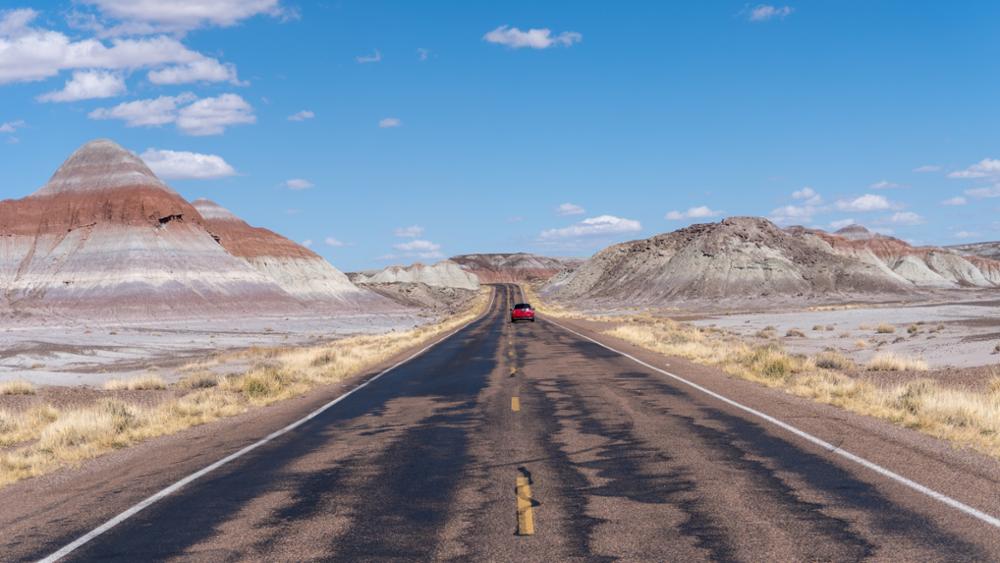
In northeastern Arizona, you'll find the Petrified Forest National Park: an area where ancient tree remnants from the Triassic period (the age of dinosaurs) still exist!
Inscribed as a UNESCO World Heritage site in 2008, this ancestral forest is now an arid plateau where you can admire trees transformed into stone blocks – fossilized over time.
During your visit, you can also spot antelopes, coyotes, lynx, and numerous plants...
In the northern section of the Petrified Forest National Park, you'll also have the chance to glimpse the Painted Desert... A stunning rocky landscape made of layers of multicolored sandstone, whose juxtapositions have formed over time a horizon of stone that is simultaneously orange, pink, gray, and red...
To Note The park can be visited by car, on foot, or by motorcycle. Entry fees are approximately: ● $20/vehicle (1-4 passengers), ● $14/motorcycle, ● $9/pedestrian. Your ticket is valid for 7 days. |
5. Meteor Crater
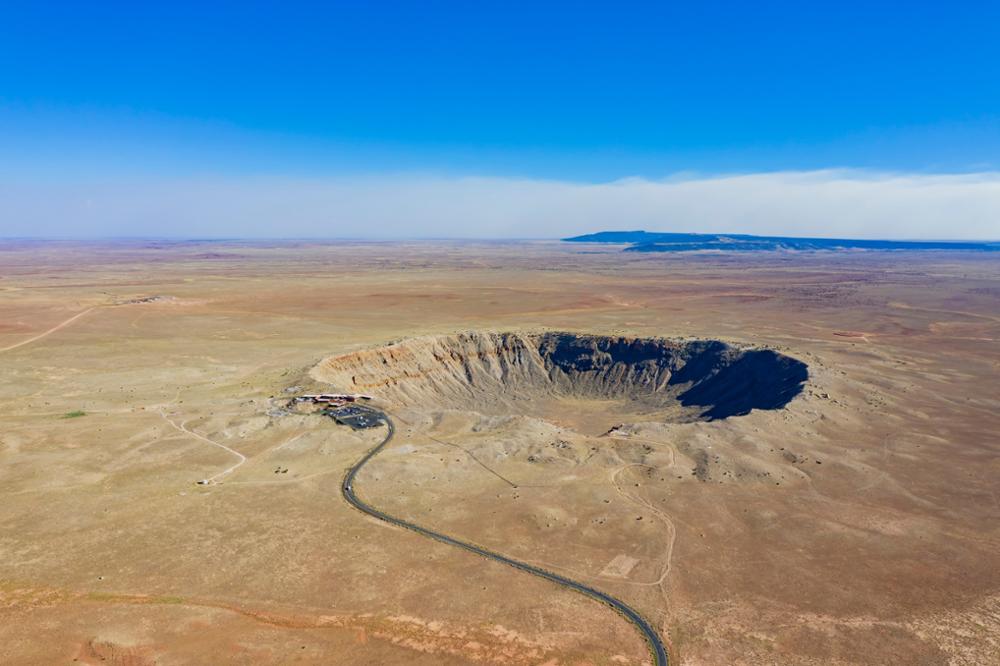
The Meteor Crater is a cavity formed approximately 50,000 years ago by a meteorite impact! Identified as such in the early 20th century, this crater displays impressive dimensions, with over 3,937 feet (1,200 meters) in diameter and 623 feet (190 meters) in depth!
During the visit, you can admire the crater from several viewpoints (arranged for this purpose) or via various trails... The Crater Rim Tour departs hourly (from morning through early afternoon). Expect approximately $27/person.
6. The Bird Cage Theater
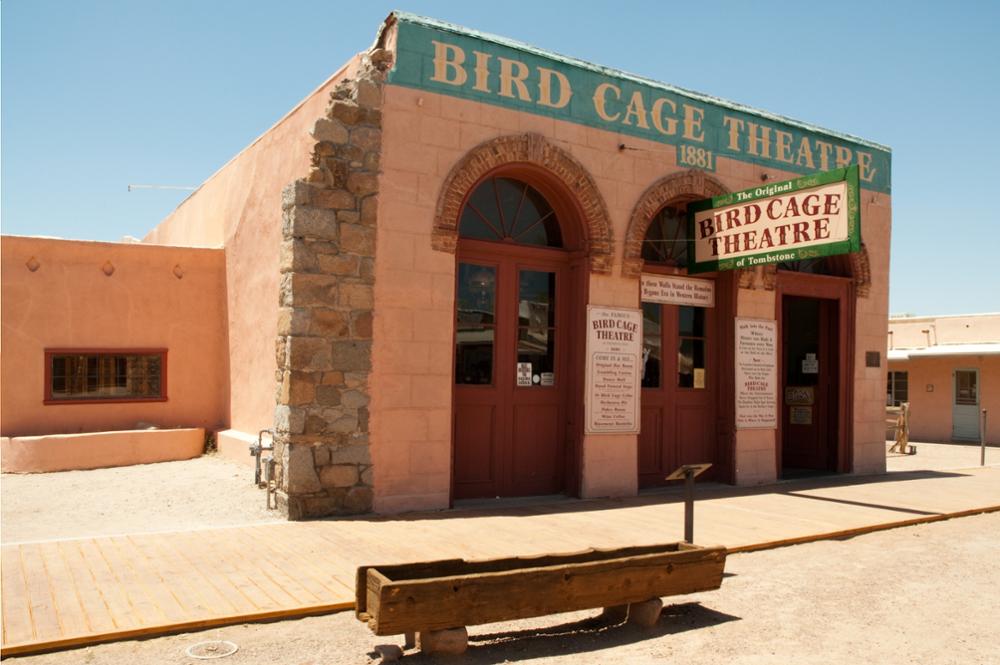
The Bird Cage Theater is a former theater-saloon that opened its doors in Tombstone between 1881 and 1889. Once disreputable (it was more of a brothel than a theater), the place now bears witness to a bygone era – yet you can still feel the Western atmosphere, thanks to the historical preservation of the premises...
Indeed, the Bird Cage Theater has barely changed since its closure! The Bird Cage Theater is also known for witnessing numerous shootouts. As a result, a hundred bullet holes are still visible on the walls...
7. Saguaro National Park
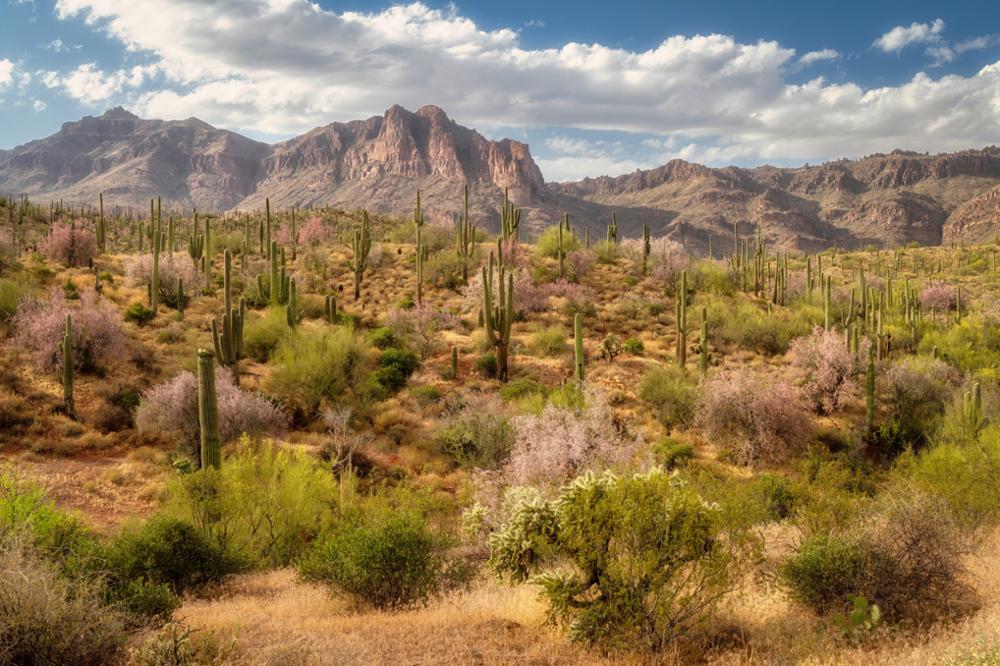
About 25 minutes from Tucson, discover Saguaro National Park. Renowned for harboring the world's largest cacti – reaching 33 feet (10 meters) tall and weighing two tons – the park spans 370 km². More than just a plant, the Saguaro cactus is a symbol of the American West, visible in countless Westerns.
Despite its arid terrain (due to its proximity to the Sonoran Desert), Saguaro National Park harbors fairly diverse wildlife. You can spot numerous animal species adapted to desert conditions. Among them:
● birds (including the Greater Roadrunner and vultures),
● reptiles (including horned lizards, Gila monsters, and snakes),
● mammals (including the Collared Peccary and coati),
● rodents.
The park also features several hiking trails (passable on foot or by car). These offer over 260 km of hiking! The most well-known are:
● Bajada Loop Drive,
● Valley View Overlook Trail,
● Signal Hill,
● Mica View.
To Know Saguaro National Park's entry fee is: ● $25/vehicle (1-4 people), ● $19/motorcycle, ● $14/pedestrian. The site is split into two distinct sections: the Tucson Mountain District (west) and the Rincon Mountain District (east). Your ticket is valid for 7 days in both zones. Upon arrival, don't hesitate to stop by the visitor center to ask rangers any questions you may have. Prioritize morning excursions, as temperatures can reach 95-104°F (35-40°C) in the afternoon (and there's no shade in the park). Also remember to bring plenty of water and sturdy hiking shoes. |
8. Chiricahua National Monument
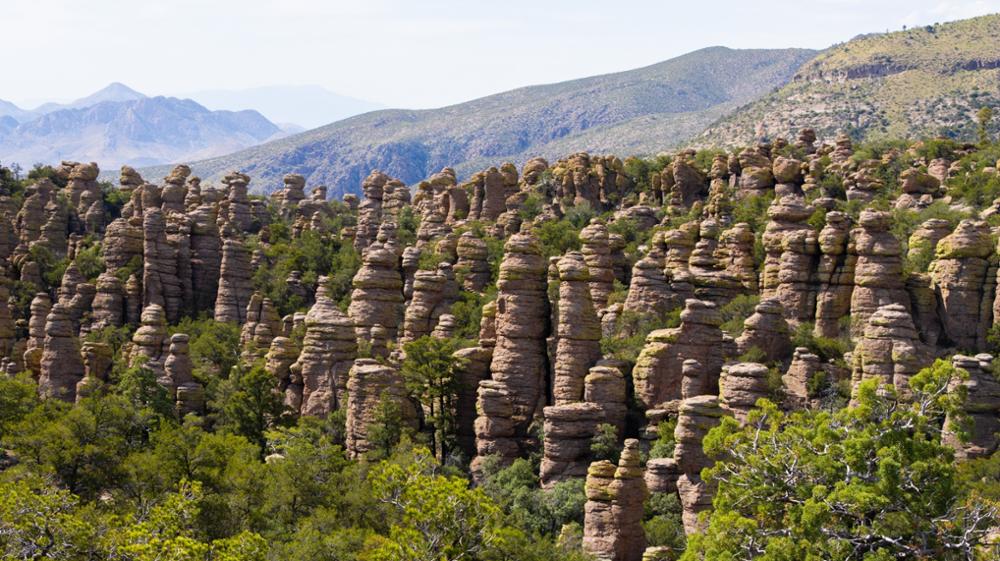
The Chiricahua National Monument is a park located in southeastern Arizona, at the heart of a former volcanic zone. It is composed of rugged landscapes featuring canyons and cliffs – all nestled in a verdant setting!
With its numerous hiking circuits, the park is ideal for walking enthusiasts. It can also be explored via two major loops: The Big Loop and Echo Canyon Loop.
Its other advantage? The park is free! If you wish to stay several days, there's a campground within the park (the Bonita Canyon Campground).
9. Desert Botanical Garden
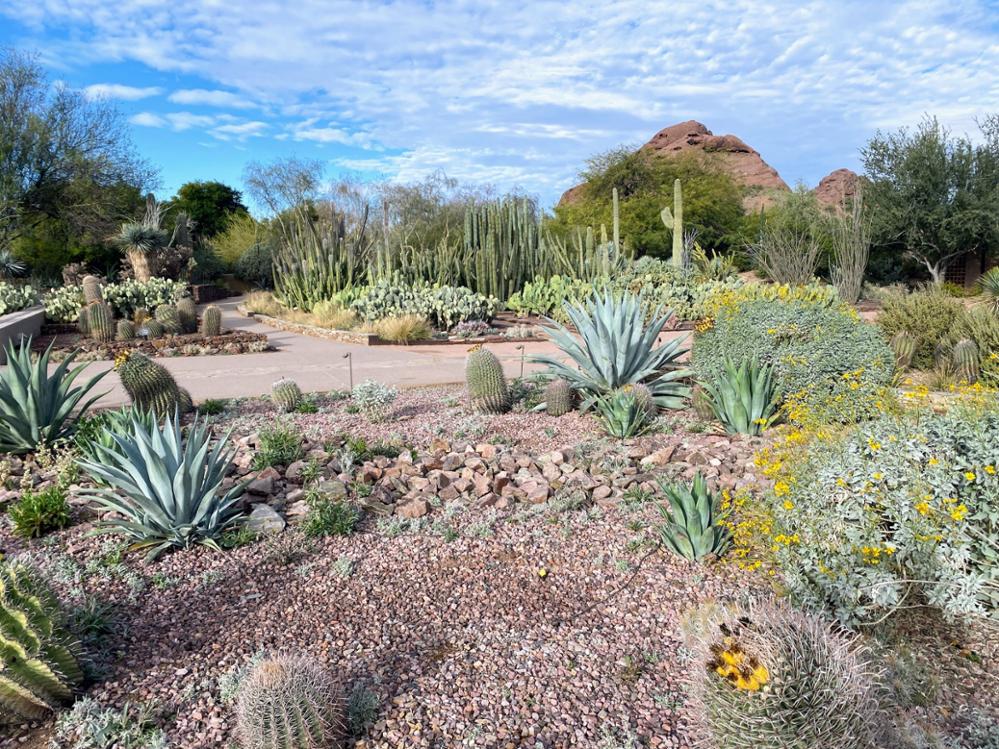
The Desert Botanical Garden is a beautiful garden created in 1937, where over 50,000 plants are cataloged! Featuring several pathways, visitors can stroll freely through the alleys to observe plant species.
The garden showcases endangered plants – and offers a glimpse into the region's endemic flora. The Desert Botanical Garden regularly organizes events and activities (check the official website).
To Know Admission costs approximately $27/adult and $16/child. It's possible to dine on-site at Gertrude's Restaurant.
|
What is the Best Season to Visit Arizona?
Arizona's average annual temperature hovers around 86°F (30°C) (64°F/19°C at the lowest in January and 106°F/41°C at the highest in July). It's a dry, arid territory best visited between January and April or October and December – when temperatures are milder (around 70°F/21°C).
If you plan outdoor activities, note that the rainy season (called the "Mexican Monsoon" or "Arizona Monsoon") occurs between June and August. During this period, rainfall is dense and temperatures are very high.
If you visit Arizona during this time, prioritize outdoor activities in the morning, as storms typically begin in the early afternoon.
Frequently Asked Questions
What is Arizona's nickname?
Arizona is nicknamed the Grand Canyon State. This name refers to the Grand Canyon. Highly touristy, this natural gorge 4,920 feet (1.5 km) deep is the emblem and soul of Arizona.
What can you do in Phoenix?
Phoenix overflows with natural and cultural attractions. Among the must-sees, don't miss Old Town Scottsdale (typical of the old American West), Camelback Mountain (a mountain summit known for its 360° view), and the stunning Tonto National Forest. In the surrounding area? You can also visit the Sonoran Desert and the Grand Canyon.
What language is spoken in Arizona?
The official language of Arizona is English. However, due to migration flows from Latin America, Spanish is also a dominant language. In the early 2000s, nearly 20% of the population identified Spanish as their native language.
*Figures from 2018
Frequently asked questions
To visit the 9 must-see attractions in Arizona at a comfortable pace, allow at least 10 to 14 days. The Grand Canyon and Monument Valley each require at least a full day, while sites like Meteor Crater or Bird Cage Theater can be covered in a few hours. A loop road trip from Phoenix is the ideal formula.
Yes, car rental is essential for exploring Arizona independently. Most must-see sites (Grand Canyon, Monument Valley, Antelope Canyon, Petrified Forest) are spread across vast distances and are not accessible by public transportation. A standard vehicle suffices for most roads, but a 4x4 can be useful for certain tracks, like the Valley Drive at Monument Valley.
Yes, the America the Beautiful Pass (approximately $80) grants unlimited access for 1 year to all U.S. national parks managed by the NPS. In Arizona, it covers entry to the Grand Canyon, Petrified Forest, Saguaro National Park, and Chiricahua National Monument. If you plan to visit at least 3 of these parks, the pass quickly pays for itself. Note that it does not cover sites managed by Native American tribes (Antelope Canyon, Monument Valley).
Arizona is an ideal family destination! Meteor Crater impresses both young and old, the Desert Botanical Garden offers educational activities, and easy hikes on the Grand Canyon South Rim are accessible from ages 6-7. Take care to properly prepare outdoor visits: abundant water, sunscreen, hat, and closed-toe shoes are essential, especially in summer when temperatures exceed 104°F (40°C).
When visiting Navajo reservations (Antelope Canyon, Monument Valley) or Hualapai territory (Grand Canyon West), it's essential to follow a few rules: always be accompanied by an authorized guide, pay official entry fees through tribal websites, never photograph residents without permission, and respect sacred spaces marked as such. These territories are autonomous and have their own regulations, independent of U.S. national parks.