Washington D.C.
Washington D.C.
The federal capital of the États-Unis, Washington D.C. brings together neoclassical monuments, free Smithsonian museums, and historic memorials along the National Mall — a city best explored on foot or by bike.
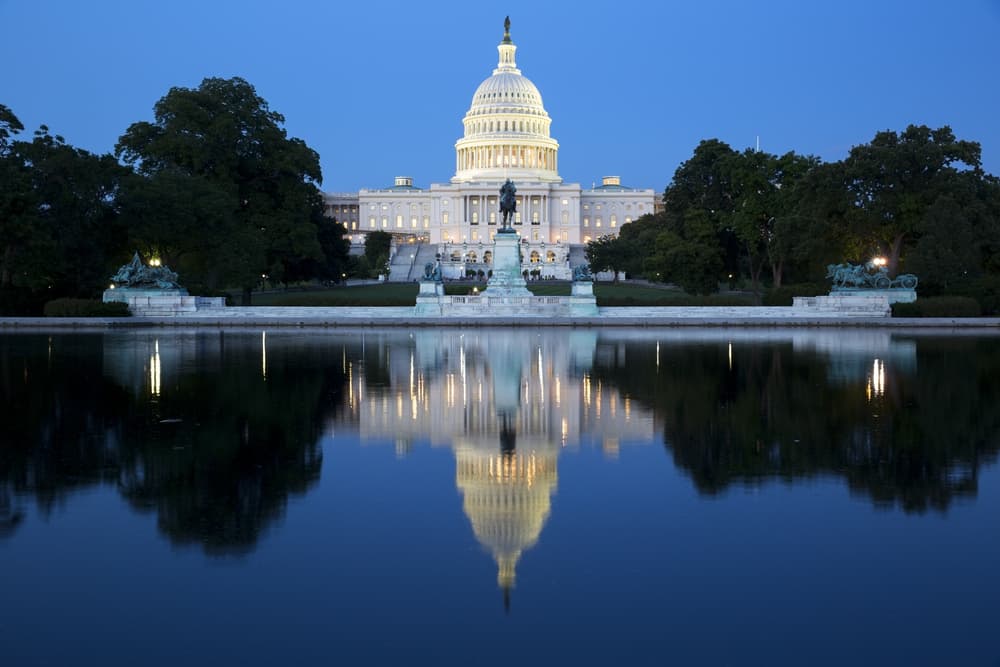
Washington, D.C. is the federal capital of the United States, purpose-built on the banks of the Potomac River at the end of the 18th century. Home to Congress, the White House, and the Supreme Court, the city also boasts an exceptional concentration of national museums, monuments, and memorials—most of them free to enter. Set against neoclassical architecture and verdant green spaces, it's best explored on foot or by bicycle along the National Mall.
Quick Facts at a Glance
Smithsonian Museums: Free admission to nearly all 19 institutions in the network.
Getting Around: WMATA Metro with stations directly on the Mall; Capital Bikeshare bikes available throughout the city.
Recommended Duration: 3 to 5 days to cover major sites at a comfortable pace.
Dress Code: No general dress restrictions; some official buildings require security screening.
Accessibility: Most museums and monuments are wheelchair accessible.
What to See
The National Mall is the city's central axis: a two-kilometer corridor lined with museums, stretching from the Capitol to the Lincoln Memorial. Along this route stand the Washington Monument, the Reflecting Pool, and several memorials dedicated to veterans. The neighborhoods of Georgetown, Dupont Circle, and Capitol Hill offer vibrant street life, with markets, restaurants, and Federal-era architecture.
History and Context
The city was founded in 1790 by an act of Congress on land ceded by Maryland and Virginia. Pierre Charles L'Enfant designed its star-shaped plan, inspired by Versailles. Partially burned by the British in 1814 and rebuilt, it became the stage for major civil rights marches in the 20th century—including Martin Luther King's iconic speech in 1963 at the Lincoln Memorial.
Highlights of Your Visit
The National Mall and Its Memorials
The National Mall anchors your itinerary. The Lincoln Memorial and Vietnam Veterans Memorial are particularly moving in the evening, when crowds thin out. The Washington Monument, a 169-meter obelisk, offers sweeping panoramic views from its summit.
The Smithsonian Museums
The Smithsonian network brings together world-renowned institutions: the National Museum of Natural History, the National Air and Space Museum, and the National Museum of African American History and Culture (advance reservations recommended for the latter). All are free.
The Capitol and Capitol Hill
The Capitol can be visited by reservation through the Visitor Center. The surrounding neighborhood houses the Library of Congress and the Supreme Court, both architecturally remarkable.
The White House and Surroundings
The White House is visible from Lafayette Square, though interior access is limited to organized tours arranged through a U.S. Congressional representative. The Ellipse gardens and the neighboring Eisenhower Executive Office Building are worth exploring.
Georgetown
This historic neighborhood along the C&O Canal features charming cobblestone streets, 18th-century Federal townhouses, and lively commercial activity. The C&O Canal can be walked or biked all the way to Great Falls.
Photography Tips
The Reflecting Pool mirrors the Lincoln Memorial and Washington Monument beautifully—ideal light at dawn or sunset. The view from the Netherlands Carillon in Arlington frames the Mall dramatically. Avoid peak hours (10 a.m.–3 p.m.) for museum interiors.
Location and Access
Washington, D.C. is served by three airports: Reagan National (DCA), the most central, with direct Metro access; Dulles (IAD) and BWI, connected by shuttle and rail. The WMATA Metro covers all major tourist sites. The city is accessible by Amtrak train from New York (approximately 3 hours) and Boston.
Nearby Attractions
Arlington National Cemetery — Across the Potomac, the final resting place of John F. Kennedy and American service members.
Mount Vernon — George Washington's plantation and residence, about 30 kilometers south.
Annapolis — Maryland's capital and historic port on Chesapeake Bay, approximately one hour's drive away.
Great Falls Park — Spectacular waterfalls on the Potomac, accessible by car or bike via the C&O Canal.
Frequently Asked Questions
Frequently asked questions
Spring (March–April) is prized for the cherry blossoms around the Tidal Basin. Fall offers pleasant temperatures and lighter crowds. Summer is hot and humid; winter is cold but quieter, with shorter museum queues.
Nearly all Smithsonian museums and National Mall monuments are free. The National Museum of African American History and Culture requires a free timed-entry reservation due to high demand.
Interior tours are available only through a request to a U.S. Representative or Senator, several months in advance. The grounds (Lafayette Square, Ellipse) are freely accessible.
The WMATA Metro serves all major sites. Capital Bikeshare is ideal for the Mall and Georgetown. Walking remains the best way to connect monuments along the Mall.
Three days allow you to cover the Mall, the Capitol, and several major museums. Five days give you time to explore Georgetown, Arlington, and nearby sites like Mount Vernon.
Yes. The Amtrak Northeast Corridor connects Washington to Philadelphia, New York, and Boston. A classic East Coast itinerary often includes these four cities over one to two weeks.
Want to discover this destination?
Our local advisors design your tailor-made trip.