Santa Fe
Santa Fe
Santa Fe is the capital of New Mexico, perched above 2,100 meters in the foothills of the Sangre de Cristo mountains.
Santa Fe is the capital of New Mexico, perched above 2,100 meters in the foothills of the Sangre de Cristo mountains. Founded in 1610, it is the oldest state capital in the United States. The city blends adobe architecture, one of the country's most vibrant art scenes, and deeply living Native American and Hispanic heritage. Its historic center, the Plaza, remains the beating heart of a city that draws artists, collectors, and travelers seeking authenticity.
Quick Reference
Altitude: approximately 2,100 m — plan for acclimatization if arriving from lower elevations.
Access: Santa Fe Regional Airport (SAF) with connections from Dallas and Los Angeles; Albuquerque International Airport (ABQ) about 100 km away, served by shuttle service.
Local transport: public bus network (Santa Fe Trails); downtown easily walkable.
Best time to visit: May–June and September–October to avoid summer heat and monsoon thunderstorms.
Recommended duration: 2 to 3 days to cover the historic center, museums, and surrounding areas.
What to See
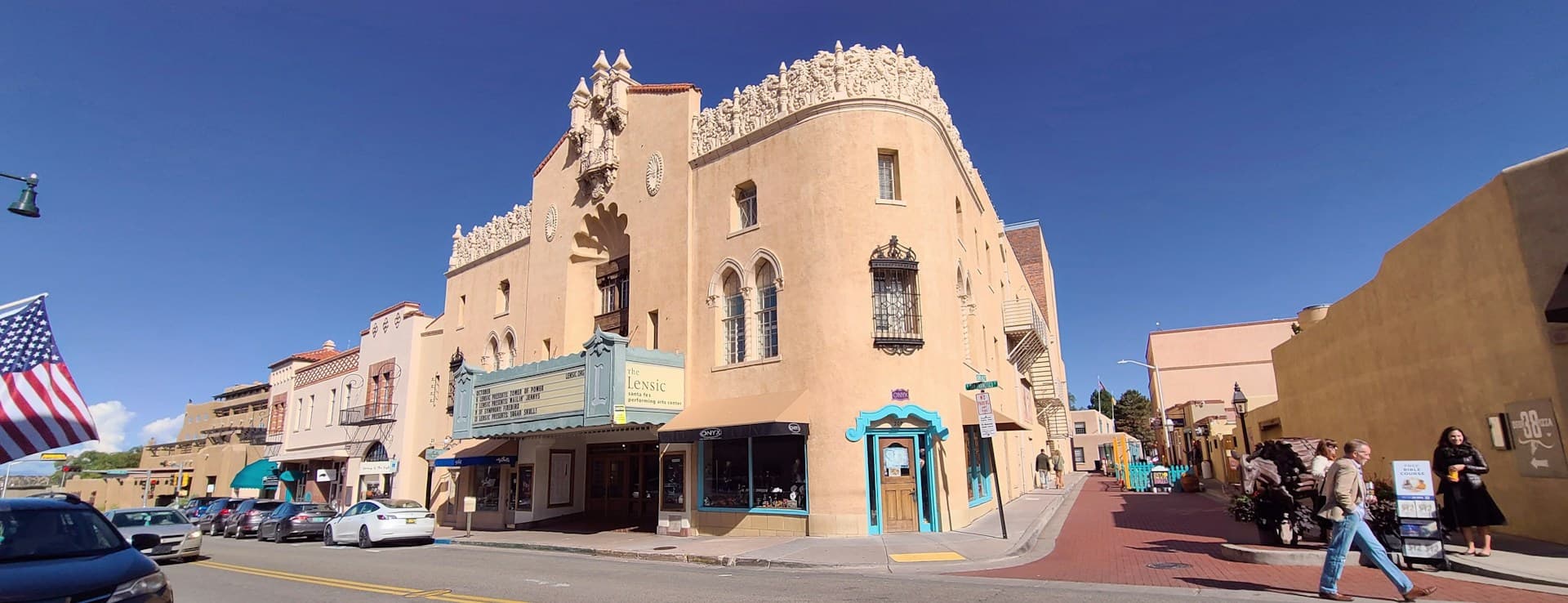
Adobe architecture dominates: earthen walls in ochre tones, exposed wood beams (vigas), rounded lines. Territorial and pueblo revival styles are regulated in the historic center, lending rare visual cohesion. Art galleries line Canyon Road for nearly a kilometer. The Palace of the Governors, on the Plaza, is the oldest continuously occupied public building in the United States.
History and Context
Santa Fe was founded around 1610 by Spanish colonists as the capital of the province of Nuevo México, on the site of an ancient ancestral pueblo. It passed under Mexican rule in 1821, then American control in 1846. The city was the terminus of the Santa Fe Trail, a major 19th-century trade route. Its tricultural identity—Native American, Hispanic, Anglo-American—remains visible in architecture, cuisine, and local celebrations.
Highlights of Your Visit
The Plaza and Palace of the Governors
The central plaza is ringed with portales where Native American artisans (primarily Pueblo and Navajo) sell jewelry and pottery. The Palace of the Governors houses the New Mexico History Museum, tracing four centuries of regional history.
Canyon Road
This paved street concentrates over a hundred art galleries, studios, and sculptured gardens. Contemporary painting, traditional Native American art, and monumental sculpture are on display. A leisurely walk takes one to two hours depending on stops.
St. Francis of Assisi Cathedral
Built between 1869 and 1886 under Archbishop Jean-Baptiste Lamy, this limestone Romanesque cathedral stands out against the surrounding adobe. It houses the statue of the Virgin of the Conquest, one of the oldest Marian representations in the United States.
The Guadalupe Quarter and Railyard
The converted former railway depot hosts a farmers market, galleries, and restaurants. Nearby Basilica of Our Lady of Guadalupe features a large mural of the Virgin of Guadalupe.
The Museums
The Museum of International Folk Art holds one of the world's largest collections of folk art. The Museum of Indian Arts and Culture documents Pueblo, Navajo, and Apache cultures with archaeological and contemporary collections. The Georgia O'Keeffe Museum is dedicated to the painter who made New Mexico her chosen territory.
Photography Tips
Morning light on the adobe facades of the Plaza is soft and warm. Canyon Road photographs best in late afternoon, when low sunlight emphasizes wall textures. For the cathedral, avoid harsh midday frontal light; shoot early morning or late afternoon instead. For artisans under the Palace of the Governors portales: always ask permission before photographing people.
Location and Access
Santa Fe lies in northern New Mexico, approximately 100 km northeast of Albuquerque via Interstate 25. The historic center is compact and walkable. Shuttles regularly connect Albuquerque Airport to Santa Fe. The city is accessible by car from Denver (approximately 6 hours) or Phoenix (approximately 7 hours). Several local operators offer guided walking tours of the historic center.
Nearby Attractions
Taos — approximately 110 km north, Taos Pueblo is a Native American village continuously inhabited for over a thousand years, a UNESCO World Heritage site.
Bandelier National Monument — approximately 50 km west, cliffs honeycombed with ancestral caves and petroglyphs of Pueblo peoples.
Meow Wolf Santa Fe — unique immersive and interactive art installation, minutes from downtown.
Ten Thousand Waves — Japanese-style spa nestled in the hills above Santa Fe, approximately 10 minutes by car.
Albuquerque — New Mexico's largest city, featuring its Hispanic Old Town and the renowned International Balloon Fiesta in October.
Frequently Asked Questions
Frequently asked questions
Spring (May–June) and fall (September–October) offer pleasant temperatures and fewer crowds. Summer is lively but marked by afternoon monsoon thunderstorms. Winter is cold but bright, with nearby skiing opportunities.
The historic center is walkable. A car becomes useful for reaching Bandelier, Taos, or surrounding natural sites. Shuttles are available from Albuquerque.
At over 2,100 m, some visitors experience fatigue or mild breathlessness the first days. Drink more water, limit alcohol the first 24 hours, and take it easy upon arrival.
Yes. Artisans under the Palace of the Governors portales are certified by the State of New Mexico—one of the most reliable authenticity guarantees. Canyon Road also features galleries specializing in contemporary Native American art.
Two days allow you to cover the Plaza, Canyon Road, and major museums. A third day is ideal for an excursion to Bandelier or Taos.
The Santa Fe Indian Market in August is one of the world's largest Native American art markets. Santa Fe Opera, active June through August, is internationally renowned. The Santa Fe Fiesta in September is the oldest civic celebration in the United States.
Want to discover this destination?
Our local advisors design your tailor-made trip.