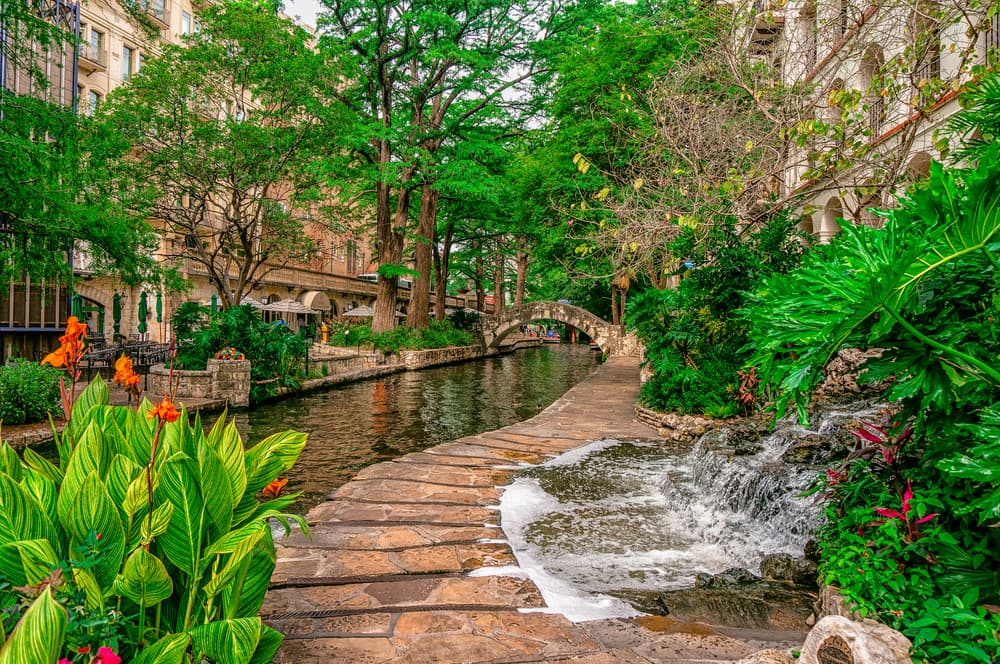
San Antonio
San Antonio
San Antonio is Texas's second-largest city by population, founded in 1718 by the Spanish along the San Antonio River.
San Antonio is Texas's second-largest city by population, founded in 1718 by the Spanish along the San Antonio River. It hosts one of the strongest Hispanic-Mexican identities in the United States, evident in its architecture, cuisine, and festivals. The historic center is home to Franciscan missions recognized as UNESCO World Heritage sites and the iconic Alamo, a symbol of Texas independence.
Quick Reference Guide
Access: San Antonio International Airport (SAT), approximately 13 km from downtown; direct flights from major U.S. cities.
Local Transport: VIA Metropolitan Transit (buses) covers the city; the River Walk is accessible on foot from downtown.
Recommended Duration: 3 to 4 days to explore downtown, the missions, and neighborhoods.
Best Time to Visit: October to April, before summer heat regularly exceeds 100°F (38°C).
Accessibility: The River Walk and most major sites are wheelchair accessible.
What to See
San Antonio revolves around several distinct focal points. The River Walk (Paseo del Río) is a network of pedestrian pathways along the river below street level, lined with restaurants, bars, and hotels. The Alamo, a former mission-turned-fortress, is Texas's most visited historic site. The La Villita neighborhood preserves 19th-century buildings now home to galleries and artisan shops.
History and Context
Founded on June 13, 1718, by Governor Martín de Alarcón, San Antonio served as the capital of the Spanish province of Texas. Franciscan friars built five missions between 1718 and 1731. In 1836, the Battle of the Alamo pitted Texas defenders against the Mexican army under General Santa Anna—a foundational episode in Texas mythology. The city remained predominantly Spanish-speaking for centuries and retains a vibrant tejano culture today.
Highlights of Your Visit
The Alamo
The former Mission San Antonio de Valero, renamed the Alamo, symbolizes Texas's 1836 resistance. The main building (the chapel) and Long Barrack are open to the public. Admission is free. A museum chronicles the battle and mission history.
The River Walk
This network of pedestrian promenades runs along the river for several kilometers below street level. Water taxis allow visitors to traverse the route. The atmosphere varies dramatically between the bustling tourist-filled section and quieter stretches toward the missions.
The Franciscan Missions
The missions San José, San Juan, Concepción, and Espada complement the Alamo to form the San Antonio Missions National Park, inscribed as a UNESCO World Heritage site in 2015. Mission San José, with its sculptured Baroque facade and rose window, is the best preserved. Some missions still host Sunday masses.
The King William Neighborhood
This 19th-century Victorian residential quarter, south of downtown, features grand mansions built by German merchants. Several have been converted into bed & breakfasts. The atmosphere is peaceful, removed from the River Walk's hustle and bustle.
Market Square
El Mercado, on Market Square, is the largest open-air Mexican market in the United States. Crafts, spices, clothing, and Tex-Mex restaurants concentrate here. Activity peaks on weekends.
Photography Tips
The River Walk is most photogenic early in the morning, before visitor crowds arrive, or in the evening when lights reflect off the water. The Alamo's facade faces east: morning light is ideal. For the missions, golden late-afternoon light beautifully illuminates the limestone. Photography is permitted inside the Alamo, but flash is prohibited.
Location and Access
San Antonio sits in south-central Texas, roughly 320 km southwest of Austin and 400 km north of the Mexican border. The historic center is compact and walkable. San Antonio International Airport (SAT) is served by major U.S. carriers. By car, Interstate 35 connects San Antonio to Austin and Dallas to the north. The missions south of downtown are accessible by car or bike via the Mission Reach, a cycling trail along the river.
Nearby Attractions
San Antonio Missions National Park — Four UNESCO-listed 18th-century Franciscan missions, a few kilometers south of downtown.
Natural Bridge Caverns — Spectacular limestone cave system, approximately 30 km north of San Antonio.
New Braunfels — Town founded by 19th-century German settlers, known for the Comal River and tubing adventures.
Austin — Texas's capital, about 1.5 hours' drive away, renowned for its live music scene and creative neighborhoods.
Frequently Asked Questions
Frequently asked questions
Fall (October-November) and spring (March-April) offer pleasant temperatures. Summer is very hot and humid. The Fiesta San Antonio festival in April enlivens the city for ten days.
Access to the chapel and Long Barrack is free. Supplementary exhibitions and guided tours may have fees.
Yes, by car or bike via the Mission Reach. Plan half a day to a full day depending on time spent at each site. Mission San José deserves at least an hour.
The missions remain active places of worship. Respectful attire is expected, especially during Sunday services. Covered shoulders and knees are recommended.
A car is the most convenient option. The Mission Reach cycling trail runs along the river from downtown to the missions for cyclists. The VIA bus network also serves the missions.
Yes. The River Walk, the Alamo, the San Antonio Zoo, and SeaWorld park (on the outskirts) are family-friendly. The downtown area is walkable with a stroller.
Want to discover this destination?
Our local advisors design your tailor-made trip.