Daytona Beach
Daytona Beach
Daytona Beach combines a long Atlantic shoreline, the iconic Daytona International Speedway, and a vibrant waterfront. A Florida destination that blends motorsports, coastal nature, and family tourism.
Daytona Beach stretches across roughly 12 miles of compact sand along the Atlantic in central Florida. The city owes its worldwide reputation to motorsport—the Daytona International Speedway is its signature—yet it also attracts families for its broad beaches, animated waterfront, and laid-back vibe. Each year, several major events transform the city into a convergence point for hundreds of thousands of visitors.
Quick Facts at a Glance
Access: Daytona Beach International Airport (DAB) just minutes from downtown; I-95 and I-4 for drivers.
Beach: open access; certain zones permit vehicle traffic on the sand (seasonal regulations apply).
Recommended length of stay: 2 to 4 days to combine beach, circuit, and museums.
Best season: October through April to avoid summer heat and humidity.
Accessibility: the boardwalk and most major attractions are wheelchair accessible.
What to See
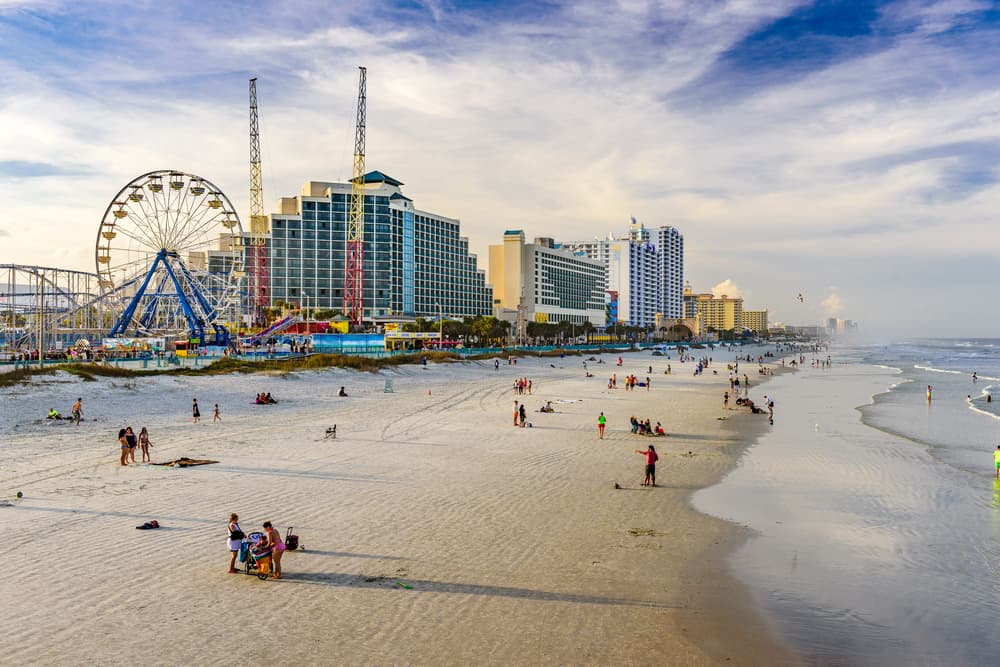
The beach itself remains the central attraction: firm sand, moderate waves, and a wide foreshore. The Daytona Beach Boardwalk concentrates rides, arcades, and restaurants facing the ocean. The Daytona International Speedway, a 2.5-mile oval, can be toured outside of race events. The Museum of Arts and Sciences houses collections ranging from Cuban art to Florida paleontology.
History and Context
As early as the late 19th century, Daytona Beach attracted pioneering automakers eager to set speed records on its hard-packed sand. In 1959, the Daytona International Speedway opened its gates, moving races from sand to asphalt. The city became the global capital of American motorsports, hosting the Daytona 500 each February. Seaside tourism developed in parallel, establishing Daytona Beach as a full-fledged family destination.
Highlights of Your Visit
Daytona International Speedway
The circuit hosts the Daytona 500 (NASCAR, February) and the 24 Hours of Daytona (January). Outside race events, guided tours provide access to the track, grandstands, and an integrated museum. The sheer scale of the venue—a 100,000-seat grandstand—impresses even without a race underway.
The Beach and Boardwalk
Daytona Beach's hard-packed sand has historically been firm enough to support vehicles. The recently renovated boardwalk offers family attractions and open-air concerts. The Daytona Beach Pier extends into the Atlantic and provides sweeping views of the shoreline.
Museum of Arts and Sciences
This regional museum surprises with the breadth of its collections: a prehistoric giant sloth skeleton, 19th-century American art galleries, exhibits on Cuban heritage in Florida. A planetarium rounds out the experience.
Ponce Inlet and the Lighthouse
A few miles south, the Ponce Inlet Lighthouse ranks among Florida's tallest lighthouses. The village of Ponce Inlet offers a quieter atmosphere, seafood restaurants, and access to Canaveral National Seashore.
Photography Tips
Sunrise over the Atlantic is especially photogenic from the pier or northern beach. For the Speedway, guided tours provide access to angles from the track itself. Ponce Inlet Lighthouse photographs beautifully in late afternoon, with sidelighting from the south.
Location and Access
Daytona Beach sits on Florida's east coast, roughly 55 miles northeast of Orlando and 60 miles south of Jacksonville. The local airport (DAB) offers direct flights from several U.S. cities. By car, I-4 connects Orlando directly to Daytona Beach. Shuttles and taxis serve major sites from the airport.
Nearby Attractions
Ponce Inlet Lighthouse — one of Florida's tallest lighthouses, with maritime museum and panoramic coastal views.
Canaveral National Seashore — pristine, unspoiled beaches and sea turtle observation in season.
Kennedy Space Center — roughly an hour south, NASA's space center features exhibits on the history of space exploration.
Saint Augustine — about an hour north, America's oldest city, showcasing Spanish colonial architecture.
New Smyrna Beach — a quieter beach town to the south, beloved by surfers and art enthusiasts.
Frequently Asked Questions
Frequently asked questions
Florida's fall and winter (October through April) offer pleasant temperatures and lower humidity. February coincides with the Daytona 500, animating the city but tightening accommodations.
Yes, in designated zones and subject to seasonal regulations. Access fees apply and hourly restrictions are in place. Check with local authorities before your visit.
Yes. Accommodations and tickets for the Daytona 500 (February) book several months ahead. Prices rise sharply during race week.
Absolutely. The boardwalk, rides, wide beach, and Museum of Arts and Sciences with its planetarium offer activities for all ages.
The two cities are connected by I-4 in under an hour and a half. It's common to spend a few days in Orlando for theme parks, then head to Daytona Beach for a beach interlude.
During off-season guided tours, photography is typically permitted. During races, rules vary by zone and credentials. Verify conditions at the time of your visit.
Want to discover this destination?
Our local advisors design your tailor-made trip.