Discovering Louisiana's Plantation Route: Our Practical Guide
Like exploring the Bayous, the Plantation Route is one of the essential visits to make in Louisiana. A sobering testament to the era of slavery
Like exploring the Bayous, the Plantation Route is one of the essential visits to make in Louisiana. A sobering testament to the era of slavery, it is a route where wealthy planters settled to cultivate sugar cane and cotton, among other crops. Which estates should you discover? How do you reach the plantations? How much time should you allow? Discover everything you need to know to organize a road trip along Louisiana's Plantation Route.
What is the Plantation Route in Louisiana?
The Plantation Route refers to all the properties that developed along the Mississippi River in the early 18th century by wealthy planters. These entrepreneurs took advantage of the river's position to develop agricultural plots using Mississippi's waters to irrigate the fields and transport goods in Louisiana. Cotton and sugar cane were mainly cultivated, along with smaller quantities of rice and natural dyes such as indigo.
Tragically tied to slavery, the plantations saw enslaved people succeed one another. Exploited by wealthy white men, enslaved people were forced to work and live within the properties. The estates consisted of a large master house where the owners lived, a slave quarter typically composed of wooden cabins, and fields. Wealthy white operators measured their wealth by the fortune linked to exploitation and by the number of enslaved people they owned.
It wasn't until the Civil War (1865) and the abolition of slavery that the plantations began their decline. Some were sold, others abandoned or destroyed. While there were once over 350 properties during the "golden age" of plantations, only about a dozen remain today. They are owned by associations or societies that have restored them and maintain them in their original state to open them to the public and never forget this painful chapter of history.
Did you know?
Plantation houses are often called "Antebellum" estates. This term refers to the architectural style characteristic of the period preceding the Civil War.
Where is the Plantation Route located in Louisiana?
The Plantation Route is located in Louisiana, along one section of the Great River Road. Spanning 70 miles (approximately 110 km), it connects the cities of New Orleans and Baton Rouge. Note that you'll also find a few estates near the town of Saint Francisville.
What are the must-see estates on the Plantation Route?
You'll find about a dozen plantations around the Mississippi River, but here are the most popular with visitors:
Destrehan Plantation
Located about ten kilometers from New Orleans, this is the first plantation accessible from the city. It's also the oldest plantation in the Mississippi Valley. It was built in 1787 by Robert Antoine Robin de Logny and was later inhabited by his daughter, Marie-Claude Céleste Eléonore Robin de Logny, and her husband, Jean-Noël Destrehan, son of the royal treasurer of the French colony of Louisiana.
The plantation cultivated indigo, a plant used to dye the uniforms of European armies, as well as sugar cane. The couple were among the richest planters in the state. More than 200 enslaved people were exploited there. In 1811, the plantation served as a courthouse during the trial and execution of 18 enslaved people captured after the New Orleans Rebellion.
As for its architecture, Destrehan Plantation is characterized by an imposing façade adorned with 8 columns and a double-pitched roof. The façade and interior were restored in the 1830s-1840s in Greek Renaissance style.
For cinema enthusiasts, know that Destrehan Plantation served as a filming location for the film Interview with the Vampire as well as the film Twelve Years a Slave.
Information and reservations for guided tours on www.destrehanplantation.org
Laura Plantation
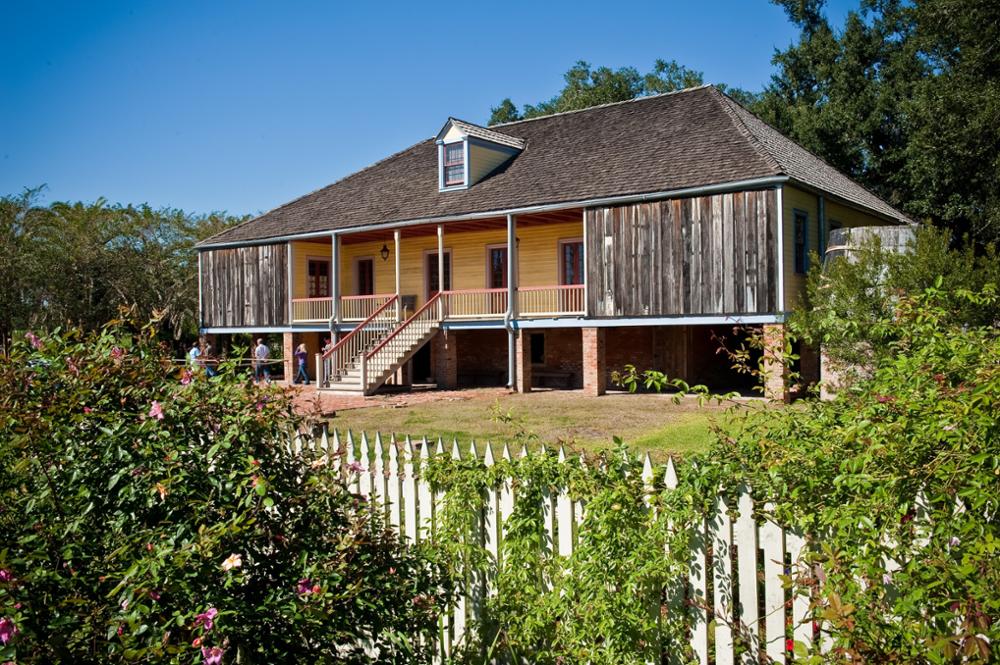
Laura Plantation is one of the most visited plantations in Louisiana. Located in Vacherie, it is one of the last Creole plantations in Louisiana. Thus, unlike other neoclassical-style estates characterized by white columned houses, this Creole plantation stands out with its yellow-painted façade and red roof.
Beyond its architecture, this plantation is distinguished by its history. It was built in 1805 by Guillaume Duparc, a French veteran of the American Revolution who received the land from President Thomas Jefferson as a reward for his loyalty to the États-Unis. But while its construction is linked to this man, it was especially the women of the family who ran the plantation.
When visiting Laura Plantation, you can discover nearly 200 years of history. You'll learn more about the 4 generations who managed the estate. This was made possible thanks to the memoirs of Laura Locoul, the great-great-granddaughter of the plantation's founder, as well as documents from the National Archives in Paris. For information, the Locoul family is one of the oldest French families in Louisiana.
Information and reservations for guided tours on www.lauraplantation.com
Oak Alley Plantation
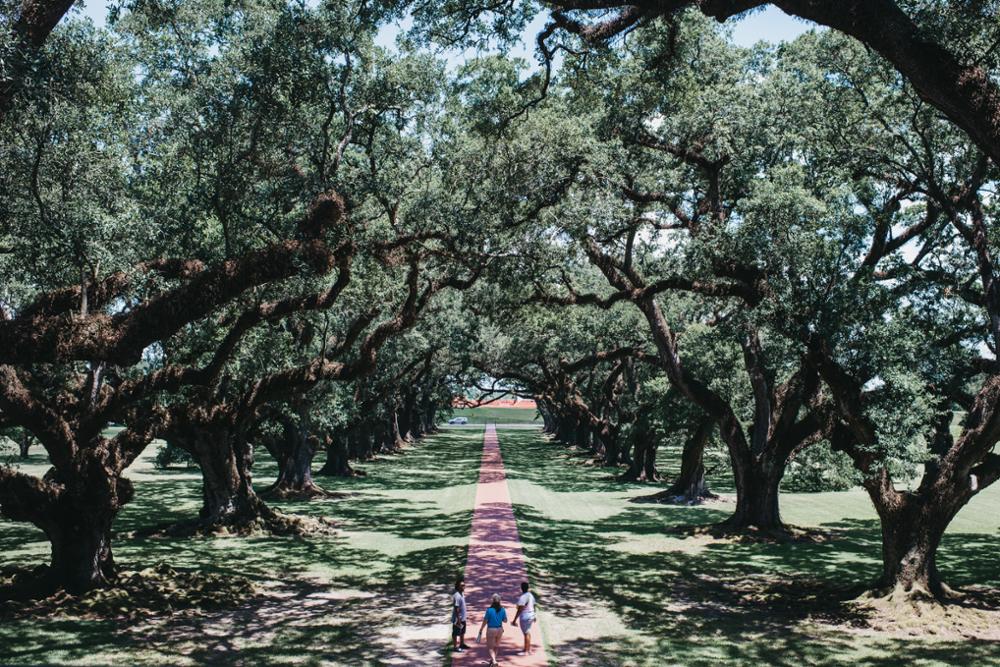
Oak Alley Plantation is known for its avenue of 28 century-old oak trees forming a 400-meter-long path that gave it its name (Oak Alley meaning "oak avenue"). These magnificent trees, which were already planted before the property was used for sugar cane cultivation, make it one of the most photogenic plantations in Louisiana.
The plantation owes its construction to Jacques Telesphore Roman, the brother of Louisiana's governor. It was this wealthy planter who had the estate built in 1837 for his wife. The main house (nicknamed "Big House" like all other plantation mansions because of the status difference compared to enslaved people's dwellings) is characterized by neoclassical architecture, with its 28 columns.
Currently owned by the Oak Alley Foundation, the property opens its doors to visitors. Guided tours are conducted by guides dressed in period costumes. In addition to visiting the mansion, the former slave quarter, and the gardens, you can discover exhibitions about enslaved people's lives, the Civil War, and sugar cane cultivation (from that era to today).
As a fun fact, Oak Alley Plantation was also used for filming several movies including Interview with the Vampire and appears in Beyoncé's "Deja Vu" music video.
Information and reservations for guided tours on oakalleyplantation.org
Houmas House Plantation
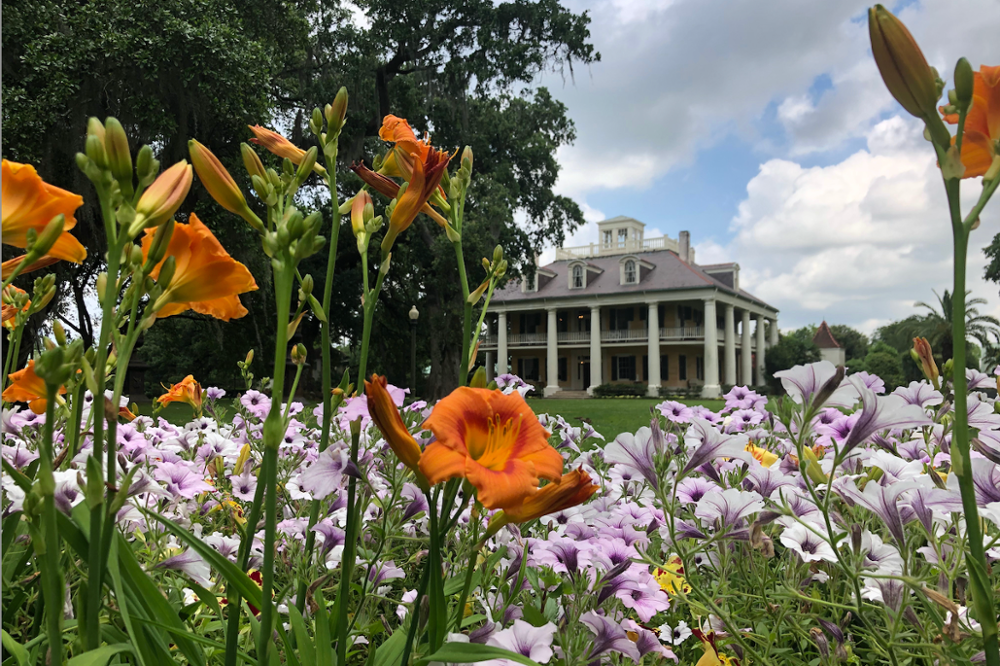
Houmas House Plantation gets its name from the Houmas Indian tribe that lived on this land, a large bend in the Mississippi River. The plantation came into being when Maurice Conway and Alexandre Latil claimed the land to build a plantation house in 1775. The small original house, built in French colonial style, was later purchased and modified in the years that followed.
It wasn't until 1840 that the grand Greek Renaissance-style mansion that we know today was built by the daughter of General Hampton, a hero of the War of Independence. The small original house was preserved and later attached to the grand mansion.
The estate was later resold in 1858 to an Irish planter, John Burnside, who developed the plantation into the largest sugar producer in America. At that time, nearly 1,000 enslaved people worked on the plantation.
During a visit to Houmas House, you can learn more about the plantation's 250 years of history, as well as visit the Great River Road Museum, a museum dedicated to the history of the Mississippi River and its importance in the areas of transportation, commerce, and Louisiana folklore.
Information and reservations for guided tours on houmashouse.com
Nottoway Plantation
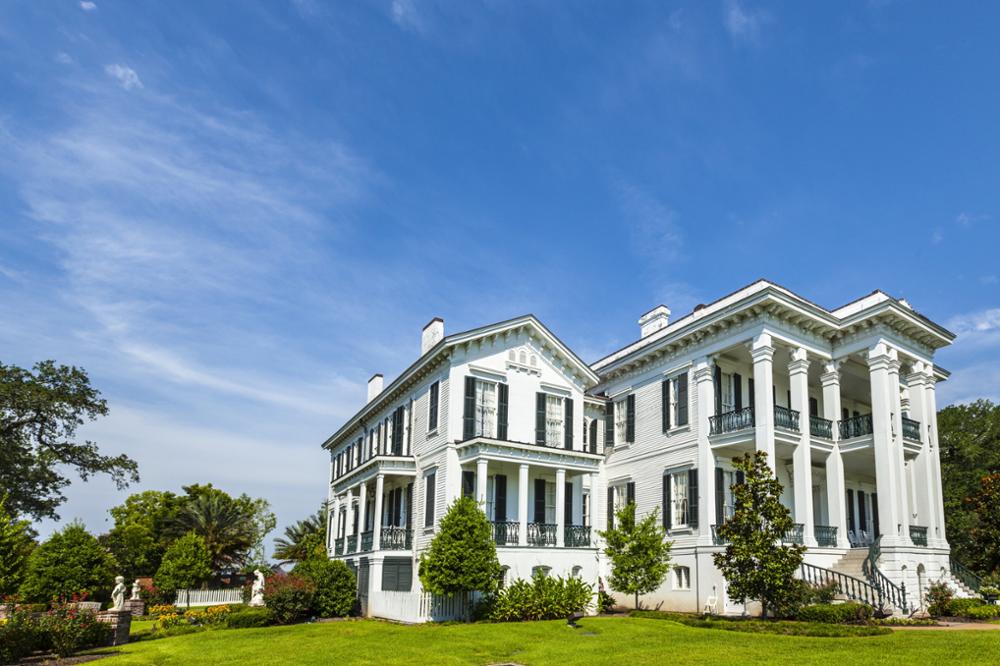
We conclude our selection with the largest Antebellum plantation in the South of the États-Unis and one of the most impressive estates on the Plantation Route: Nottoway Plantation. Nicknamed White Castle, it includes 64 rooms, 165 doors, and 200 windows and is characterized by Greek Renaissance architecture with some Italian influences.
It was built in 1849 by John Hampden Randolph to house his family of 11 children. He made his fortune in sugar cane cultivation and owned 4 plantations spread over 3,000 hectares. Even today, you can find sugar cane fields around the property.
As with most other plantations, many enslaved people continued to work as "free" people on the estate after the civil war and abolition of slavery. Some describe this as deliberate choice, but it should be emphasized that most of them didn't know where to go and didn't have the means to leave elsewhere…
Information and reservations for guided tours on nottoway.com
Where to stay on the Plantation Route?
While plantations are open to the public for tours, some even offer visitors the opportunity to stay on the property. Indeed, several have been converted into Bed & Breakfasts and are even considered the best accommodations in the region. Among the estates where you can stay are Oak Alley Plantation, Houmas House, and Nottoway Plantation.
Of course, you can also choose to stay at a motel or inn in the region, or visit a few plantations in a day before heading to Baton Rouge or New Orleans for the night.
How to visit the Plantation Route?
The easiest way to explore the Plantation Route is to rent a car. Since the estates are relatively close to each other, you can visit several in one or two days. To give you an idea of driving time, the Great River Road section covering the Plantation Route takes about 1.5 hours without stops.
If you don't want to embark on a road trip and drive during your stay, you can opt for an excursion departing from Baton Rouge or New Orleans. Most packages include transportation and guided tours of the plantations. Don't hesitate to contact us if you're interested!
How much time should you allow to visit the Plantation Route in Louisiana?
You won't be able to visit all the plantations in a single day. However, it is possible to spend a day on the Plantation Route visiting 3 estates, knowing that you should dedicate at least 2 hours at each one.
Note that most plantations are visible from the road. You can therefore easily spot them during your road trip, even if you can't visit all of them.
Attention!
Most plantations cannot be visited freely and require booking a guided tour. Be sure to check in advance for available time slots before visiting.
What is the best time to discover the Plantation Route?
The best time to visit the Plantation Route in Louisiana is from February to June. During this period, the weather is dry and temperatures are mild (68-77°F). Avoid August and September, which are hurricane season.
To learn more, also discover our travel package in authentic Louisiana.
Frequently asked questions
Prices vary depending on the plantation. On average, expect between 20 and 35 USD per adult for a guided tour. Some plantations like Oak Alley or Nottoway offer combined passes including accommodation. It's advisable to book online in advance to guarantee your time slot.
Yes, several agencies offer organized bus excursions departing from New Orleans. These packages typically include round-trip transportation and guided tours of 2 to 3 plantations. This is a good option if you don't want to rent a car.
Nottoway Plantation is often considered the most impressive as it's the largest antebellum estate in the South of the États-Unis, with 64 rooms. Oak Alley is the most photogenic thanks to its avenue of 28 century-old oak trees. Laura Plantation is ideal for those interested in Creole history.
Yes, several plantations have been converted into Bed & Breakfast accommodations. Oak Alley Plantation, Houmas House, and Nottoway Plantation offer rooms for overnight stays. It's a unique experience, though these accommodations are typically more expensive than a standard hotel.
Plan for at least 2 hours per plantation. It's possible to visit 3 plantations in a full day. If you'd like to take your time and stay overnight, plan for 2 days to fully enjoy the 70-mile route between New Orleans and Baton Rouge.
The majority of guided tours are offered in English. Laura Plantation is a notable exception, as it sometimes offers tours in French due to its Creole history and connections with the National Archives in Paris. It's advisable to check directly with each plantation before your visit.