Tequila vs Mezcal: What's the Difference?
Tequila or mezcal? That's the question to ask yourself when preparing a Mexican cocktail! These two agave-based spirits are both similar and different...
Tequila or mezcal? That's the question to ask yourself when preparing a Mexican cocktail! These two agave-based spirits are both similar and different… Production regions, manufacturing processes, distinctive tastes, and tasting recommendations: follow us on a journey of flavors across North America.
Tequila vs Mezcal: What are the Differences Between These Two Spirits?
Tequila and Mezcal are two spirits—that is, two liqueurs obtained through distillation, a technique that extracts alcohol from a liquid by heating it. Both originating from Mexico, they are made from agave: a succulent plant native to the arid zones of North America.
Resembling a cactus, it is distinguished by fleshy, rosette-shaped leaves. Used in numerous industries (cosmetics, biofuel, etc.), agave is the star ingredient in the production of Tequila and Mezcal—or more precisely, its heart: the piña. Once harvested, the piña (which resembles a pineapple) is cooked, fermented, and then distilled to produce the two spirits… which ultimately taste very different!
Their Origin and Production
The first major difference between the two spirits is their origin. While tequila is produced in only five states of Mexico—Michoacán, Guanajuato, Nayarit, Tamaulipas, and Jalisco (the most renowned)—mezcal can be produced in various parts of the country.
Moreover, although they come from the same plant, the two spirits do not come from exactly the same agave variety. Tequila is made exclusively from blue agave (otherwise, the spirit cannot be sold under this designation), while mezcal comes from several agave varieties—up to thirteen different ones!—including Espadin agave, particularly beloved by aficionados.
Worth Knowing Since 1974, tequila has been a beverage protected by a Protected Designation of Origin (PDO). To be considered as such, it must imperatively come from the aforementioned states and contain at least 60% blue agave—the remaining 40% typically comes from sugarcane alcohol (known as mixed tequila). Made from 100% blue agave, it is classified as premium tequila. |
Their Production Process
Although both spirits come from the heart of the agave and follow the same basic production process (harvesting, grinding and pressing, cooking, fermentation, distillation, and aging), they are nonetheless slightly different.
For tequila? The hearts are harvested at maturity, between 7 and 10 years. Before grinding them, it is necessary to separate the fibers from the piñas to extract the juice and obtain a highly concentrated agave juice. The hearts are then cooked in industrial ovens or autoclaves. Distillation is subsequently carried out in a copper or stainless steel alembic.
For mezcal? The production process requires agave hearts harvested between 7 and 15 years old. These are cooked whole in underground pits, heated by stones—which gives mezcal its distinctive smoky flavor. Distillation is carried out in a terracotta or wooden vessel.
Their Aging
The aging duration of these two spirits reinforces their specific characteristics—and determines their individual classifications:
Types of Tequila
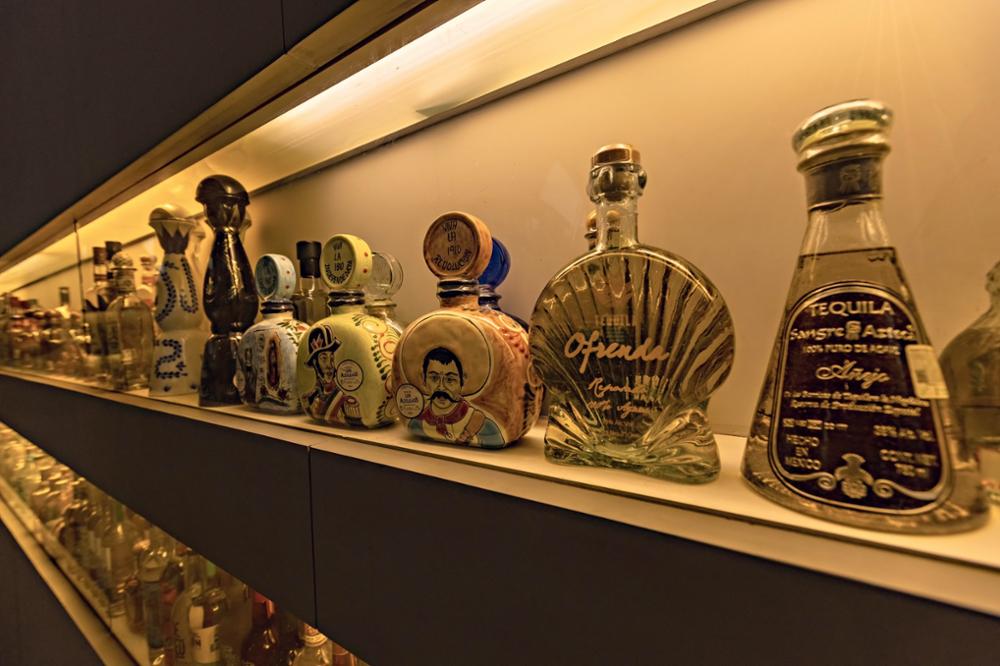
Tequila blanco (obtained directly after distillation, therefore not aged);
Tequila reposado: at least 2 months;
Tequila joven (or tequila gold): between 2 and 11 months;
Tequila añejo: aged for 1 to 3 years (extra añejo beyond that).
Types of Mezcal
Mezcal joven: up to 2 months;
Mezcal reposado: from 2 to 12 months;
Mezcal añejo: aged for at least 1 year.
Their Flavor
The origin, production process, and aging ultimately impart a distinctive taste to these two Mexican spirits… While tequila is prized for its vivid notes of agave, hints of caramel and wood (which offer a lingering taste), mezcal is celebrated for its smoky aromas and earthy notes!
How to Drink Tequila or Mezcal
Tequila can be enjoyed in several ways. You can drink it in the iconic "tequila shot" style: lick salt from your fingers, down a shot of tequila reposada in one go, then bite into a slice of lime. It's also excellent in cocktails, with tequila blanco (whose clean taste adds real character to the drink), such as the unmissable Tequila Sunrise and Margarita!
By contrast, mezcal is never consumed as a shot, but should be savored in small sips. To perceive all its flavors? It is recommended to drink it very chilled, then wet your lips with it to detect the top notes…
For a perfect tasting experience, it is best to hold a small sip in your mouth for a few seconds to experience an explosion of flavors… A typical cocktail? The Mezcal Paloma! After the aperitif comes dinner time… Here's an overview of the best vegetarian dishes to try in Mexico.
Frequently asked questions
The main difference lies in their production and raw material. Tequila is produced exclusively from blue agave, in 5 defined Mexican states, with cooking in industrial ovens. Mezcal can be made from up to 13 different agave varieties, across many regions of Mexico, and its hearts are cooked in underground pits, which gives it its characteristic smoky taste.
No. Although tequila is technically a type of mezcal (since it is made from agave), not all tequilas are mezcals in terms of designation. Tequila has had its own PDO since 1974 and meets strict criteria for origin and composition. Mezcal, on the other hand, benefits from a distinct designation and covers a much broader spectrum of varieties and regions.
Unlike tequila, which is sometimes consumed as a shot, mezcal is always savored in small sips. It is recommended to serve it very chilled, wet your lips with it to perceive the top aromas, then hold a small sip in your mouth for a few seconds to reveal all its smoky and earthy notes. A classic cocktail made with mezcal is the Mezcal Paloma.
Tequila blanco is bottled directly after distillation, without aging, giving it a clean and vivid agave taste. Tequila añejo, on the other hand, is aged for 1 to 3 years in oak barrels, developing softer notes of caramel, vanilla, and wood. Beyond 3 years, it is called extra añejo.
Both spirits come from agave, but not from exactly the same variety. Tequila is made exclusively from blue agave (Agave tequilana Weber), while mezcal can use up to 13 different varieties, including Espadin agave, the most common. This diversity of varieties contributes to mezcal's aromatic complexity.