Northern Parks and the Rockies
Three major parks spanning Montana and Wyoming, accessible June through September, where geysers, wolf packs and glacial lakes unfold over 8 to 10 days.
The Northern Parks and the Rockies stretch across three states: Montana, Wyoming and Idaho, with an extension toward Colorado for those wishing to venture further south. Our team has organized journeys to this region for years and we consider it the most wildlife-dense and volcanically dramatic corner of the United States. Elevations range from 1,800 to 4,000 meters, which shapes everything: weather patterns, road accessibility, vegetation and the visiting window, restricted to June through September for high-altitude sections.
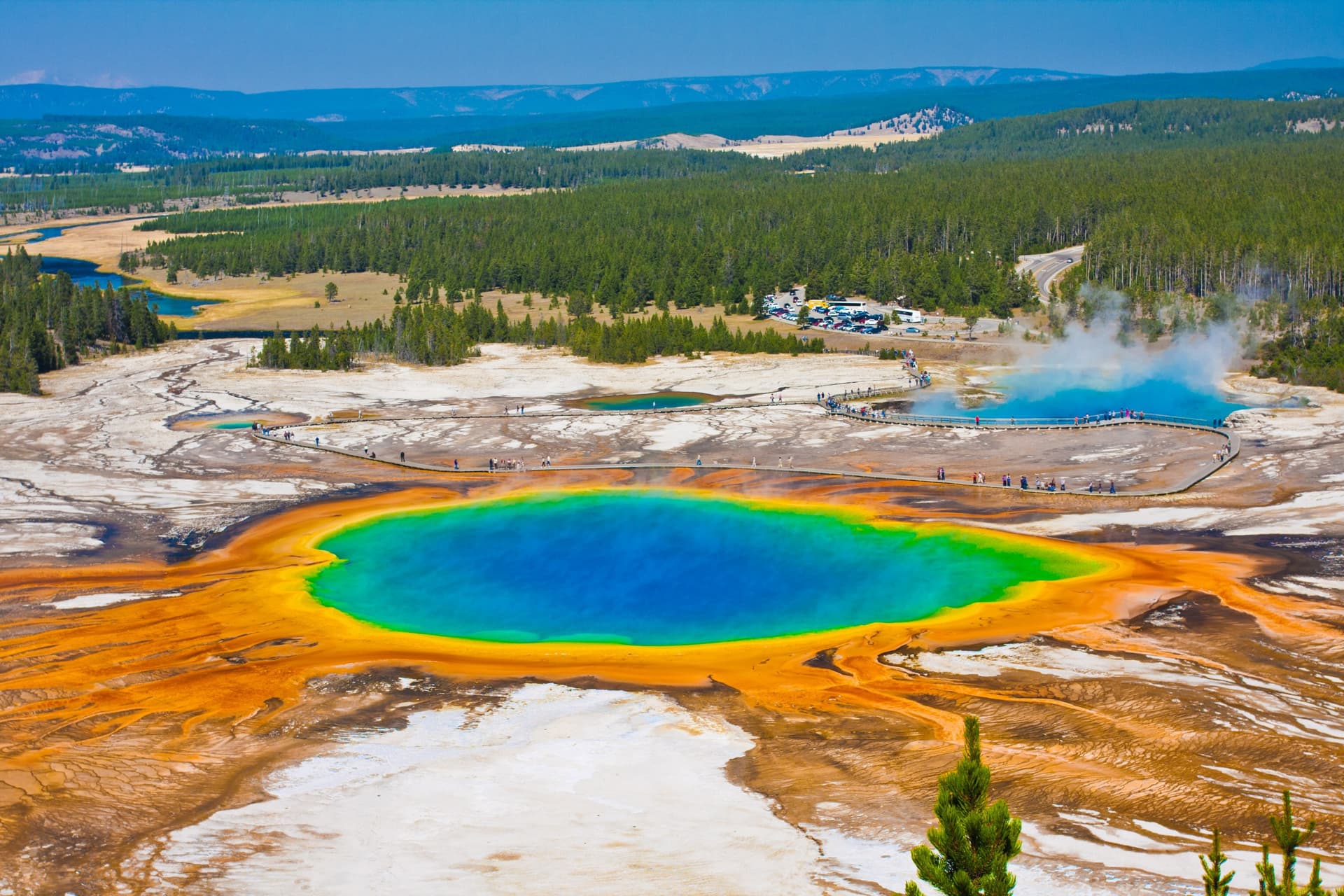
Yellowstone, established in 1872, sits within an active volcanic caldera. This explains the concentration of geysers—over 500 on the site alone—including Old Faithful, which erupts every 60 to 110 minutes. Lamar Valley, in the park's northeast, remains our morning rendezvous point for observing wolf packs reintroduced in 1995, bison herds numbering hundreds of animals, and grizzlies descending from the heights at dawn. Further south, Grand Teton aligns its granite summits above the Snake River and Jackson Lake, just an hour's drive from Yellowstone. The two parks flow naturally into one another.
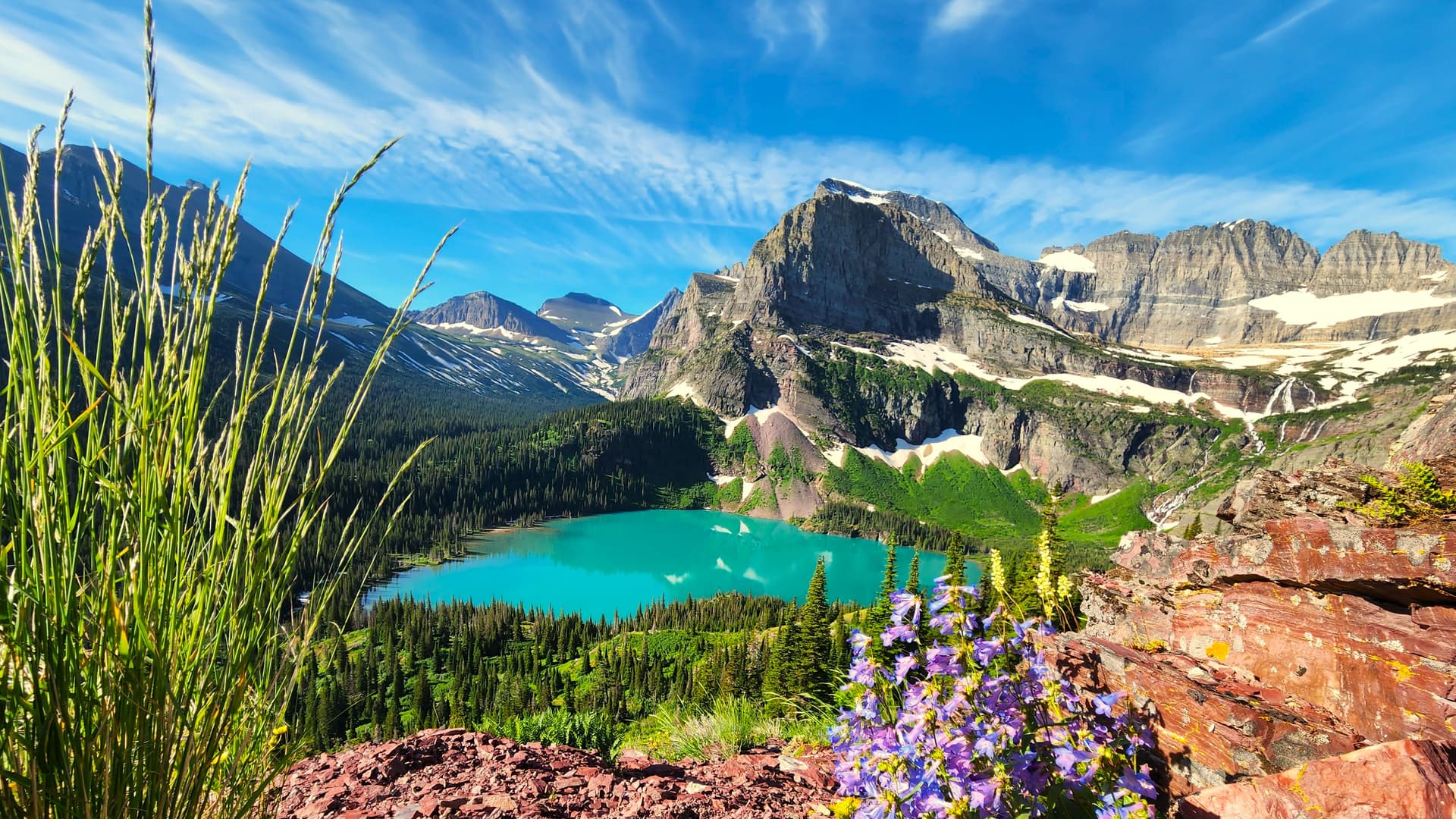
Glacier National Park, in northern Montana at the Canadian border, presents a different character: colorful sedimentary rock formations, turquoise glacial lakes, and the Going-to-the-Sun Road, an 80-kilometer scenic route that crosses Logan Pass at 2,026 meters. This road opens only between mid-June and early October depending on snowfall. The park still harbors roughly twenty active glaciers, compared to 150 in the nineteenth century. Wildlife includes mountain goats, bighorn sheep and black bears, more elusive than Yellowstone's grizzlies.
Logistical gateways are Bozeman, Montana for northern access to Yellowstone; Jackson Hole, Wyoming for Grand Teton and southern access; and Kalispell for Glacier. Jackson remains a former trapper town reinvented, with its iconic arches of elk antlers on the central plaza and ranches dotting the surroundings. Bozeman, more academic in character, hosts the Museum of the Rockies, a paleontology reference housing tyrannosaur fossils from the nearby Hell Creek formation. Cody, east of Yellowstone, retains its cowboy heritage with nightly summer rodeos and the Buffalo Bill Center.
Local culture draws from nineteenth-century trappers, ranchers and Native American nations. The Crow and Blackfeet reservations border the parks, and certain Blackfeet operators offer guided tours within Glacier, their ancestral territory. At table, you'll find grilled bison, river trout, and Montana steakhouse cuisine that remains faithful to its pastoral traditions. Small towns like Gardiner, Cooke City and Whitefish pulse with seasonal rhythms, quiet in winter, vibrant from June through September.
The economy rests on ranching, tourism and, more recently, the influx of affluent residents to Jackson Hole and Big Sky, reshaping local real estate. Traditional ranches coexist with historic log lodges such as Old Faithful Inn (1904) and Many Glacier Hotel (1915), both on the National Register. We book these systematically 10 to 12 months in advance for peak season.
Must-See
Lamar Valley at dawn. Departure at 5:30 a.m. from Mammoth Hot Springs to observe wolves, grizzlies and bison in Yellowstone's northeast section—binoculars and spotting scope essential.
Going-to-the-Sun Road. An 80-kilometer traverse of Glacier National Park from Lake McDonald to Lake Saint Mary, crossing Logan Pass at 2,026 meters, open mid-June through early October.
Old Faithful Inn. A lodge of twisted whitebark pine constructed in 1904, its hall soaring to 23 meters, situated 100 meters from Old Faithful geyser, which erupts every 60 to 110 minutes.
Snake River rafting. A 13-kilometer descent from Deadman's Bar in Grand Teton, facing granite summits, with opportunities to spot bald eagles and moose along the riverbanks.
Cody Rodeo. Nightly performances June through August in this town founded by Buffalo Bill in 1896, an eastern gateway to Yellowstone that retains its ranch-town identity.
When to Go
The optimal window runs mid-June through mid-September. Before June, the Going-to-the-Sun Road, Beartooth Highway and several interior Yellowstone roads remain closed by snow. After mid-September, early snowfalls can return quickly. July and August offer the most stable conditions, with daytime temperatures of 25 to 28°C in the valleys and 10 to 15°C at higher elevations, though these are also peak-traffic months: we recommend early departures before 7 a.m. at major sites. Nights remain cool throughout the season, around 5°C in July at 2,400 meters—thermal gear and windbreakers are necessary.
September, through the 15th to 20th, remains our preferred period: diminished crowds, early autumn colors on the aspens, elk bugling and heightened bear activity as they forage before hibernation. In winter, Yellowstone remains accessible only by snowmobile or tracked vehicle from Mammoth or West Yellowstone, constituting a separate journey to plan independently.
Practical Advice
We recommend 8 to 10 days for this region, departing from either Bozeman or Jackson Hole. An efficient itinerary combines 2 days at Grand Teton, 4 days at Yellowstone (to cover the geyser basins, Lamar Valley and Grand Canyon of the Yellowstone), then 3 days at Glacier following an internal flight or an 8-hour drive via Helena. Distances are substantial: Yellowstone's interior loop alone spans 230 kilometers, and multiple wildlife stops daily slow your pace considerably.
The region pairs naturally with the American West (Utah, Arizona) by extending south through Salt Lake City, or with a ranch stay in Wyoming for travelers seeking immersion in pastoral life. Accommodations range from historic lodges and wood cabins—clean and warm but unpretentious—except in Jackson Hole and Big Sky where upscale options exist. The ideal visitor: even occasional hikers, wildlife enthusiasts, contemplative travelers willing to rise early. For families with young children, the parks' Junior Ranger programs work well and structure the experience.