American West
Four states, seven national parks and the Navajo Nation within less than 600 km: the American West unfolds in a loop from Las Vegas, along long but excellent roads.
The American West we showcase to our travelers spans four states: Arizona, Utah, Nevada, and a strip of Colorado. It's the land of the Colorado Plateau, a geological uplift rising between 1,500 and 2,800 meters, carved over six million years by the Colorado River and its tributaries. The result is a succession of canyons, mesas, and arches in Navajo sandstone, their hues ranging from the cream white of Bryce to the vibrant red of Sedona.
Our typical starting point is Las Vegas, Nevada, because McCarran Airport concentrates domestic flights and vehicle rentals are most competitive there. Phoenix offers a relevant alternative if you want to begin with Sedona and the Apache country of the White Mountain. Between the two, distances are substantial: 440 km from Las Vegas to Page, 380 km from Page to Moab, 270 km from Monument Valley to the South Rim of the Grand Canyon. The roads, notably US-89 and Scenic Byway 12 in Utah, are in perfect condition but cross sectors with no gas stations for 100 to 150 km. We drive them in SUVs, sometimes in motorhomes for families wanting to sleep within the parks.
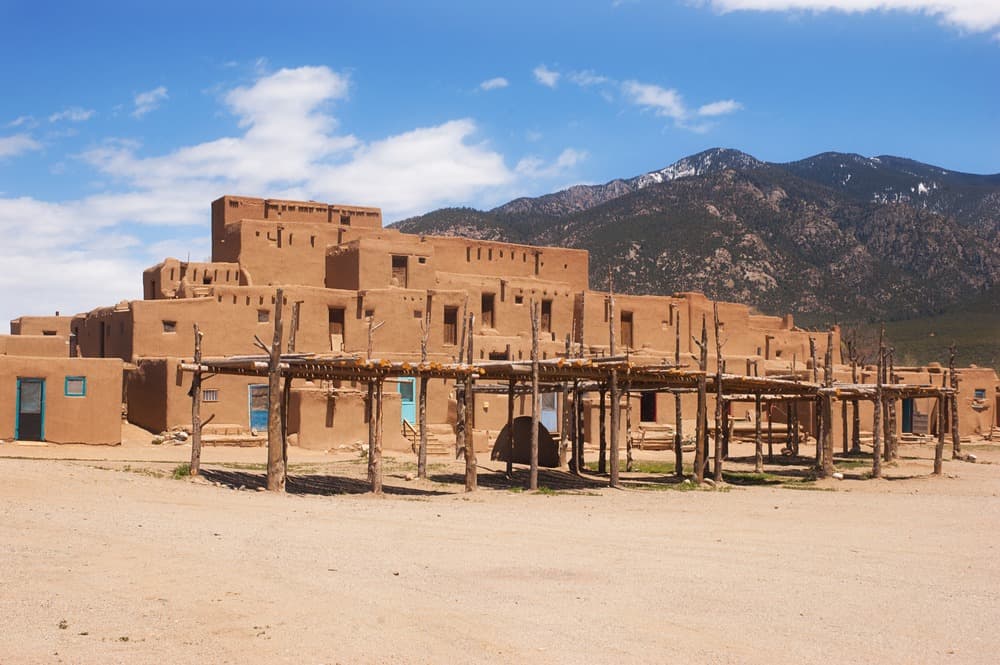
Native American presence structures much of the territory. The Navajo Nation, autonomous since 1923, covers 71,000 km² across Arizona, Utah, and New Mexico. Monument Valley, Antelope Canyon, and Canyon de Chelly are located on its lands. Access to these sites requires Navajo guides, which transforms the nature of the visit: you learn to read the landscape through Diné stories, taste fry bread and mutton stew in Kayenta or Tuba City. Further north, in Utah, Mormon culture still marks the villages of Kanab, Escalante, and Torrey, founded in the 1860s by Brigham Young's settlers.
The density of national parks is unmatched anywhere in the United States. Within a 600 km radius of Page, you'll find Grand Canyon, Zion, Bryce, Capitol Reef, Arches, Canyonlands, and Mesa Verde—seven major parks. Each has its own logic: Zion is explored from the canyon floor, on foot in the Virgin River for the Narrows hike; Bryce is contemplated from the plateau rim at 2,400 meters, with its amphitheaters of limestone hoodoos; Arches is approached via short 1 to 3-hour loops from the scenic drive. We tailor the sequence to fitness levels and available time, avoiding three consecutive parks without an urban break.
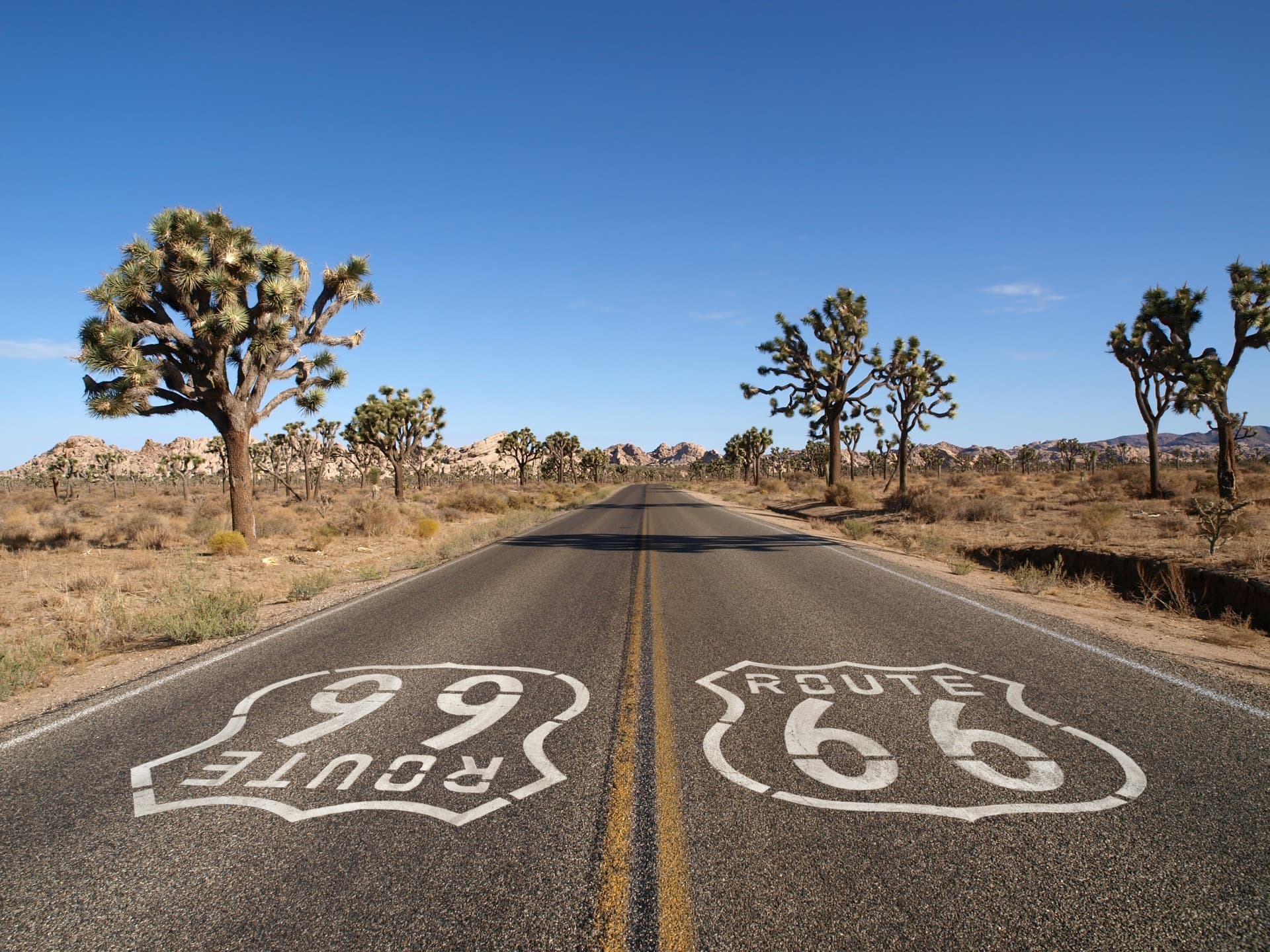
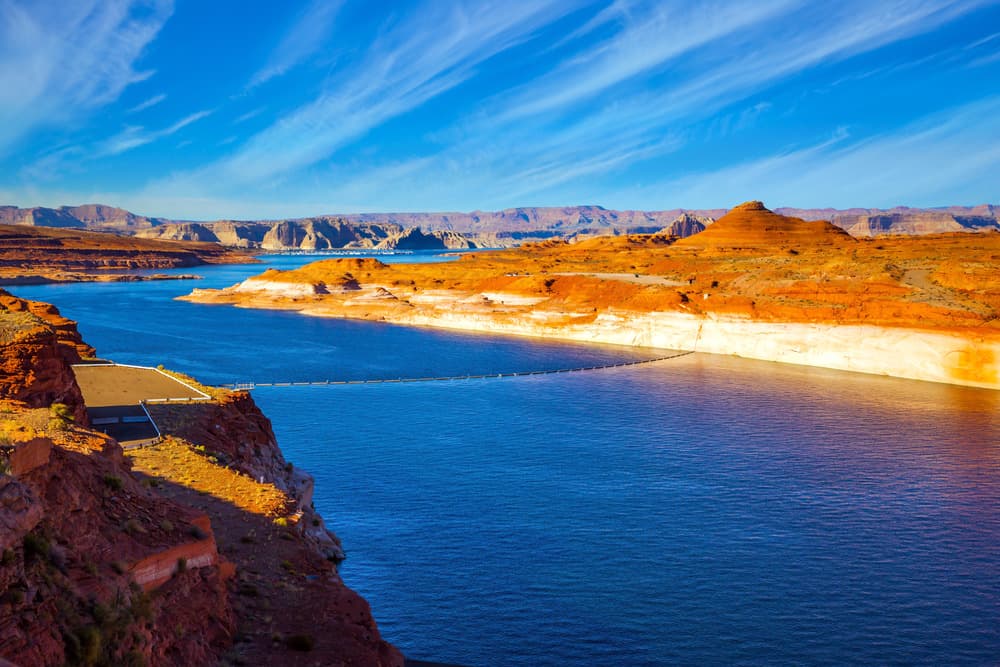
The stops we deliberately insert between parks often reshape the memory of the trip: a night in a lodge on Lake Powell's shores, dinner in Flagstaff at an old Route 66 saloon, a morning in Torrey at a bison ranch, a detour to the small town of Bluff to understand cohabitation between Mormons, Navajos, and Utes in San Juan County. Despite its crowds, Sedona retains appeal for the Cathedral Rock vortexes and Sinagua ruins at Palatki, accessible by permit.
Economically, the region lives off tourism (5 million annual visitors to the Grand Canyon alone), extensive ranching, and a few copper and uranium mines operating at reduced capacity. Las Vegas, with 2.3 million in its metropolitan area, remains the only true urban hub; elsewhere, towns rarely exceed 5,000 people, explaining the scarcity of lodging within parks and the importance of booking well in advance.
Must-See
The Narrows of Zion wading upstream. Water hiking in the Virgin River between Navajo sandstone walls narrowed to 6 meters, covering 8 to 16 km depending on water levels. Accessible from late May to October, closed during storms.
Sunrise at Mesa Arch, Canyonlands. The arch is backlit by the first sun over the White Rim, 300 meters below. Access via 15 minutes of hiking from Island in the Sky, 50 km from Moab.
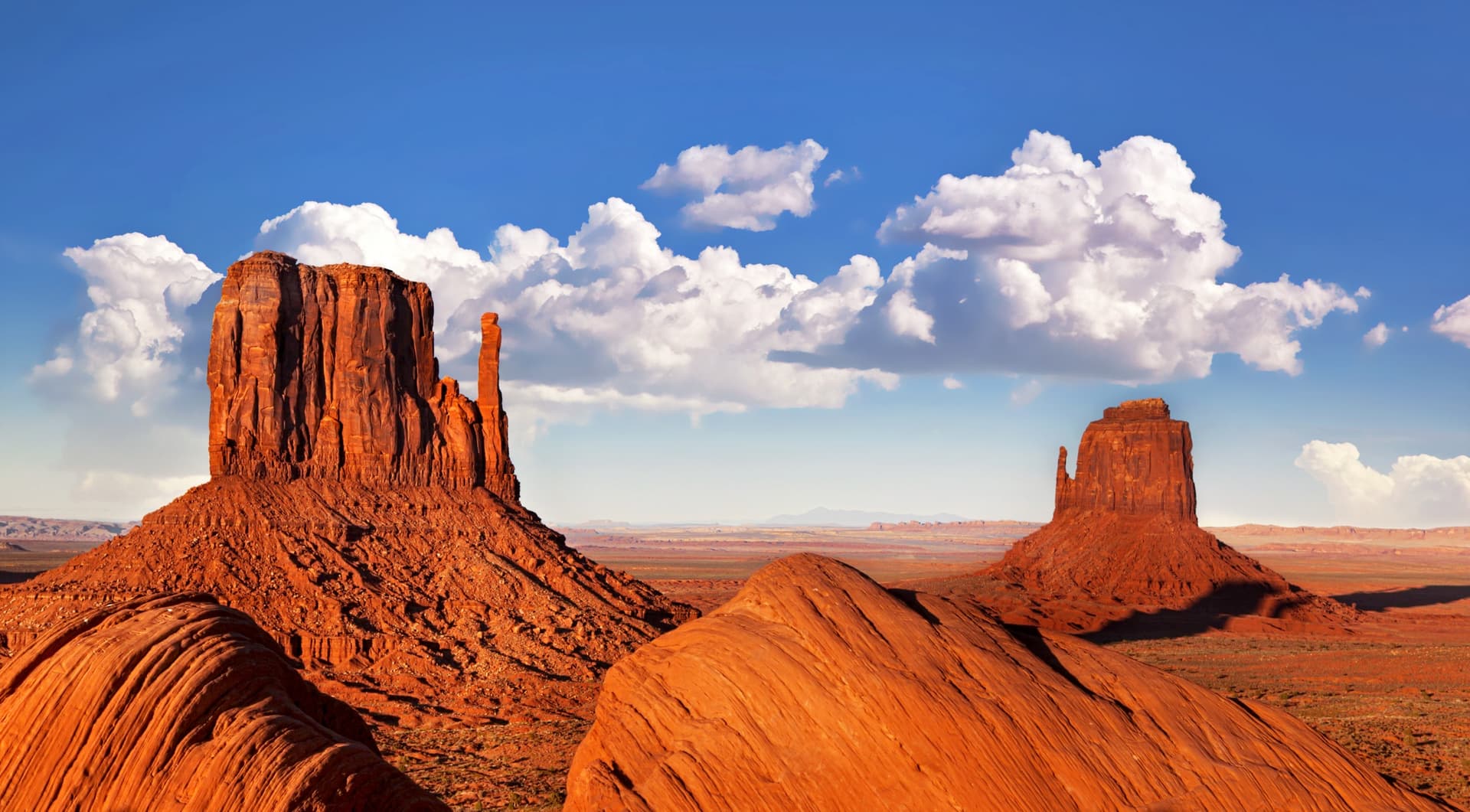
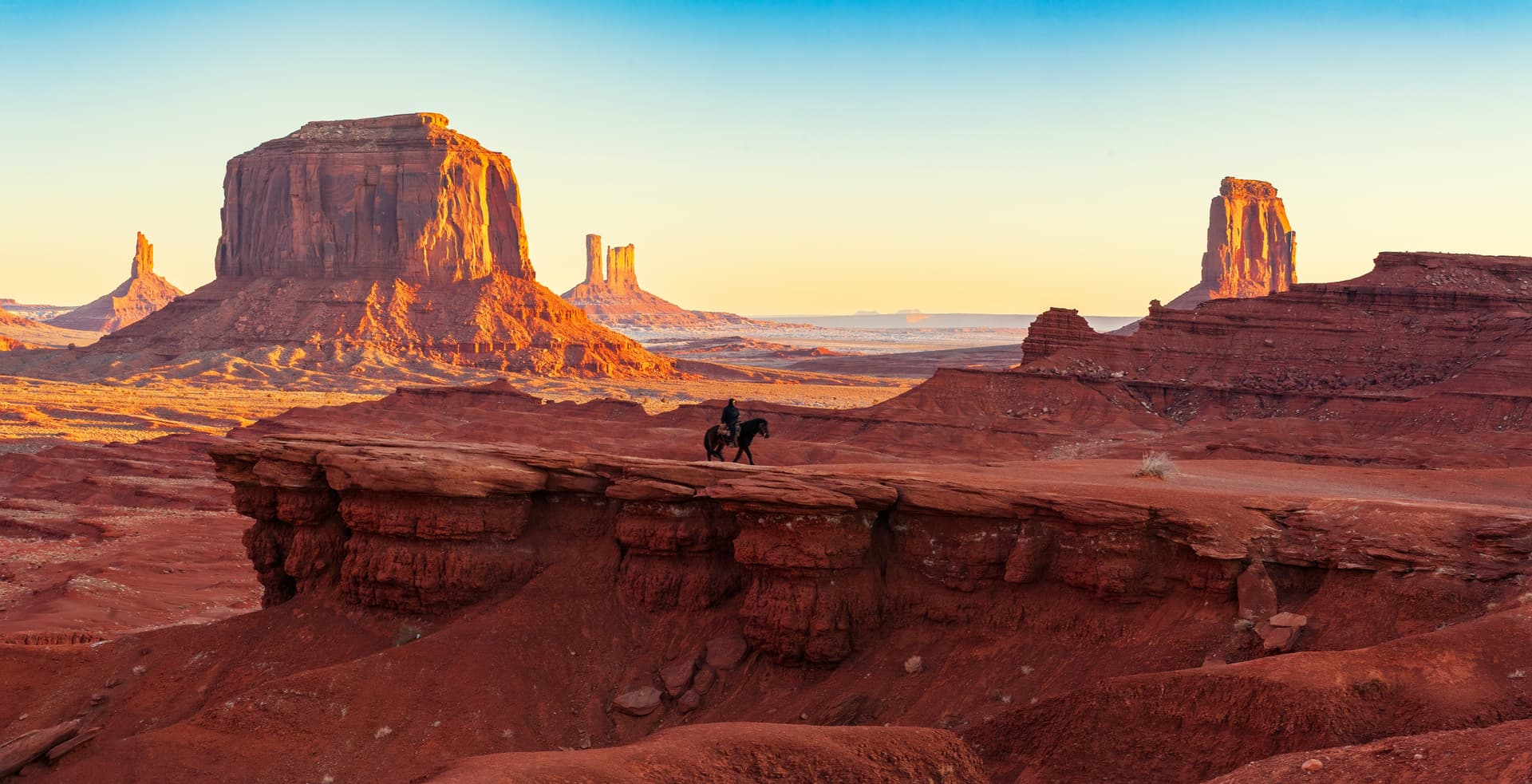
Monument Valley with a Navajo guide. 27 km off-road route in a 4x4 through the tribal valley, with stops at ancestral petroglyphs and lunch in a traditional hogan. The Loop Road is car-accessible, but interior sectors require Diné accompaniment.
Thor's Hammer hoodoo at dawn. Descent on the Navajo Loop trail at Bryce Canyon, 200 meters of elevation loss between limestone chimneys. Plan 1.5 hours round-trip, bring a windbreaker through June due to altitude.
Antelope Canyon Upper at midday. 1-hour guided tour through the Antelope sandstone slot, where vertical light rays reach the ground between 11 a.m. and 1 p.m. from April to September. Reservation required through Navajo operators in Page.
When to Go
We recommend two windows: mid-April through late May, and mid-September through late October. Spring offers daytime temperatures of 18 to 28 °C in Moab and Page, with cool nights (5 to 10 °C) at Bryce, which peaks at 2,700 meters. Autumn adds golden cottonwoods along waterways and declining crowds after Labor Day. July and August are best avoided in the canyons: the Grand Canyon floor regularly exceeds 40 °C, Phantom Ranch reaches 45 °C, and monsoon storms from mid-July through early September trigger flash floods in slot canyons (multiple casualties yearly at Antelope).
Winter has its own logic. Bryce under snow, between December and February, offers striking contrasts on the hoodoos, but Zion can be inaccessible at high elevations and the North Rim of the Grand Canyon closes from October 15 to May 15. We arrange it for travelers who accept a slower pace and shorter days, based in Springdale or Kanab.
Practical Advice
Eleven days on-site is, in our view, the minimum duration for a coherent circuit: Las Vegas - Zion - Bryce - Capitol Reef - Moab - Monument Valley - Page - Grand Canyon - Las Vegas, roughly 2,200 km of driving. Below 8 days, you'll need to skip interior Utah (Capitol Reef, Arches) and focus on the southern loop around Page. Travelers with 14 days can add Mesa Verde and Monument Valley on the Utah side, or extend through Sedona and Flagstaff. Lodges within parks (Bright Angel, Zion Lodge, Lake Powell Resort) book six to nine months ahead; otherwise, we stay in comfortable motels in gateway towns.
The region naturally combines with California by exiting Las Vegas toward Death Valley and the Sierra Nevada, or with Northern Parks and the Rockies by heading up Salt Lake City toward Yellowstone and Grand Teton. It suits independent drivers, families with children 8 and up (hikes remain modular), hikers, and photographers. It's less suitable for those seeking urban or culinary immersion: dining options remain basic outside Las Vegas, Flagstaff, and Moab.