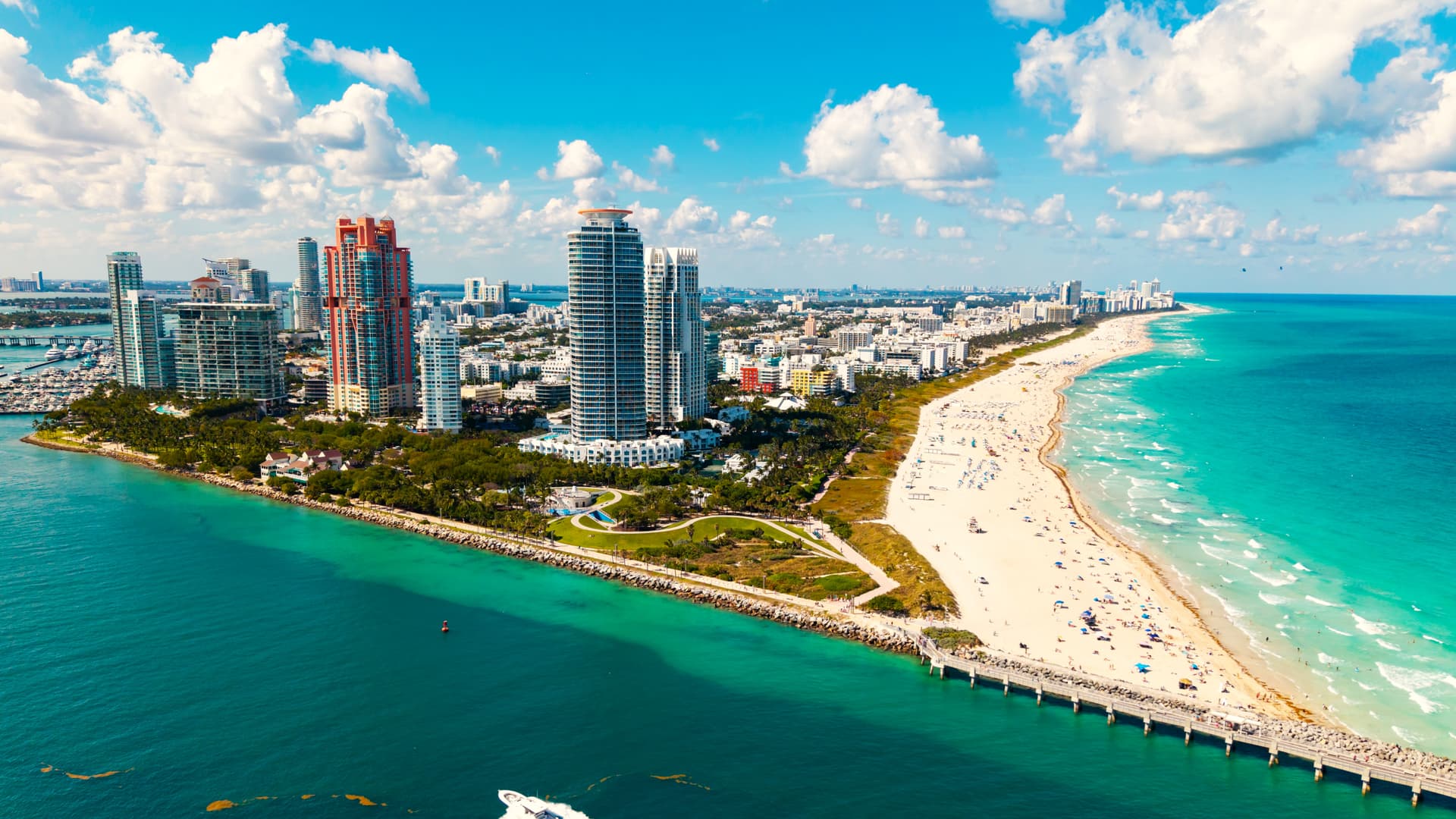
Florida and the Southeast
From Miami to Key West via 42 bridges, from the Everglades to Gulf beaches: Florida is the winter gateway to the États-Unis, accessible from December to April.
Florida and the Southeast form a subtropical band that starts north of Orlando and descends to Key West, 150 km from Cuba. Our team considers it the winter gateway to the États-Unis: while Chicago is buried in snow, Miami displays 25°C in January. The region reads as three parallel bands. The Atlantic coast, urban and dense, lines up Jacksonville, Daytona, Cape Canaveral then Miami Beach. The interior, flat and marshy, is dominated by Lake Okeechobee and the Everglades. The Gulf coast, calmer, stretches from Tampa to Naples with white sand beaches and shallow water.
Miami is not just an American city. Nearly 70% of its residents speak Spanish at home, a legacy of Cuban waves since 1960 and more recent Venezuelan, Colombian and Haitian arrivals. The Little Havana neighborhood, on Calle Ocho, retains its Cuban cafés serving cortadito for $1.50 and domino players at Maximo Gomez Park. Wynwood, a former warehouse zone, has concentrated more than 70 murals commissioned from international artists since 2009. South Beach lines its Art Deco buildings from the 1930s along Ocean Drive, the world's largest preserved collection of this style.
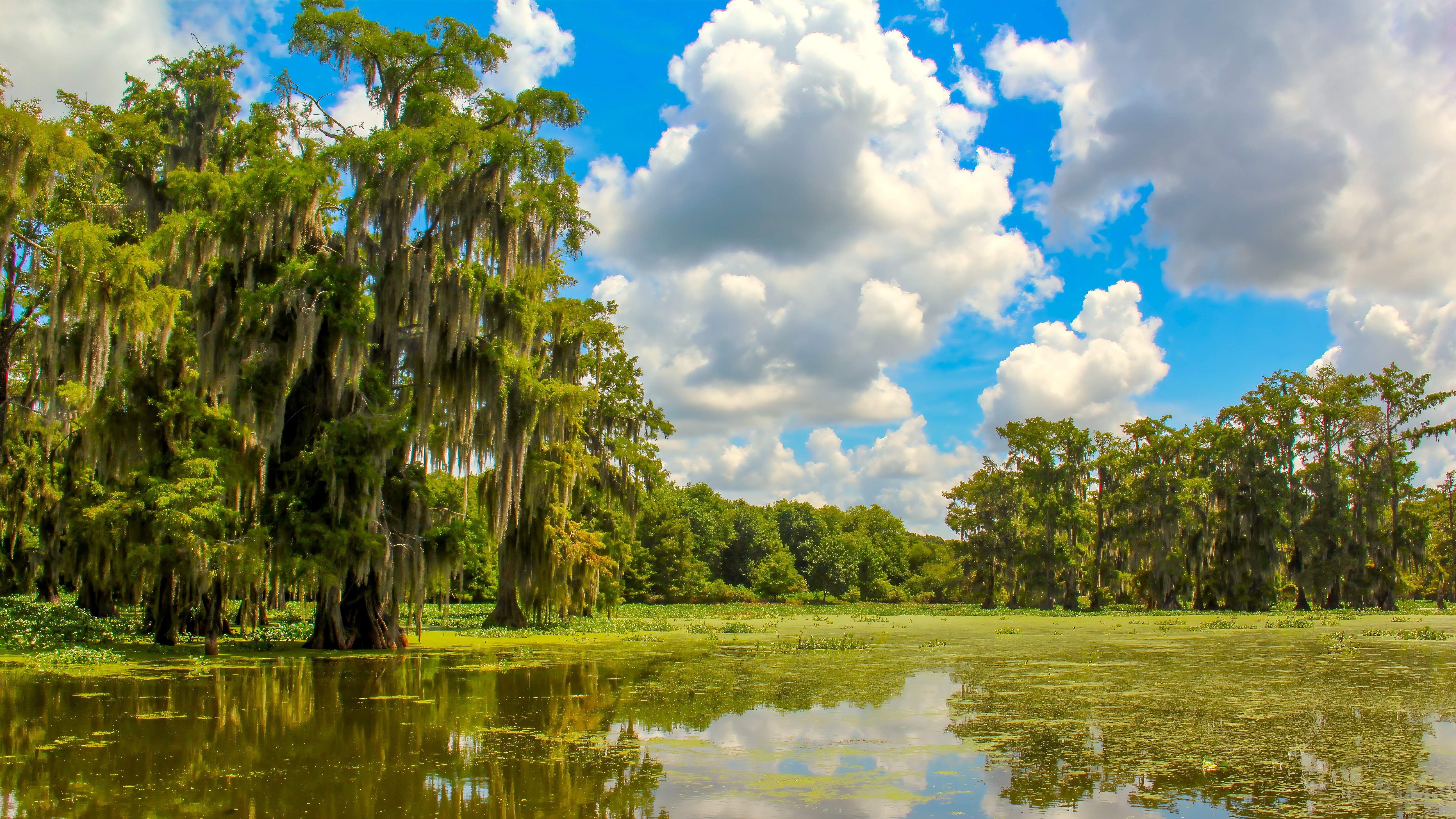
The Everglades, a national park since 1947, cover 6,100 km² of flooded grasslands that biologists call the river of grass—an 80 km-wide river flowing at 30 cm per day toward Florida Bay. It's the only place in the world where alligators and crocodiles coexist. The Miccosukees and Seminoles, peoples who took refuge here in the 19th century to escape deportation to Oklahoma, still live there. Their villages, such as the one on the Tamiami Trail 40 km west of Miami, offer airboat tours led by residents themselves.
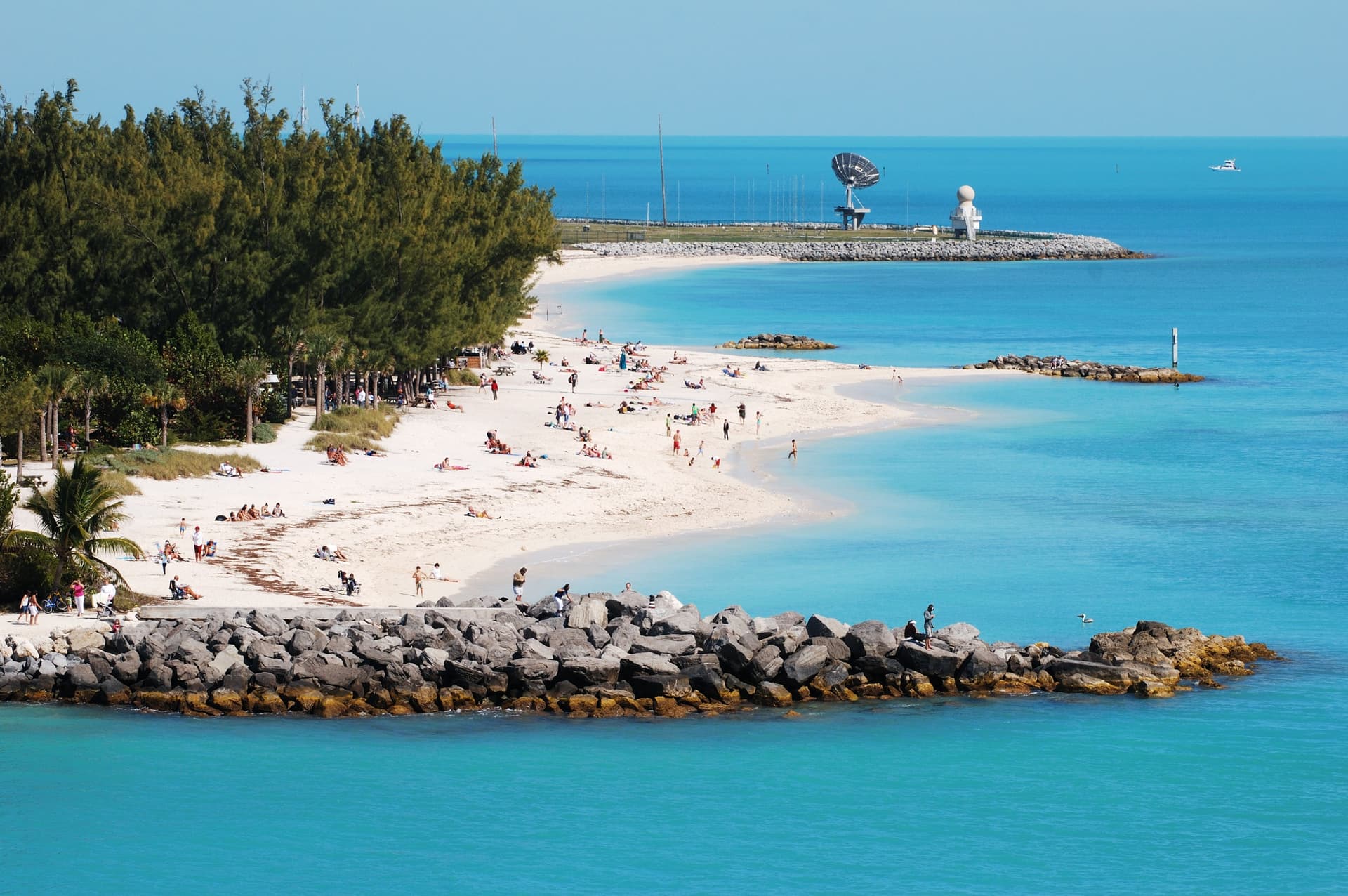
The Overseas Highway, or US-1, connects Key Largo to Key West via 42 bridges including the Seven Mile Bridge built in the 1980s alongside the remains of Flagler's railroad swept away by the 1935 hurricane. The Keys chain together like a strand of pearls: Key Largo for diving on John Pennekamp's coral reefs, Islamorada for tarpon fishing, Marathon, Big Pine Key with its endemic dwarf deer, then Key West, Hemingway's city where he wrote For Whom the Bell Tolls in his Whitehead Street house. The sunset over Mallory Square remains a daily ritual since the 1960s.
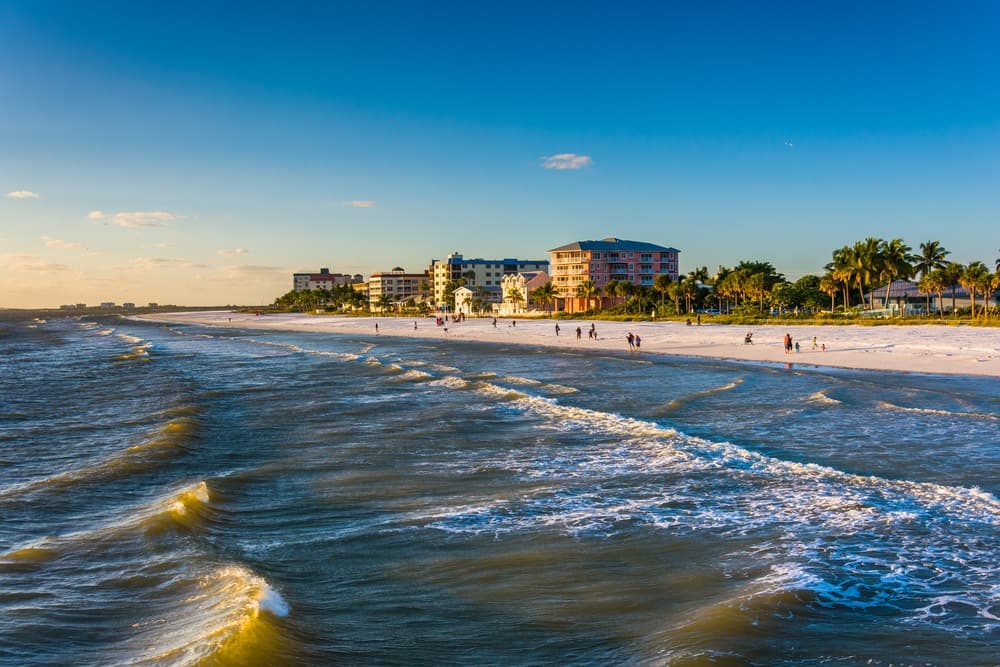
The Gulf Coast has a different rhythm. Sanibel Island, accessible via a toll bridge from Fort Myers, is known for its shells that walkers collect at low tide in the so-called Sanibel stoop position. Naples concentrates wealthy retirees and seafood restaurants where stone crabs, harvested from October to May, are served with a mustard-mayonnaise sauce. Further north, the region around Tampa and Saint Petersburg retains a working-class and Latino identity, with the Ybor City neighborhood founded by Cuban cigar rollers in the late 19th century.
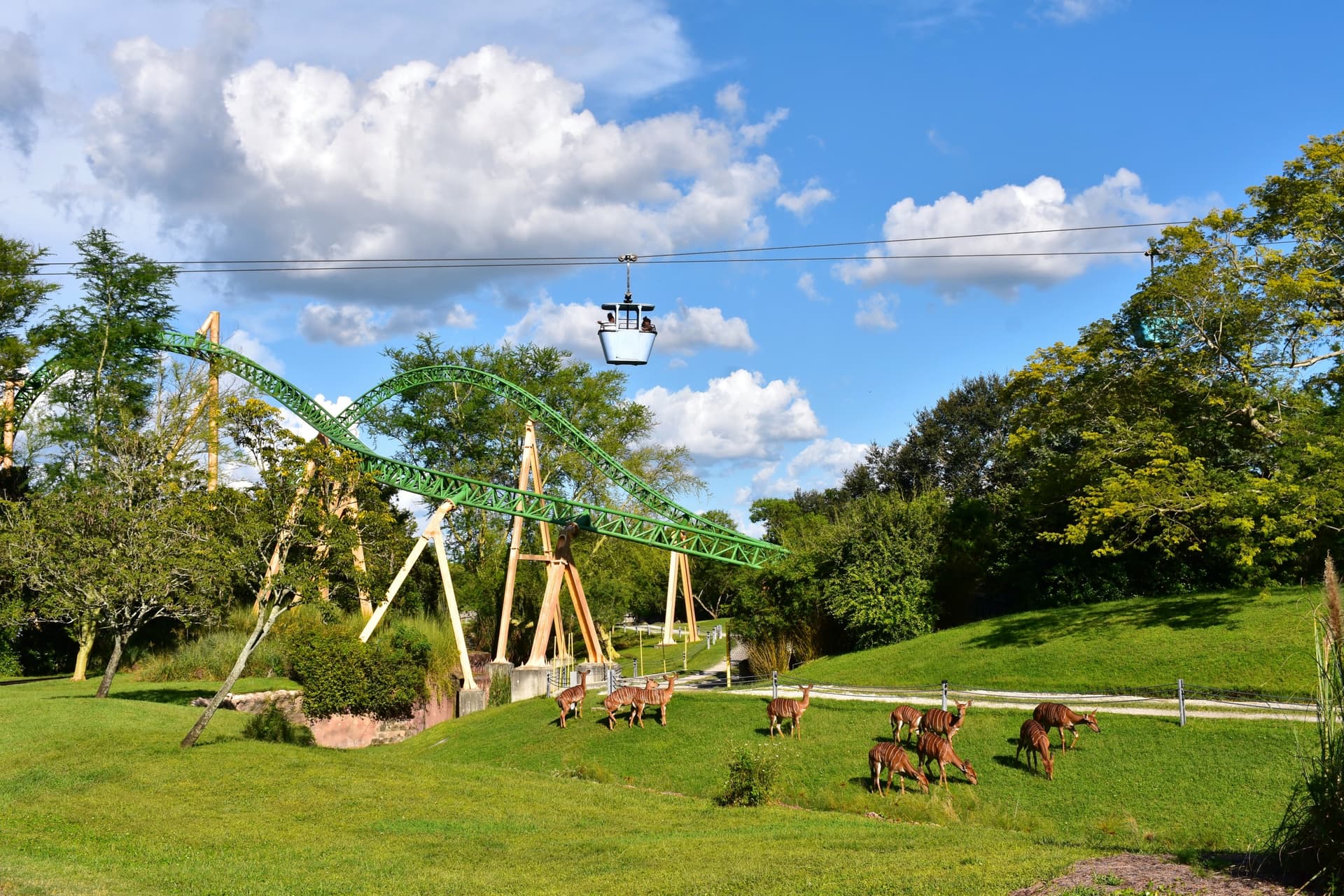
Orlando, 3.5 hours' drive from Miami, plays a different game: Walt Disney World opened there in 1971 on 110 km² of land purchased in secret, followed by Universal Studios. For families, it's often the stop that justifies the trip. For others, it's best avoided unless you're curious.
Must-see
The Overseas Highway to Key West. 180 km of bridges over shallow turquoise water, to explore in two days with a night in Islamorada for fishing or diving on the Alligator Reef wrecks.
Airboat tour in the Everglades. Departure from Everglades City or the Tamiami Trail, crossing sawgrass prairies at 50 km/h, spotting alligators and snowy egrets in the cypress hammocks.
Little Havana and Wynwood in Miami. Cortadito at the Versailles Restaurant on Calle Ocho in the morning, Wynwood murals in the afternoon: two neighborhoods 15 minutes apart that tell the story of contemporary Miami.
Diving on Key Largo's coral reefs. The John Pennekamp Coral Reef State Park has protected since 1963 the only living coral reef on the continental États-Unis, accessible by boat 30 minutes from shore, water at 24°C in winter.
Sanibel Island and its shells. Beaches oriented east-west that trap Caribbean shells, early morning walk at low tide, J.N. Ding Darling bird sanctuary with its white ibis and roseate spoonbills.
When to go
The best season runs from late November to April. Temperatures range between 18°C at night and 26°C during the day in Miami, humidity drops to 65%, rainfall is rare. It's also when the water stays at 24°C, comfortable for diving and snorkeling. The Everglades are accessible in the dry season, mosquitoes are scarce and wildlife concentrates around remaining water points, making observation easier.
From June to November, the wet season brings three drawbacks: heavy heat at 33°C with 85% humidity, daily afternoon storms, and hurricane risk. September and early October see the peak hurricane season, a period we strongly advise against, with several coastal areas potentially evacuated within 48 hours. May and late November remain acceptable windows, warmer but still dry, with fewer crowds at sites.
Practical advice
Plan for 8 to 12 days to properly cover the region: 3 days in Miami and the Everglades, 2 to 3 days on the Keys to Key West, 2 days on the Gulf Coast between Naples and Sanibel, plus Orlando if traveling with family. Miami International Airport is the logical entry point, with direct flights from Paris. Fort Lauderdale, 40 km to the north, sometimes offers better fares. A car is essential, distances are reasonable, US-1 and Interstate 75 called Alligator Alley connect both coasts in 2 hours.
The region combines well with the Deep South to extend toward New Orleans in 12 hours' drive or a domestic flight, or with the East Coast by heading up toward Charleston and Savannah. Comfort levels are high everywhere, from family motels in the Keys to Naples resorts. This destination is particularly suited to families with young children thanks to Orlando and the shallow Gulf beaches, to contemplatives drawn to the Everglades and divers. Those who enjoy mountain hiking and vast empty spaces will find more to their taste in the American West.