New Orleans
New Orleans
Birthplace of jazz, capital of Mardi Gras, showcase of Creole and Cajun cuisine: everything you need to know to prepare your visit to New Orleans.
Passing through Louisiana, don't hesitate to visit New Orleans. With its colonial old quarter, magnificent cathedral and vibrant nightlife, the city has plenty to captivate travelers. Music is everywhere in this cradle of jazz. Discover in our practical guide everything you need to know about this destination.
New Orleans, cultural capital of Louisiana
When one speaks of New Orleans, the image of a city that is lively, festive and cosmopolitan immediately comes to mind. The city's icon is the Saint Louis Cathedral, the oldest cathedral in the United States that continues to welcome worshippers to this day. Because it is one of the rare American cities to have been under French rule, because the Mardi Gras festival gives rise to enormous public revelry, because it holds the record for the number of historic neighborhoods, New Orleans is an essential stop when traveling as a couple or with family throughout Louisiana. You will be captivated by the deeply mixed society, where French, Spanish, Creole and African-American cultures blend together. You may even have the chance to encounter a fortune teller. "Easy to fall in love with, difficult to leave," assures the Tourism Board website. Set off for New Orleans and explore another facet of the United States.
Notes from the past
The city owes its name to the Duke of Orléans, who was then the regent of Louis XV, when French colonists conquered it in 1718. It was the administrative capital of Louisiana. After a long period in which the French, Spanish and English fought for control of the flourishing port, New Orleans temporarily returned to French rule in 1803. It joined the Union after Napoleon Bonaparte ceded Louisiana to the United States of America for the handsome sum of 15 million dollars.
The port played a central role in the city's economy. European immigrants enriched themselves through the exploitation of enslaved people, crammed haphazardly along the Mississippi River before finding buyers. These individuals were forcibly enrolled as laborers in sugar cane and cotton plantations. Despite repeated epidemics of yellow fever, despite the Natchez uprising, New Orleans was the richest city in the United States in the 1830s.
From French colonization, New Orleans retained English-speaking culture and the Catholic faith. From Spanish rule, it inherited a jovial and festive spirit. The waves of immigration that followed in the 19th century caused pronounced mixing of cultures. The city is an incredible blend of peoples, beliefs, traditions and cultures.
The modern city
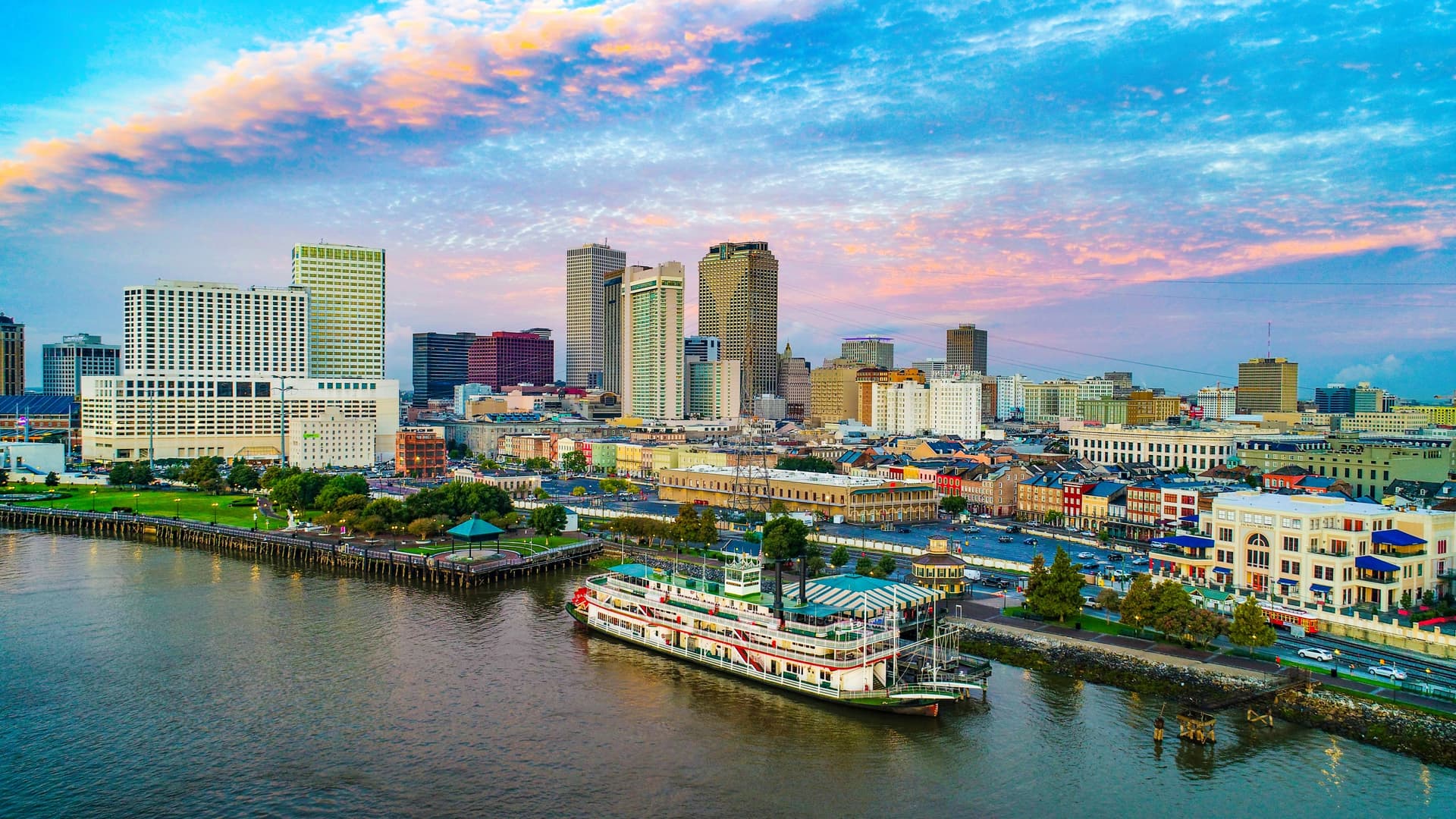
Close to the Gulf of Mexico, along the banks of the Mississippi, New Orleans is undeniably the historic and cultural heart of Louisiana. In the last 2019 census, the city was home to approximately 390,000 residents. Tourism is the engine of New Orleans' economy. The industry generates 9 billion dollars in revenue. It sustains over a hundred hoteliers and bed and breakfast managers and pays salaries to more than 72,000 active workers.
Must-see attractions
The city owes its reputation to its composite architectural heritage, where several influences coexist. The French Quarter, also known as the Old Quarter, is world-renowned. A score of other neighborhoods are filled with historic memories to explore.
Religious heritage
Saint Louis Cathedral
Facing Jackson Square, on the riverside, stands the Saint Louis Cathedral. The city's mother church was destroyed by fire in 1788 and restored 62 years later. The style of the façade wavers between French neo-Gothic and Renaissance. Two remarkable buildings flank the cathedral: the Cabildo, the Spanish city hall, and the Presbytery, which served as a courthouse before being converted into a museum.
Historic and cultural heritage
The French Quarter
As you stroll through the French Quarter, keep an eye open for Creole pavilions and residences, characterized by an immense courtyard and wrought iron balcony. Well-maintained gardens, fountains and patios will capture your attention. Many of these grand mansions have been converted into bars, hotels and bed and breakfasts. Notice this unusual bar, reportedly haunted by the ghosts of American officers and ladies of the night. Most pubs and drinking establishments are concentrated on Bourbon Street. In the center of the French Quarter is the French Market. It's worth visiting to sample Creole and Cajun specialties. Crawfish soups, grilled oysters, po'boy sandwiches, gumbo and jambalaya are just some of the unique flavors to awaken your appetite.
Jackson Square Park
Not far from Bourbon Street, Jackson Square, originally named Place d'Armes, is also a popular tourist attraction. The square is dominated by an equestrian statue of Andrew Jackson, the military general who led the Americans to victory at the Battle of New Orleans.
A procession of historic neighborhoods
Along the green streetcar line, admire the charming residences that line Saint Charles Avenue. Neoclassical churches in the Italian style, American colonial-style homes, Victorian or French mansions alternate along the street. Continue your visit to the Garden District, Canal Street and the Riverfront.
The National World War II Museum
This military history museum has been a favorite for many visitors since it opened to the public in 2000. Fighter planes, landing craft, submarines, multimedia documentaries and testimonies from former combatants come together to immerse you in the dark hours of the 1945 War. Worth visiting in the business district of New Orleans.
Preservation Hall
Don't miss this historic building if you find yourself strolling along Bourbon Street. Opened in the early 1960s, it sets itself the mission of preserving the traditional style of New Orleans jazz.
Musical heritage
Visiting New Orleans also means meeting a city of music lovers where several legends of jazz, soul and rhythm and blues were born. From morning to evening, the musical atmosphere envelops the cafés, restaurants and taverns. Groups of musicians perform in the streets and concert halls abound.
Mardi Gras Festival
Louisianans perpetuate a French tradition dating back over three hundred years: Mardi Gras carnival. This celebration is the most important event in the city. It takes place each year before Lent. On the program: processions of floats, masks adorned with feathers and pearls, and the sale of king cakes (a local pastry).
When to visit?
The best time to visit New Orleans is in the spring or fall, when the weather is pleasant, away from scorching heat and intense rainfall. Many cultural events and festivities take place in spring. In March, temperatures range from 12°C to 23°C. October is slightly warmer, with temperatures below 27°C and above 17°C.
Tourism's success is facilitated by well-developed road and air connections. Louis Armstrong International Airport in New Orleans serves domestic and international flights. There are no direct flights from European capitals. Plan for approximately twelve and a half hours of flight time between takeoff from Paris-Orly airport and landing at Louis Armstrong airport in New Orleans. Duration varies depending on the connecting city.
Eighteen kilometers of road separate the airport from downtown. For stress-free transportation, simply pay the fee for an airport shuttle that will take you to the business district for approximately $24. For budget-friendly transport, board the RTA's public Airport Express bus and ask the driver to stop at Canal Street.
Getting around
Visiting the French Quarter, French Market or neighborhoods with beautiful historic homes can easily be done on foot. That said, tourists will appreciate taking a cruise along the Mississippi River aboard a steamboat or paddlewheel boat: an original way to explore New Orleans.
You'll love...
- The Renaissance façade of Saint Louis Cathedral;
- Listening to jazz music on the church steps;
- Admiring the buildings of the French Quarter;
- Attending a jazz concert;
- Visiting Preservation Hall;
- Taking a stroll through Jackson Square;
- Touring historic homes;
- Exploring the French Market and savoring local delicacies.
Want to discover this destination?
Our local advisors design your tailor-made trip.