Natchez
Natchez
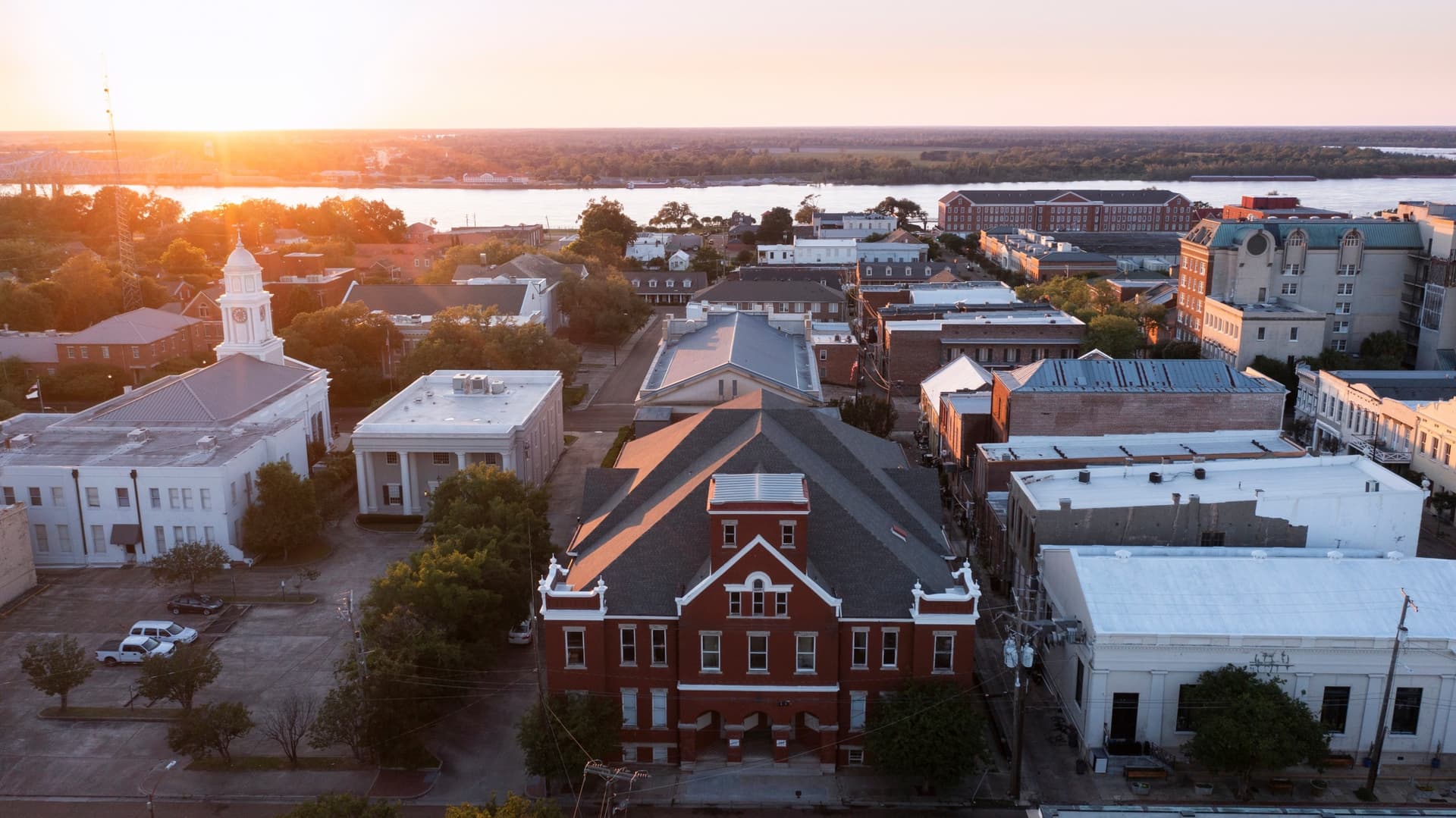
Mississippi's oldest city, Natchez showcases 600 antebellum homes perched on the river bluffs. Practical guide: what to see, when to visit, how to get there.
Discover Natchez, a city where every street tells a unique story. Nestled along the Mississippi River, it stands as a true jewel of the South, blending a rich cultural heritage with vibrant, contemporary energy. Its iconic historic homes welcome fascinating and diverse local characters, offering an authentic and immersive experience. Beyond its storied past, Natchez has evolved into a haven of modern hospitality, with a dynamic and welcoming community. Come explore this city where tradition and modernity intertwine, and let yourself be charmed by its hidden treasures and warm atmosphere. You are all welcome here!
History
Natchez, Mississippi's oldest city, boasts a rich and tumultuous past. Founded in 1716, it began as a French outpost established north of the New Orleans region on Natchez territory. Built by Bienville and named Fort Rosalie in honor of the wife of Minister Pontchartain, the fort was designed to exploit the region's agricultural potential, quickly attracting numerous settlers. However, the initially cordial relations between the Natchez and French deteriorated in 1723 following several incidents.
French colonists had settled on small plots distant from the fort, while two large concessions extended further out. Natchez proved to be one of the finest settlements for tobacco cultivation. In 1728, Captain Détchéparre, the fort's new commander, decided to occupy land already used by a Natchez village to establish a plantation. Though initially reluctant, the Natchez accepted the occupation, but on November 29, 1729, they suddenly attacked the French colonists. This raid claimed approximately 250 French lives—145 men, 56 children, and 35 women. Fifty women and children, along with nearly three hundred enslaved Africans, were captured. In response, the French, allied with the Choctaw, exacted their revenge a year later. Captured Natchez were sold into slavery in Saint-Domingue, and the retaliation contributed to the dispersal and extinction of the tribe as an organized entity.
The city was rebuilt in 1731 and took the name of the defeated tribe. Natchez rapidly became the capital of the middle Mississippi, though it later lost much of its prominence. Following the Treaty of Paris, Natchez came under British control, then Spanish, before briefly returning to French administration. Ultimately, it was acquired by the Americans through the Louisiana Purchase in 1803, an agreement negotiated between Jefferson and Napoleon I.
Today
Natchez, though regarded as Mississippi's oldest city, holds a promising future. It is a historic city, a pleasure to explore on foot, combining dynamism with beauty, where preservation of the past and progress converge harmoniously. Today, Natchez is an accessible, livable city, and particularly attractive to entrepreneurs. Its reputation for friendliness and hospitality is well-deserved, offering inclusion and a sense of community.
What to See and Do in Natchez?
- Magnolia Hall: Beautifully restored by the Natchez Garden Club, this house-museum immerses you in the city's history. Explore its rich past and appreciate its refined architecture.
- The Natchez Trails: Enjoy the Natchez trails, a blend of urban streets and scenic pathways along the Mississippi bluff.
- Natchez Cemetery: Delve into the cemetery's fascinating history and discover compelling stories of notable figures at rest, including the tragic Louise and the enslaved York.
- Grand Village of the Natchez Indians: Explore this 52-hectare site featuring prehistoric Native American mounds and a reconstructed Natchez dwelling.
- Natchez Museum – African American Heritage Center: Discover powerful exhibitions on the Forks of the Road slave market and the Rhythm nightclub fire.
Popular Natchez Attractions
- Longwood
- Rosalie Mansion
- Stanton Hall
- Dunleith Historic Inn
- Mary Basilica
Climate
Natchez enjoys a humid subtropical climate with varied weather throughout the year. Spring is particularly pleasant for outdoor activities, with daytime temperatures ranging from 70 to 84°F and nighttime temperatures between 50 and 59°F. Summer days are warm, reaching around 90°F, while nights remain mild at approximately 70°F, providing the perfect setting for enjoying the nightlife.
In autumn, temperatures remain comfortable, reaching about 70°F during the day in November and dropping to 45–50°F at night. Even in winter, Natchez retains a mild climate, with daytime highs around 50°F in January and nighttime lows hovering near 39°F.
When to Visit?
To experience Natchez under optimal conditions, plan your visit for August. Conversely, January, February, and December are best avoided due to less favorable weather, with lower temperatures and limited sunshine.
To reach Natchez from New Orleans International Airport (MSY), begin with a 25-minute bus ride to the New Orleans bus station. From there, board an Amtrak train for a 2-hour 9-minute journey to Brookhaven Station. Finally, take the road for approximately 1 hour and 29 minutes to reach Natchez. This route combines rail and car travel for direct arrival in this charming city.
Want to discover this destination?
Our local advisors design your tailor-made trip.