Chicago
Chicago
America's third-largest metropolis, Chicago blends iconic skyscrapers, Impressionist art, blues clubs, and urban beaches along Lake Michigan.
Known for its skyscrapers, rich artistic heritage, sports tournaments, and designer boutiques lining the Magnificent Mile, Chicago, the Windy City, attracts nearly 55 million visitors each year. Here's a closer look at the destination's main attractions.
Chicago's great architectural ensembles unfold along Lake Michigan. Who hasn't heard of Chicago, America's third-largest metropolis after New York and Los Angeles? Chicago's status as a global city is confirmed in the fields of culture, sports, cinema, architectural achievement, and the preservation of fine arts. Which of its many tourist attractions will capture your attention? Is it the history of famous criminals like Al Capone and John Dillinger? Is it the breathtaking view from the 103rd floor of Willis Tower? Is it the satisfaction of admiring a painting by Monet, Picasso, or Chagall at the Art Institute of Chicago? Or perhaps the roaring excitement of fans when the Cubs play at Wrigley Field? Whether you're traveling with family or your loved one, you can count on Chicago for a memorable vacation.
History
Etymology
The nickname "Windy City," by which Chicago is also known, has nothing to do with the climate. It is used in the sense of "much ado about nothing"—a touch of irony from New York's leaders to belittle Chicago, which was selected over New York to host the 1892 World's Fair. Despite the politicians' declarations, the festival could not be inaugurated on time.
Origins
Situated along the shores of Lake Michigan, Chicago was once inhabited by the Potawatomi and Ottawa nations. In the eighteenth century, the arrival of the British, French, and Americans who fought for control of the region forced them into exile to reservations in Oklahoma. Using force, American officers seized Native American lands in 1795, transforming a fetid, marshy place into a rapidly developing city that would become Chicago.
Key dates in the city's history
1833: The municipal charter of Chicago is drafted. It would gain city status four years later. The beginning of sanitation operations. The Chicago Board of Trade, established in 1848, contributed to the city's economic development.
October 1871: Chicago was devastated by a massive fire. Nearly 300 people perished in this disaster, and over 100,000 were left homeless.
War between management and workers. Law enforcement fired on rebels.
1890 to 1935: Numerous gangs moved into the city, which became a hotbed of corruption, insecurity, and organized crime.
Chicago recovered rapidly after the fire. The following decades saw a flourishing of exceptional monuments that the city takes pride in to this day. The Chicago School of Architecture launched the City Beautiful movement.
1989–2010: After the economic depression of the 1950s, skyscraper projects rebounded, now incorporating sustainable development concerns.
Today: Chicago, a global tourist destination
With 2.69 million inhabitants, the Windy City commands one of North America's largest metropolitan areas. The taming of once-rebellious nature, now managed through development projects, allows for a wide variety of agricultural products. Chicago is part of the vast plains of the Corn Belt and the Great Lakes highway network. The Rust Belt region also has its nerve center in Chicago.
This globally-oriented city holds numerous records: the sixth most prosperous city in the world, fifth most visited destination in the United States, and home to the second-tallest building in America. Chicago's reputation is built on its cutting-edge skyscraper architecture. Tourism is growing rapidly, with a wide array of attractions including retail stores along the Magnificent Mile, beaches along Lake Michigan, art museums, Michelin-starred restaurants, theaters, and concert halls.
What to see and do in Chicago
The number of points of interest and attractions in Chicago is virtually limitless. A week is not too long to explore the riches of this incredible city. If you don't have time to see everything, take inspiration from our selection to plan your sightseeing itineraries.
Architectural and urban heritage
Immerse yourself in the magic of the urban landscape by strolling down Michigan Avenue, one of the most renowned streets in the United States. Michigan Avenue is to Chicago what Wall Street is to Manhattan or Rodeo Drive to Los Angeles. Architectural treasures multiply along the boulevard.
John Hancock Center
This glass-walled building stands out with its distinctive cross-braced facade, which is celebrated by professional architects worldwide. On the 94th floor sits 360 Chicago, an observation platform offering stunning views of Chicago's buildings and surroundings.
Willis Tower
Designed in 1974 by architect Bruce Graham, Willis Tower was the world's tallest skyscraper for 25 years after its completion. Although several buildings have since surpassed it, the view from its observation terrace—the Skydeck—remains spectacular. After taking in the panorama, don't miss the brief presentation on the building's history.
Chicago Water Tower
Located at the heart of the Magnificent Mile, this Gothic Revival tower once served as a drinking water cistern. It is the only public building to have survived the Great Fire of 1871.
Parks and recreation
Millennium Park
Among Chicago's most recent additions is Millennium Park, a large entertainment complex that opened in 2004. A botanical garden, fountain, ice skating rink, and lush lawns make it a recommended spot for relaxation. The highlight of the visit is the Cloud Gate, a monumental steel sculpture weighing 110 tons that is considered Chicago's main symbol. It's hard not to appreciate the water spectacle of Crown Fountain with its human figures! There's no doubt about it—this is the place to come for a breath of fresh air away from urban hustle and bustle.
Lincoln Park
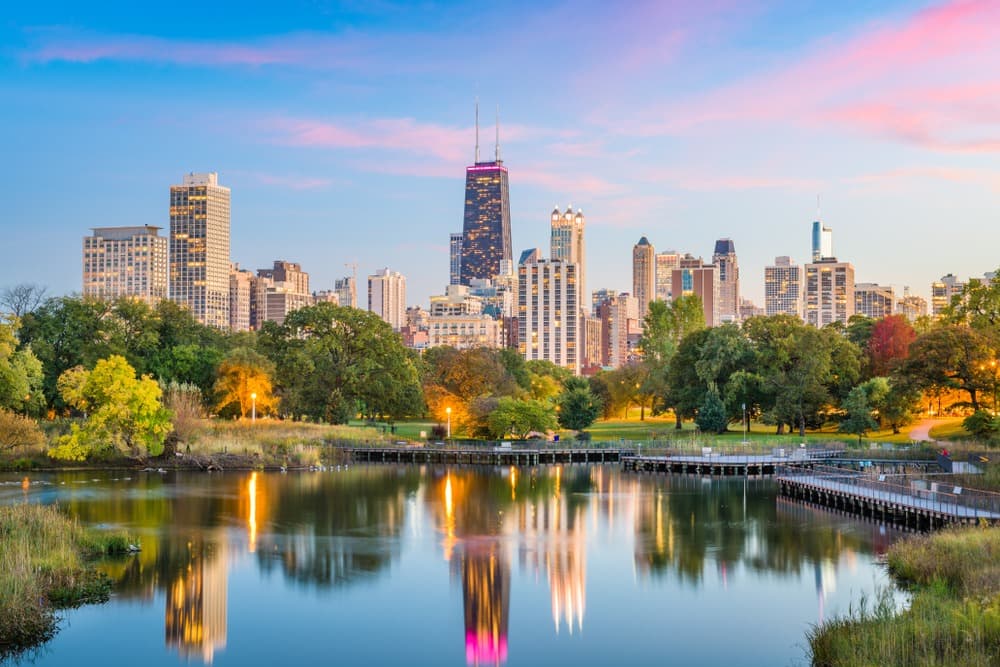
Covering an area of 490 hectares, Lincoln Park is Chicago's largest public park. It features a zoo, botanical garden, water lily pond, and two interesting museums.
Navy Pier Park
Navy Pier Park offers an experience similar to Millennium Park, with the difference that it features a large number of activities for children. From floral observation at the Crystal Garden to the musical carousel and remote-controlled boat cruises, families will find plenty to do. Adults can enjoy a Shakespeare performance. The park also includes cafes, shops, and dining establishments.
Prestigious museums
The exceptional richness of Chicago's museums is a major highlight. Art lovers won't risk being bored.
Art Institute of Chicago
Lining Michigan Street, the Art Institute of Chicago is not only the city's largest museum, but also the most captivating. More than 300,000 artworks are on display. Art enthusiasts will be delighted to recognize Water Lilies by Claude Monet, On the Terrace by Renoir, A Sunday Afternoon on the Island of La Grande Jatte by Georges Seurat, The Child's Bath by Mary Cassatt, among other remarkable works. The institution boasts the world's most important collection of Impressionist and Post-Impressionist paintings outside of Paris. Beyond paintings, you'll also observe photographs, sculptures, ceramics, textiles, architectural drawings, and many other treasures.
If time is short for visiting all of Chicago's museums, this is the one to prioritize. Otherwise, you can continue to the museum of contemporary art.
Museum of Science and Industry
Hats off to the magnificent limestone facade! The museum building is a masterpiece of Beaux-Arts architecture. Inside, you'll discover, among other things, a Nazi submarine seized by Americans during World War II. The Museum of Science and Industry ranks as Chicago's fourth most visited attraction.
Field Museum
Opened in 1893, the Field Museum emphasizes anthropology and natural sciences.
Practical information
Chicago's climate
Being part of the Great Lakes Region, Chicago experiences a humid continental climate with warm summers. January is the coldest month of the year, with lows around –8.6°C and highs around –0.6°C. Snowfall is significant, with marked differences between coastal regions and the interior. July is the hottest month, with temperatures around 23°C and reaching up to 28°C.
Despite its moderate altitude, Chicago's winters are legendary for their severity due to cold Arctic air sweeping across North American landmasses.
When to visit?
To make the most of your Chicago vacation, plan your departure between April and May or between September and October. The weather is pleasant and warm during these seasons. Numerous festive and cultural events take place throughout the city.
It's possible to book a direct flight to Chicago from major European cities like Paris. Budget-friendly offers often include one or two stopovers.
You'll love…
- Admiring the impressive collection at the Art Institute of Chicago;
- Taking in the iconic landmarks along Michigan Avenue;
- Capturing photos of the Museum of Science and Industry's facade;
- Enjoying a carousel ride at Navy Pier;
- Spending an afternoon stroll through Millennium Park;
- Dining at a Michelin-starred restaurant.
Want to discover this destination?
Our local advisors design your tailor-made trip.