Cheyenne
Cheyenne
A western capital at the gateway to the Rockies, Cheyenne reveals mythical rodeos, working ranches, and railroad heritage between Denver and Yellowstone.
Nestled at the foot of the Rockies, just an hour and a half drive from Boulder, Cheyenne is the capital and largest city of Wyoming. Founded in the 19th century during the railroad's expansion, it grew with the rhythm of locomotives and vast bison herds. While urbanization has transformed its landscape, Cheyenne has preserved its western identity and timeless charm. Between museums, historic buildings, and still-active ranches, the city offers an authentic immersion into the Wild West. A stop in Cheyenne means diving into a fascinating history, at the crossroads of Colorado and the Rocky Mountains.
History
The city's origins date back to July 4, 1867, when the first tents were pitched on the current site. This founding coincided with the construction of the transcontinental railroad by the Union Pacific Railroad, which crossed these Great Plains territories.
Named after the Cheyenne Native American tribe that once inhabited these lands, the city experienced rapid growth. Nicknamed "Hell on Wheels" in its early years, it attracted railroad workers and soldiers from the nearby fort to its numerous saloons.
The 1880s marked Cheyenne's golden age. The cattle industry transformed this small town into a prosperous city, so wealthy it became the richest city in the world at that time.
Today
Today, Cheyenne remains a major agricultural, commercial, and railroad hub with more than 65,000 residents. Wyoming's capital has preserved its authentic Wild West spirit while modernizing. The historic downtown is home to 19th-century buildings, art galleries, and gift shops.
Visitors can enjoy outdoor activities in the mountainous surroundings, explore the city's iconic attractions, or stay in hotels. The city remains famous for its Cheyenne Frontier Days, the world's largest outdoor rodeo.
What to See and Do in Cheyenne?
1. Cheyenne Frontier Days
Cheyenne Frontier Days attracts thousands of visitors each year. Created in 1897, this outdoor rodeo runs for about ten days at the end of July. You can watch bull-riding competitions, parades, and country music concerts. This festival showcases the cowboy traditions that forged the city's identity.
2. Big Boots
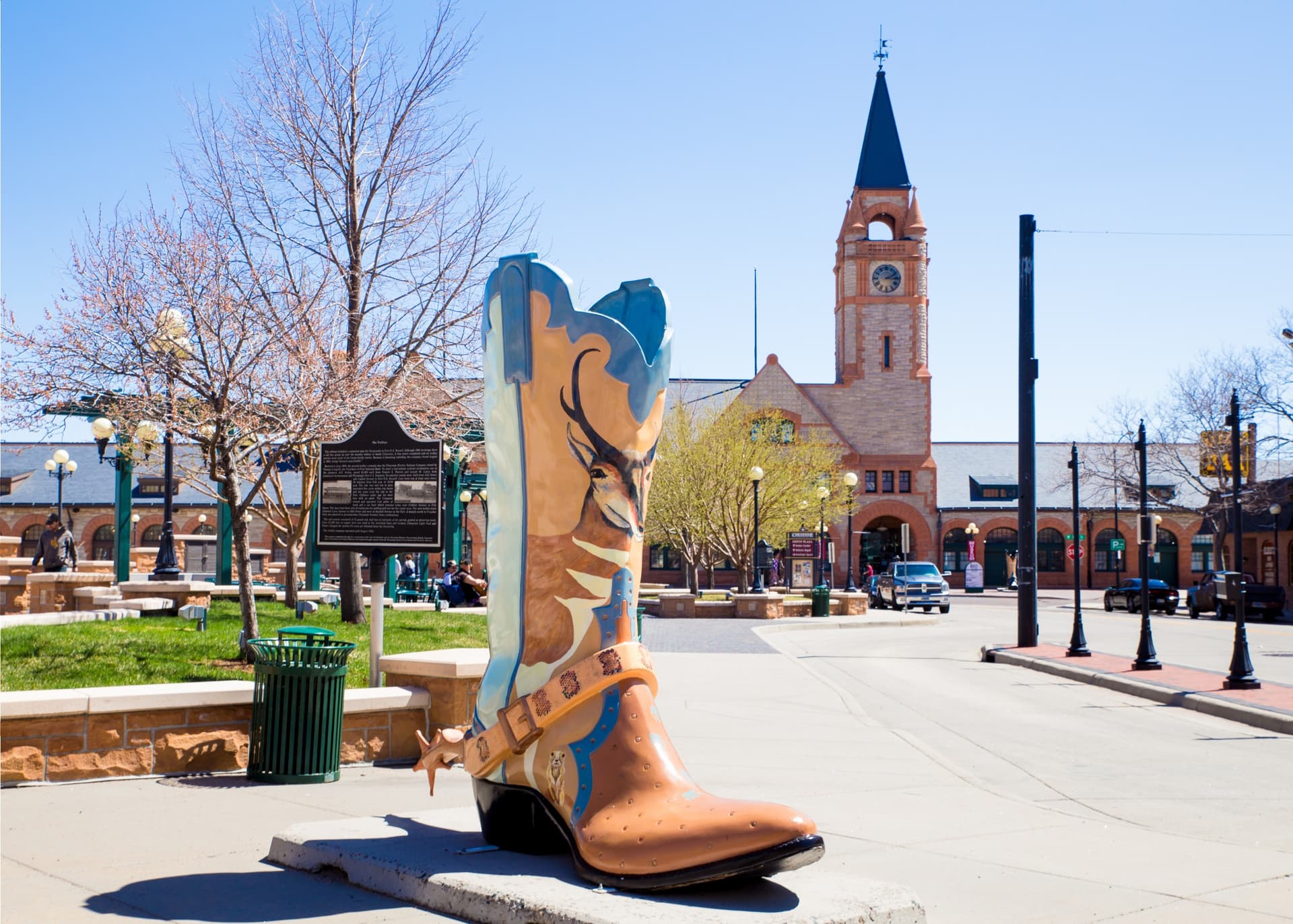
Throughout the downtown streets, you'll notice enormous decorated cowboy boots created by local artists. These sculptures, standing over six feet tall, form a fun and artistic trail. Each work tells a story from Wyoming's history or culture. Following the Big Boots is an original way to explore Cheyenne while discovering its vibrant neighborhoods.
3. The Museums
Cheyenne is brimming with museums. Among the most interesting are:
- Nelson Museum of the West
This museum displays varied collections related to the Wild West. You'll discover antique weapons, Native American artifacts, military uniforms, and western paintings. It perfectly illustrates the meeting of cultures that shaped Wyoming.
- Wyoming State Museum
The Wyoming State Museum offers a comprehensive overview of the state. It presents geology, wildlife, history, and local culture.
- Cheyenne Depot Museum
Housed in the former Union Pacific station, the Cheyenne Depot Museum testifies to the railroad's essential role in founding and developing the city. You'll discover railroad exhibits, miniature locomotives, and the history of railroad workers who shaped the West.
- Cheyenne Frontier Days Old West Museum
The Cheyenne Frontier Days Old West Museum preserves over a hundred carriages and horse-drawn vehicles. Located on the rodeo grounds, it also traces the event's evolution and displays costumes, posters, and memorabilia linked to this tradition.
- Cowgirls of the West Museum
The Cowgirls of the West Museum honors pioneering women of the West. Through objects and stories, it pays tribute to their role in Cheyenne's history and cowboy traditions.
4. Wyoming State Capitol
The Capitol is a must-see during your Cheyenne exploration. Built in the late 19th century and topped with a gold-leaf dome, it symbolizes the city's prosperity during the cattle industry's golden age. The tour reveals Wyoming's political history and beautifully restored rooms.
5. Cheyenne Botanic Gardens
The Cheyenne Botanic Gardens is a peaceful retreat in the heart of the city. You'll find tropical greenhouses, themed gardens, and an area designed for children. Admission is free, making it an ideal activity for a family outing or a nature break.
6. Southeast Wyoming Welcome Center
The Southeast Wyoming Welcome Center is a practical stop to begin your visit. You'll find tourist information, interactive exhibits, and a souvenir shop. It's a useful starting point to plan your stay in the capital and surrounding areas.
7. Street Railway Trolley
The Street Railway Trolley offers an original guided tour aboard a restored historic streetcar. The circuit passes through downtown and by the main monuments. The guide shares anecdotes and notable episodes from local history, offering visitors a vivid perspective on Cheyenne.
8. Terry Bison Ranch
At Terry Bison Ranch, located south of the city, you can get up close with Wyoming's emblematic animal. You can take a small train excursion to observe the herd or enjoy activities like fishing, horseback riding, and farm tours. The ranch also offers traditional meals featuring bison.
9. Big Boy Steam Engine
At Holiday Park, you can admire a massive steam locomotive from Union Pacific, the Big Boy 4004. It's one of the largest locomotives ever built. This impressive piece recalls the railroad's importance in Cheyenne's development and attracts heritage railroad enthusiasts.
10. Curt Gowdy State Park
About thirty minutes away, Curt Gowdy State Park delights outdoor enthusiasts. This state park features hiking trails, mountain biking routes, and lakes ideal for fishing and kayaking. It's a perfect spot to enjoy natural landscapes and complement your Cheyenne visit with outdoor adventure.
Practical Information
When to Visit Cheyenne?
The best time to visit Cheyenne is summer, spanning June through mid-September. Spring is relatively quiet, making it an ideal period to enjoy lower hotel and accommodation prices.
Since Cheyenne sits nearly in the center of the United States, it's very easy to reach. The capital is served by two federal interstates: I-80, which crosses the city east to west, and I-25, which connects north and south. If flying, the nearest airports are Cheyenne Airport and Denver Airport.
Cheyenne is easily explored on foot in its historic center. To explore the surroundings or reach Curt Gowdy State Park, a car is the most convenient option. You can also use local bus lines or participate in guided tours, such as the Street Railway Trolley, for a narrated discovery experience.
Want to discover this destination?
Our local advisors design your tailor-made trip.