Route 66: The Ultimate US Road Trip
Route 66: The Ultimate US Road Trip
From Chicago to Santa Monica, 3,940 km across eight states: history, major stops and practical advice for driving the Mother Road.
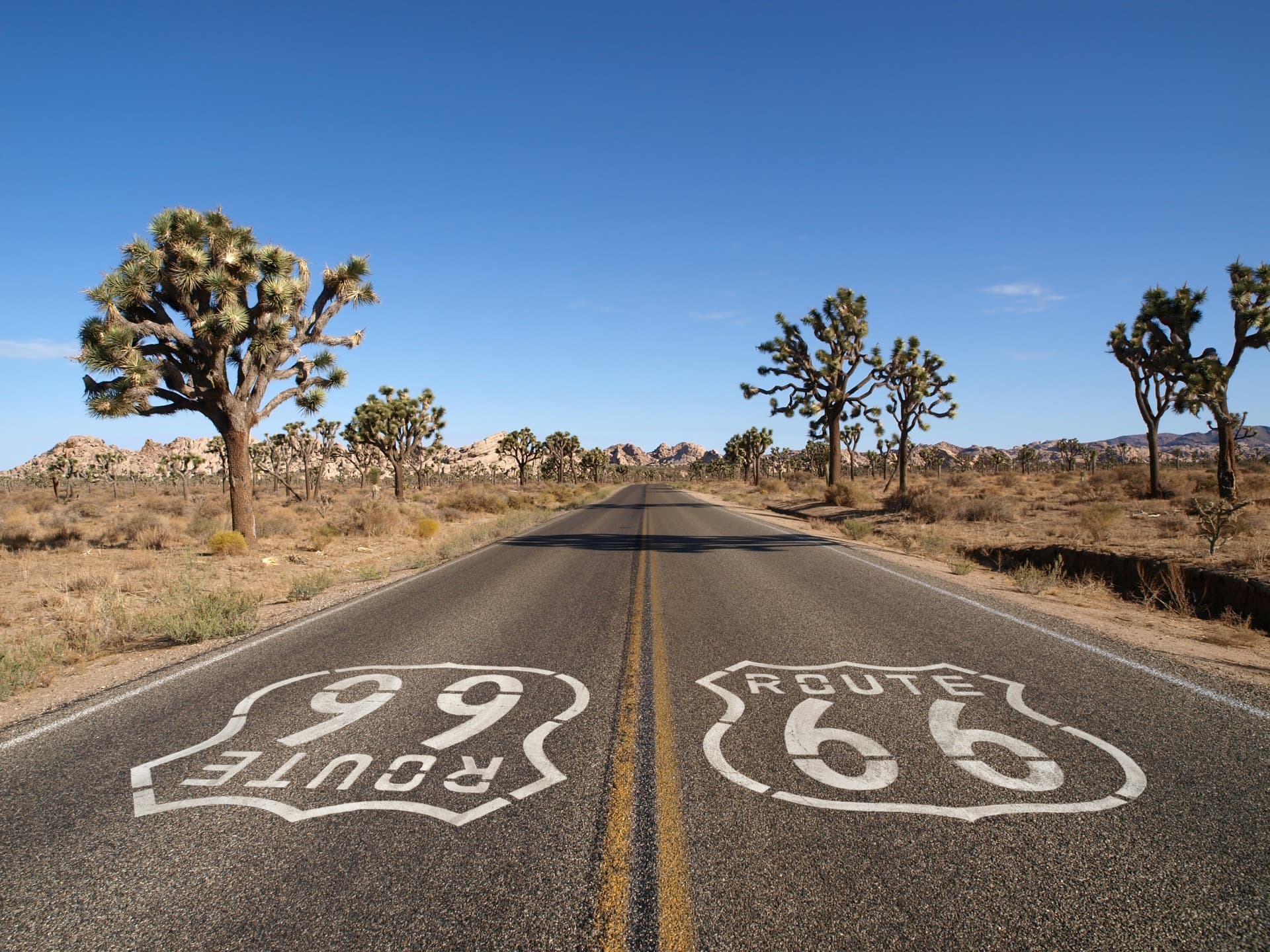
Route 66 connects Chicago (Illinois) to Santa Monica (California) over approximately 3,940 km, crossing eight states: Illinois, Missouri, Kansas, Oklahoma, Texas, New Mexico, Arizona, and California. Nicknamed Will Rogers Highway, Mother Road or Main Street of America, it served for fifty years as the country's primary transcontinental axis before becoming a historic route traveled each year by thousands of visitors.
Why drive Route 66
Route 66 is far more than a journey: it's a cultural corridor that has shaped part of the American imagination. Along its 3,940 km, you traverse contrasting landscapes—Midwestern agricultural plains, southwestern desert plateaus, Pacific coastline—interspersed with small towns where vintage gas stations, neon motels and 1950s diners still stand.
The appeal of this drive lies in this density of preserved historic elements: vintage signage, original bridges, dedicated museums, artistic installations. Several sections of the original road are now classified as Historic Route and maintained by local associations.
History of the Mother Road
Route 66 was officially established in 1926. It was the first transcontinental road to connect small rural towns with major urban centers across the États-Unis. Its creation was largely driven by Cyrus Avery, an Oklahoma businessman known as the "Father of Route 66." In 1928 and 1929, a transcontinental footrace linking Los Angeles to New York via Chicago helped make the route famous.
During the Great Depression and the Dust Bowl of the 1930s, thousands of ruined farmers traveled Route 66 to migrate to California in search of work—an exodus immortalized by John Steinbeck in The Grapes of Wrath (1939). During World War II, the road served to transport troops and supplies.
Beginning in 1985, the opening of the faster Interstate Highways network led to the official decommissioning of Route 66. Many waypoint towns were bypassed and fell into decline. Today, associations like the Route 66 Alliance work to preserve historic sections and their built heritage.
A cultural icon
The road has inspired abundant artistic output. Beyond Steinbeck's novel, the song "(Get Your Kicks on) Route 66" composed by Bobby Troup in 1946 was covered by Nat King Cole, Chuck Berry, the Rolling Stones and Depeche Mode, permanently anchoring the route in popular culture.
What to see along the route
Chicago and the Midwest
The journey begins in Chicago, where the Willis Tower (the city's tallest skyscraper) and the shores of Lake Michigan provide the first viewpoints. Crossing the Midwest then reveals agricultural America: cornfields, silos, isolated farms.
Chain of Rocks Bridge (Missouri)
Built in 1926 near St. Louis, the Chain of Rocks Bridge spans the Mississippi River and is one of the original structures of Route 66. It has been designated a National Historic Landmark since 2006.
Route 66 Museum (Oklahoma)
In Clinton, Oklahoma, the Oklahoma Route 66 Museum traces the history of the road decade by decade through vintage cars, signs and period artifacts.
Cadillac Ranch (Texas)
An art installation created in 1974 near Amarillo, Cadillac Ranch displays ten Cadillacs planted vertically in the ground. Visitors are invited to cover them with graffiti, which are constantly renewed.
Parks and rock formations of the Southwest
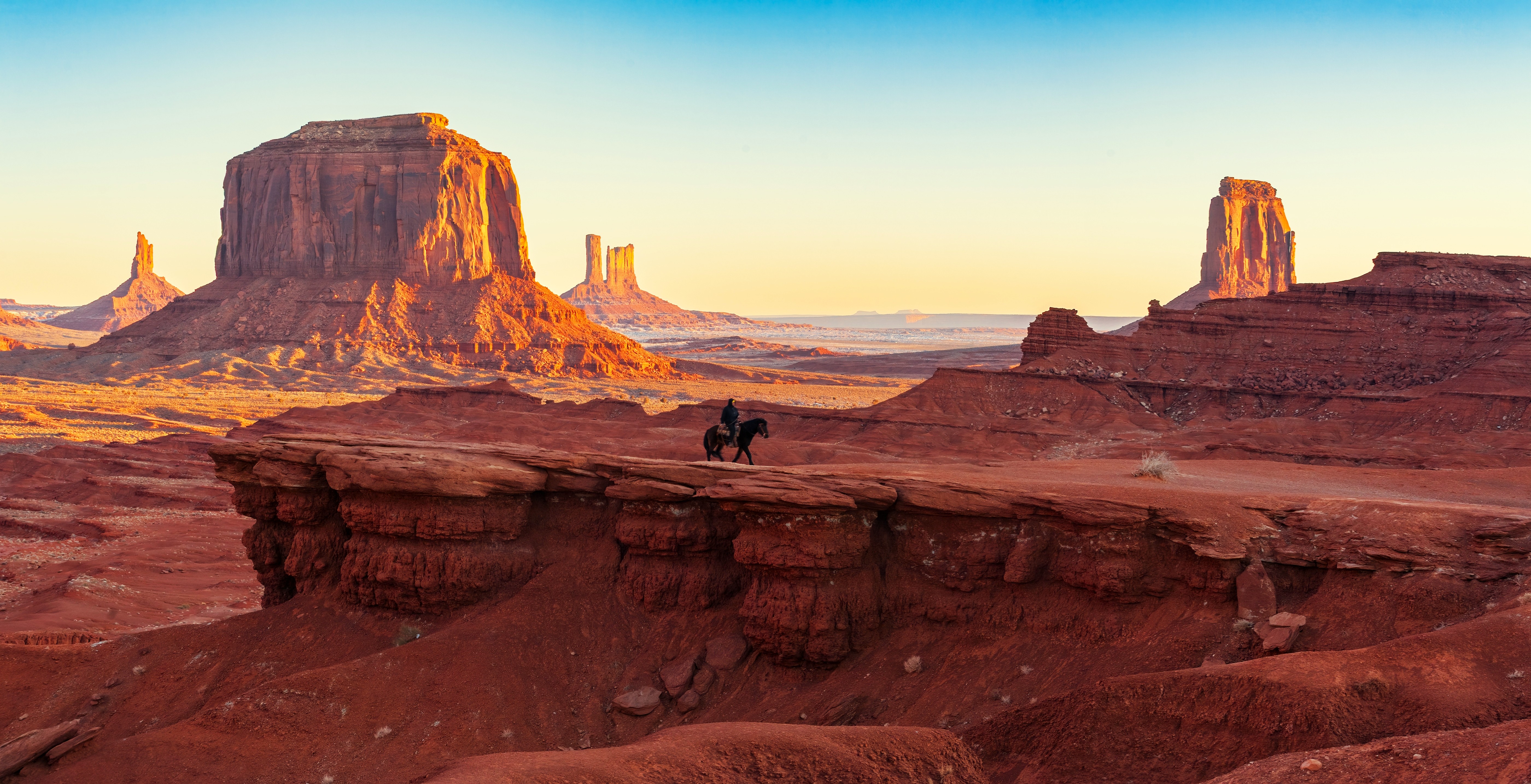
Arizona offers the most spectacular landscapes of the journey, with the Petrified Forest National Park and the Painted Desert directly crossed by the original route. The Grand Canyon and Monument Valley require a detour but remain popular stops.
Wigwam Motel (Arizona)
In Holbrook, the Wigwam Motel built in 1950 features rooms shaped like concrete tipis, surrounded by vintage cars. The entire complex has been listed on the National Register of Historic Places since 2002.
Roadside curiosities
The drive is dotted with quirky records typical of American roadside culture:
- the world's largest ketchup bottle (water tower) in Collinsville, Illinois;
- the world's largest water gun in Erick, Oklahoma;
- the world's largest dinosaur in Cabazon, California.
Santa Monica Pier (California)
The official endpoint is at Santa Monica, on the pier marked by an "End of the Trail" sign. The pier houses an amusement park with a Ferris wheel and carousel facing the Pacific Ocean.
Practical information
Duration and budget
Plan for 2 to 3 weeks to cover the entire route without rushing. A condensed version over 10 to 12 days is possible by focusing on major stops (Chicago, St. Louis, Oklahoma City, Amarillo, Albuquerque, Flagstaff, Santa Monica). The overall budget remains substantial: you'll need to budget for vehicle rental, fuel, accommodation (motels, hotels or RVs) and meals.
Car rental
The minimum age to rent a car is 21 years (often with a young driver surcharge until age 25). An international driving permit in addition to your national license is recommended. A car remains the most flexible option; motorcycles and RVs are also common for this type of itinerary.
Useful detours
From Kingman (Arizona), a detour of a few hours allows you to reach Las Vegas. The Grand Canyon is also accessible from Williams or Flagstaff.
When to go
Spring (April-May) and early fall (September-October) offer the most favorable conditions: moderate temperatures across the entire route and reasonable crowds. Summer is very hot in Arizona and New Mexico deserts (40°C frequent), making long drives uncomfortable. Winter presents risks of snow and ice in the Midwest and on the heights around Flagstaff, and some seasonal businesses in the Southwest close.
How to get there
The logical starting point is Chicago's international O'Hare Airport, well served from Europe. The return is from Los Angeles (LAX), immediately near Santa Monica. Most rental companies allow one-way rentals between these two cities for an additional fee. It's also possible to drive the route in reverse (Los Angeles → Chicago) depending on flight availability.
FAQ
Frequently asked questions
It begins in Chicago, Illinois, and ends at Santa Monica Pier in California, on the Pacific coast.
The historic route measures approximately 3,940 km. The distance varies depending on which original sections are taken and detours made.
A complete and comfortable road trip requires 2 to 3 weeks. A condensed version over 10 to 12 days is possible by limiting yourself to major stops.
Chicago, St. Louis, Springfield (Missouri), Tulsa, Oklahoma City, Amarillo, Albuquerque, Flagstaff and Santa Monica are the major stops on the journey.
No, the official route does not pass through Las Vegas. A detour from Kingman, Arizona, allows you to reach it in a few hours of driving.
21 years in most states, often with a young driver surcharge until age 25. An international driving permit is recommended in addition to your national license.
April-May and September-October offer the best compromise: moderate temperatures across the entire route and reasonable crowds.
Plan your trip to the États-Unis
Route 66 fits into broader itineraries combining major parks, iconic cities and cultural stops. To build a custom itinerary and benefit from logistical advice (rental, stopover accommodations, detours), consult our trips to the États-Unis.
Interested in this visit?
We can include it in your personalised itinerary.