Parthenon of Nashville
Parthenon of Nashville
A full-scale replica of the Parthenon of Athens in the heart of Centennial Park, Nashville's monument houses a 12-meter golden Athena and an American art museum.
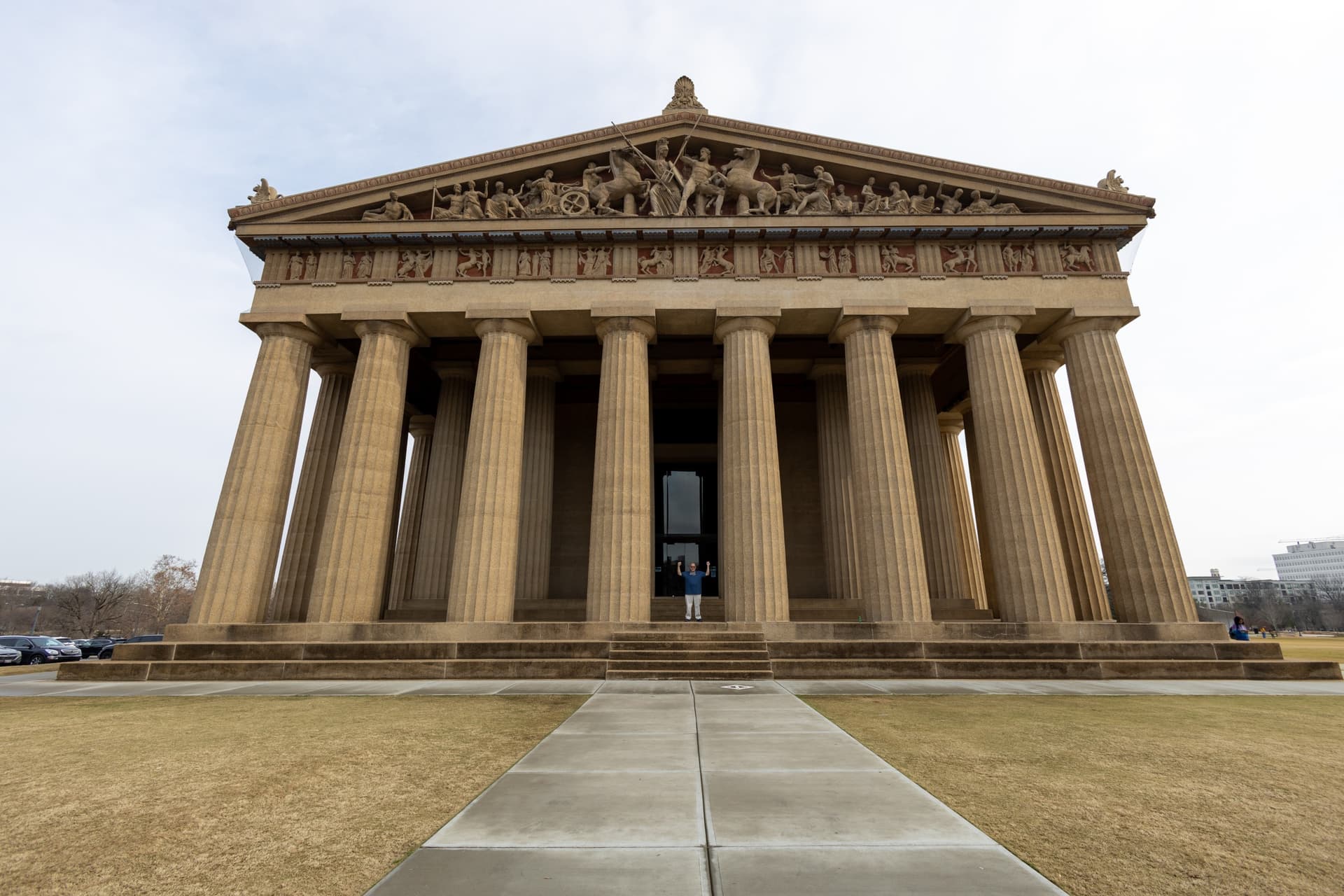
The Parthenon of Nashville is the only full-scale replica of the Parthenon of Athens in the world. Built in Centennial Park, this concrete monument houses an American art museum and a 12-meter tall statue of Athena covered in gold leaf. It recalls why Nashville earned the nickname "Athens of the South."
Why visit the Parthenon of Nashville
The site offers three distinct attractions. First, you see a full-scale reconstruction of an ancient monument in its current state: Nashville's version restores the original proportions of the Greek temple, including its friezes and columns. Next, you explore a museum dedicated to American painters from the 19th and 20th centuries. Finally, you walk through one of Tennessee's most-visited urban parks, an anchor point for local cultural life.
The building has been listed on the National Register of Historic Places since February 1972 and remains one of Nashville's strongest cultural landmarks.
History: from the 1897 exposition to a permanent monument
In the 19th century, Nashville earned the nickname "Athens of the South" due to its concentration of universities. The city capitalized on this image during the Tennessee Centennial International Exposition in 1897, which celebrated a hundred years since the state joined the Union. The Parthenon was the centerpiece of the event, accompanied by other classical replicas.
Nearly 2 million visitors attended the exposition. The temple's success was such that the city decided not to demolish it, unlike the other pavilions. The original structure, designed in wood, plaster, and brick, was not built to last. Between the 1920s and 1930s, it was completely rebuilt in reinforced concrete using the same proportions, creating the monument visitors see today.
What to see
The Athena Parthenos statue
At the center of the main hall stands a reconstruction of Athena Parthenos, the Greek goddess of wisdom and war. Standing 12 meters tall, she is covered with over 3 kg of gold leaf and holds a statue of Nike in her right hand. Created based on ancient descriptions, she is the largest indoor sculpture in the United States. The marble moldings at the base of the building offer a good vantage point for photography.
The American art museum
The basement of the Parthenon houses a permanent collection from the bequest of Sir James M. Cowan: approximately sixty original paintings by American artists from the 19th and 20th centuries, representative of North American landscape and impressionist schools. Temporary exhibitions complement the permanent display by featuring contemporary artists, both American and international.
The friezes and bronze doors
Plaster replicas of the friezes from the original Parthenon (the famous marbles now divided between Athens and London) are visible in the upper gallery. The two monumental bronze doors, among the largest in the world, deserve a few minutes of observation for their casting craftsmanship.
Practical information
- Visit duration: allow approximately 40 minutes for a quick tour, 1 to 1.5 hours if you take time to explore the museum.
- Admission: paid entrance at a moderate rate, with discounts for children (4-17 years) and seniors. Free for children under 4. Tickets are available on-site only.
- Hours: open Tuesday through Sunday, closed Mondays and certain holidays (Independence Day, Thanksgiving, Christmas). Check current hours on the official website before your visit.
- Accessibility: building is accessible to people with reduced mobility via a side entrance.
When to visit
The Parthenon is open year-round, with climate-controlled interiors. The busiest season runs from late May through early September: Centennial Park hosts theatrical performances and outdoor concerts, including a summer season of plays presented on the lawn in front of the monument. Spring and early fall offer interesting light for photographing the facades, without the humid heat characteristic of Tennessee summers. Winter remains quiet and allows for a visit without crowds.
How to get there
The Parthenon is located in Centennial Park, approximately 3 km west of downtown Nashville.
- By bus: the site is served by Line 5 of the West End service on the WeGo Public Transit network.
- By tourist trolley: the Old Town Trolley includes the Parthenon in its hop-on hop-off circuit, making it the easiest option for visitors without a car.
- By car: free parking is available immediately nearby, but spaces fill quickly during peak season and weekends.
- On foot or by bike: from Vanderbilt University, allow 15 to 20 minutes of walking.
What to see nearby
Centennial Park itself deserves a stroll: a lake with ducks, an exposed steam locomotive, and a Sabre fighter plane recall the site's successive uses. To extend your Nashville visit, several complementary stops are located nearby:
- Country Music Hall of Fame and Museum: to understand Nashville's place in American music history.
- Broadway: the avenue of honky-tonks and live music bars, about 10 minutes by car.
- Graceland in Memphis, for those continuing westward through Tennessee.
Frequently asked questions
Frequently asked questions
Include the Parthenon in your itinerary
The Parthenon of Nashville fits naturally into a Tennessee stay, between country music, a road trip on the Music Highway, and cultural stops throughout the American South. To plan a tailor-made trip including Nashville and its surroundings, explore our suggested itineraries for the United States.


Interested in this visit?
We can include it in your personalised itinerary.