Monument Valley
Monument Valley
On the Colorado Plateau, between Utah and Arizona, Monument Valley unfolds its red sandstone buttes across 91,696 acres of Navajo territory.
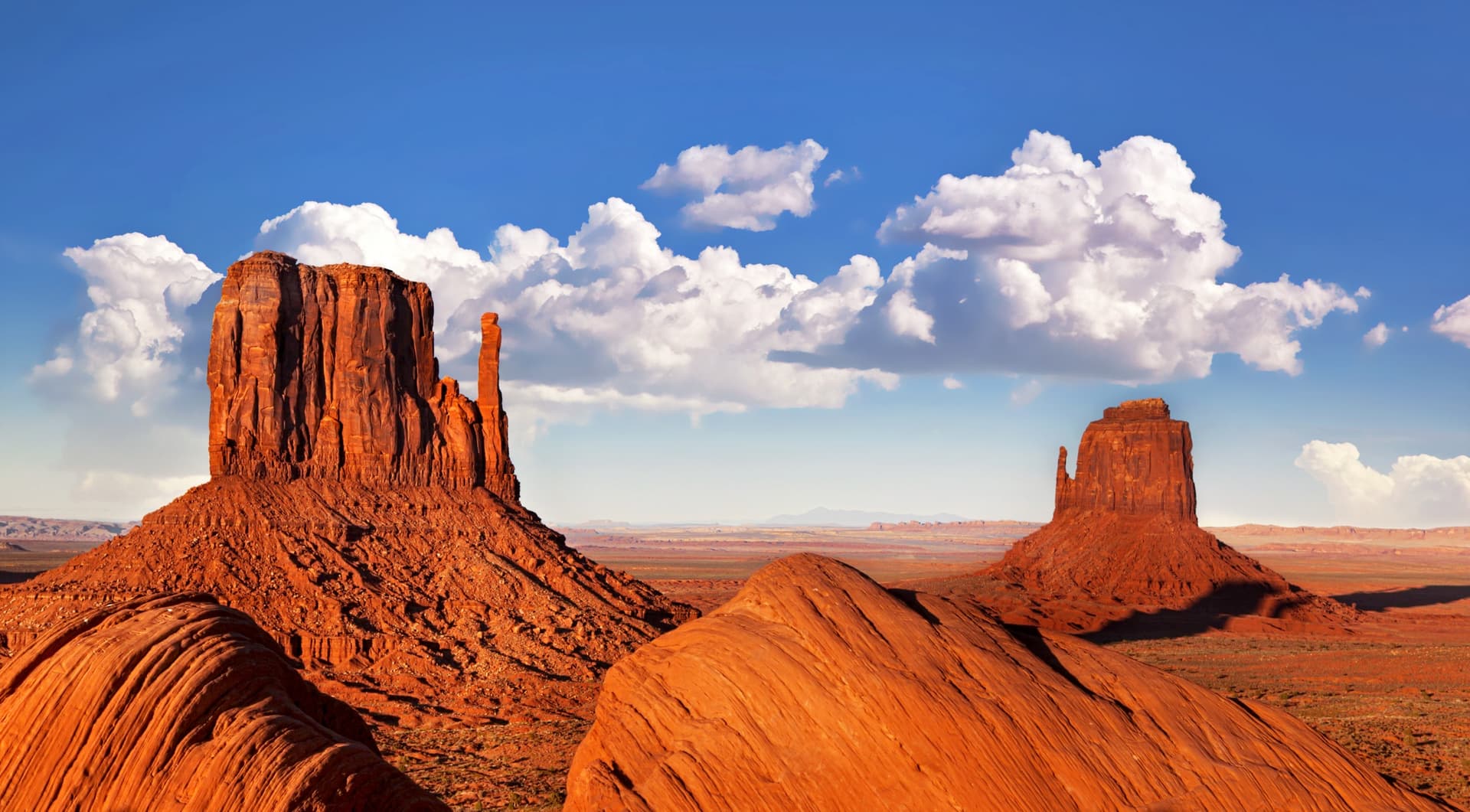
Monument Valley occupies a portion of the Colorado Plateau, straddling the border between Utah and Arizona. This 91,696-acre territory, managed by the Navajo Nation, owes its fame to its red sandstone buttes that rise 400 to 1,000 feet above the desert plain. In the Navajo language, the site is called Tse'Bii'Ndzisgaii, meaning "the valley of rocks."
Why visit Monument Valley
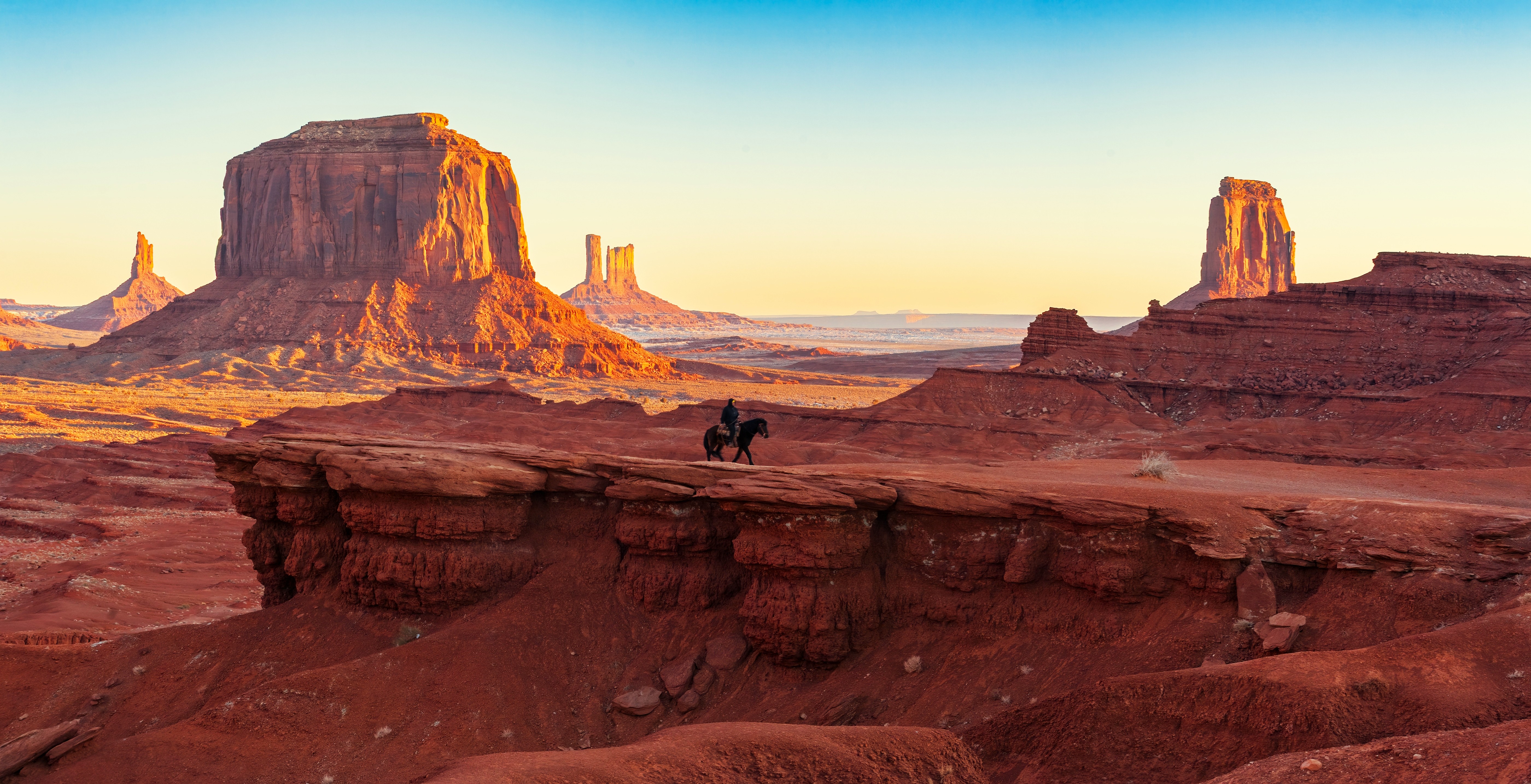
The site brings together several rarely combined attractions. From a geological standpoint, its rock formations sculpted by erosion offer an iconic landscape of the American Southwest. Culturally, it is ancestral Navajo territory, still inhabited today, where artisans offer jewelry and local crafts. Cinematically, its silhouettes have shaped the Western genre's imagination: John Ford filmed several films here beginning in 1939, then returned in 1955 with John Wayne. Marlboro advertising extended this iconic status throughout the 20th century.
History and geological formation
Approximately 270 million years ago, the region was covered by water. The deposited sediments gradually compacted into sandstone. Wind erosion, combined with the tectonic movements of the Colorado Plateau, subsequently exposed the softer layers, leaving only the resistant blocks: the characteristic mesas, buttes, and needles.
The Monument Valley Navajo Tribal Park was established in 1958 by the Navajo Nation, which manages it to preserve both the landscape and its use by resident communities. The park thus operates independently of the federal national parks system.
What to see and do
The Lookout
Located opposite the Visitor Center and accessible on foot from the parking area, this overlook offers an unobstructed view of the park's most photographed trio: West Mitten Butte, East Mitten Butte, and Merrick Butte. It's typically the first stop on any visit.
The Valley Drive
This 27 km loop road allows you to approach the main formations by car, weather permitting. The route serves Elephant Butte, Camel Butte, John Ford Point (view of the Three Sisters), Artist's Point, North Window, as well as The Hub, the Totem Pole, The Thumb, and the Cube. The road is unpaved, sometimes rutted: a vehicle with elevated ground clearance is recommended.
The Wildcat Trail
This is the only hiking trail accessible without a guide or special permission. The approximately 6 km loop circles West Mitten Butte, requires 1.5 to 2 hours of walking, and departs from the primitive camping area. Late afternoon remains the most popular time to enjoy the warm hues at sunset.
Wildlife and vegetation
The plateau is home to mountain lions, coyotes, jackrabbits, lizards, and several bird species. The vegetation, adapted to aridity, includes Russian sage and Mojave yucca.
When to visit
The climate is high desert: hot, dry summers and cold winters. Summer temperatures rarely exceed 38°C, with approximately 54 days per year above 32°C, and nights remain cool. In August, brief thunderstorms may occur. In winter, daytime temperatures generally stay below 18°C.
The most comfortable periods extend from April to June, then September to October, when temperatures are moderate and light is particularly clear. Summer remains feasible but more crowded.
Practical information
- The site is closed on Thanksgiving, Christmas, and New Year's Day.
- RVs, vehicles with trailers, and drones are not permitted.
- Entrance fees and hours for the Valley Drive and Visitor Center change regularly: check conditions on the park's official website before visiting.
- Plan half a day for a quick visit from the Lookout and Valley Drive, a full day if you add the Wildcat Trail and a sunset.
How to get there
No public transportation serves Monument Valley. A car is essential, and an SUV is recommended for the Valley Drive to avoid any risk of getting stuck.
- From Utah (north): US-163 heading south.
- From Moab: US-191 south, via Monticello, Blanding, and Bluff, then US-163.
- From the south: US-60 to Kayenta, then heading north.
Nearby
Monument Valley is part of a larger circuit through the American Southwest. Antelope Canyon and Page (Lake Powell) are about two hours' drive to the west. Bryce Canyon National Park and Canyonlands National Park complete an itinerary in Utah. Road trip enthusiasts can extend further to Cadillac Ranch in Texas.
Frequently asked questions
Frequently asked questions
Half a day is enough for the Lookout and a quick drive through the Valley Drive. To add the Wildcat Trail and a sunset, plan for a full day.
Yes. The Valley Drive and Wildcat Trail are freely accessible. More remote areas (Mystery Valley, certain arches) require an approved Navajo guide.
April to June and September to October, when temperatures are moderate. Summer is hotter and more crowded; winter offers landscapes occasionally dusted with snow.
Not necessarily, but a vehicle with high ground clearance (SUV) is highly recommended. The road is unpaved and certain sections are rutted after rains.
No. Drones, like RVs and vehicles with trailers, are prohibited throughout the site.
Plan your trip
Monument Valley combines ideally with the great parks of the American West in a multi-day road trip. To build your complete itinerary, consult our trips to the États-Unis.
Interested in this visit?
We can include it in your personalised itinerary.