Virginia
Virginia
Birthplace of the United States, Virginia unites colonial villages, Blue Ridge Mountains, vineyards and Atlantic beaches. Complete guide for planning your journey.
Located near Washington D.C., Virginia is a state on the east coast of the United States. Its territory captivates both nature lovers and history enthusiasts alike. From the trails of the Appalachians to the shores of Chesapeake Bay, passing through colonial villages and the grand estates of Thomas Jefferson and George Washington, each location offers an unforgettable visit. Whether you seek tranquility, adventure, or a journey through the past, Virginia will enchant you. Discover its top attractions in this guide.
Virginia's history at a glance
Birthplace of the United States, Virginia was the first territory to be permanently colonized by the English, with the founding of Jamestown in 1607. From its earliest days, the colony's history oscillates between ambition and uncertainty, marked by figures such as John Smith and the legend of Pocahontas, against a backdrop of fragile alliances and tensions with indigenous peoples.
During the 18th century, Virginia became a major center of political thought and action. It was here that some of the great architects of the nation were born, including George Washington, Thomas Jefferson, and James Madison. Their influence was decisive in the struggle for independence and in establishing American democratic institutions.
Later, Virginia became rooted in an economic model based on plantations and slavery. At the heart of the tensions dividing the country, it played a key role in the Civil War, hosting many of the most decisive battles of the conflict.
Today, despite this checkered past, Virginia stands as a state with a strong identity, balancing historical heritage, majestic landscapes, and an enduring influence on American history.
What to see and do in Virginia?
1. Cities to discover
Virginia brims with towns of unique charm. Here are the most popular with tourists:
Richmond, the capital
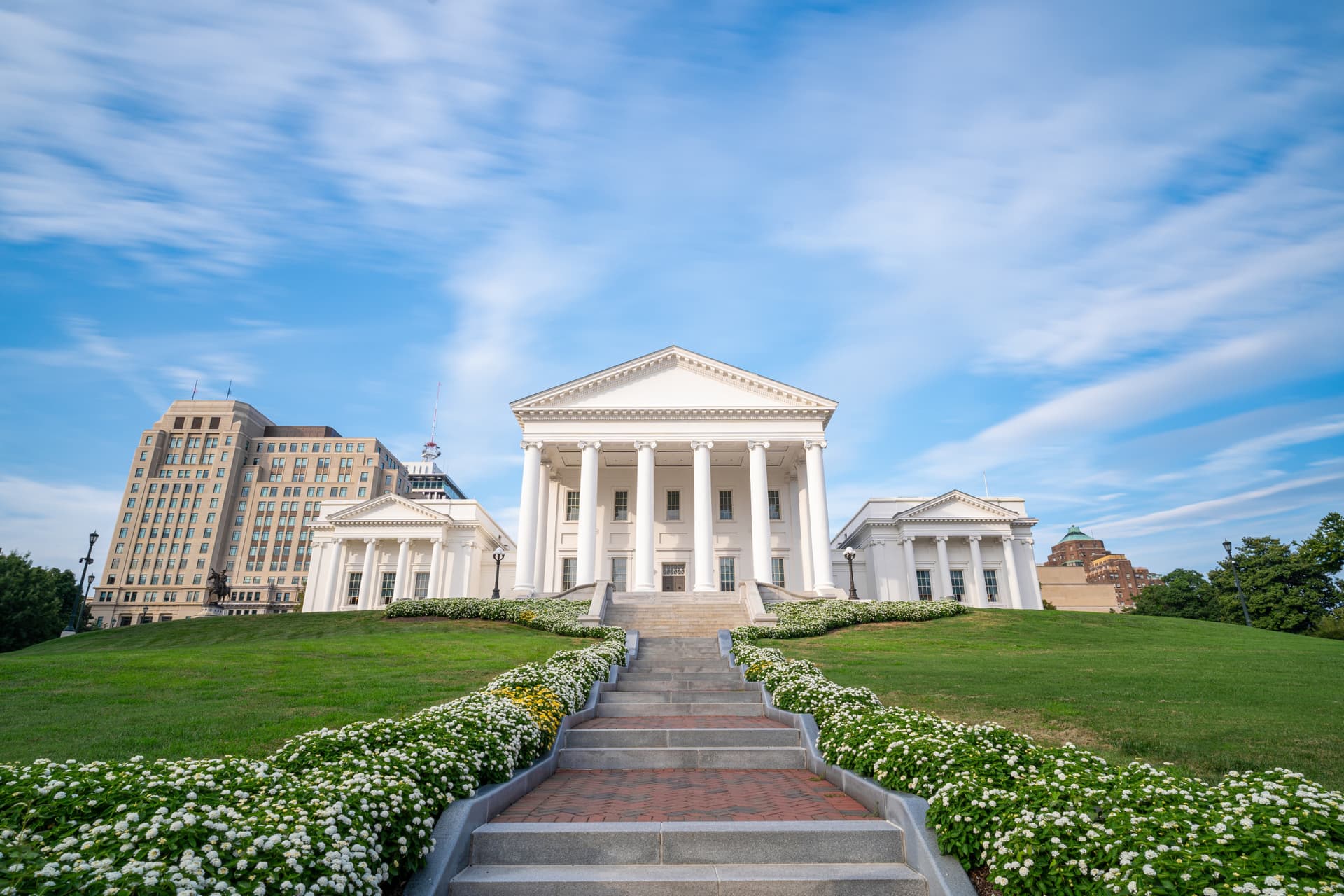
Located in the center of the state, Virginia's capital is a successful blend of history and modernity. Its bustling downtown is full of historic buildings, contemporary art galleries, and trendy restaurants. The Shockoe Bottom neighborhood, once the center of tobacco trading, impresses today with its cafés and walls covered in colorful murals. Don't miss the Virginia Museum of Fine Arts, one of the most important museums in the United States. Along the James River, you can enjoy kayaking, paddleboarding, or relaxing along the canal.
Alexandria
Nestled just south of Washington D.C., Alexandria fascinates with its striking contrast to the neighboring capital. Its historic district, Old Town, is a colonial gem. Cobblestone streets, 18th-century brick houses, and independent shops create a warm atmosphere. Stroll along the Potomac, enjoy brunch on the waterfront, then visit the Torpedo Factory Art Center, a former factory transformed into artist studios.
Arlington
On the other side of the Potomac River, just across from Washington D.C., sits Arlington. The Arlington National Cemetery is its most visited site. It is the resting place of more than 400,000 soldiers and American presidents such as John F. Kennedy. The changing of the guard impresses visitors with its precision and symbolic significance.
2. Historic sites
As mentioned above, Virginia is the birthplace of American history. From colonization to the Civil War, each era has left visible traces through preserved and emotionally charged sites.
Colonial Williamsburg
Colonial Williamsburg, the former colonial capital, is a living museum located in the eastern part of the state. Dozens of 18th-century buildings have been restored, and costumed actors recreate daily life before the American Revolution.
Monticello
Monticello, just a few kilometers from Charlottesville, is far more than a beautiful mansion. It is a reflection of Thomas Jefferson's genius, with its inventions, its terraced gardens, and his vision of independence. The visit also allows you to better understand the complexity of American history, notably through testimonies about slavery.
Mount Vernon
Mount Vernon is the estate of George Washington. It is located near Alexandria, on the banks of the Potomac. You will discover the house of the first president of the United States, its outbuildings, its orchards, and an interactive museum. The view of the river from the porch is one of the finest in the region.
Appomattox Court House
This peaceful village was the scene of a key moment in American history: the surrender of General Lee, which ended the Civil War. The site, preserved as it was in the 19th century, invites a quiet and profound visit to encounter history. To be discovered west of Richmond!
3. Parks and nature
With its mountains, coastal plains, forests, and rivers, Virginia is a dream destination for outdoor enthusiasts. Its scenic natural landscapes will not disappoint.
Shenandoah National Park
Shenandoah National Park is crossed by the famous Skyline Drive, a 170-kilometer panoramic road that follows the ridges of the Blue Ridge Mountains. This serves as the starting point for numerous hiking trails, including those leading to Dark Hollow Falls or the summit of Old Rag Mountain. The protected area awaits you west of Washington D.C.
Blue Ridge Parkway
Nicknamed "America's most beautiful road," this road winds between Virginia and North Carolina. The scenery is spectacular, especially in autumn. Picnic areas, scenic overlooks, and trails allow you to fully enjoy the drive.
Great Falls Park
Great Falls Park offers stunning views of the Potomac's rapids. Walkways allow you to observe the waterfalls up close, and several trails follow the cliffs. Located just 30 minutes from Alexandria, the park is perfect for a nature escape without leaving the urban area.
4. Coast and beaches
Virginia boasts a varied coastline, where long sandy beaches coexist with wild islands of the Atlantic Ocean.
Virginia Beach
Virginia Beach is the state's most popular beach destination. Its enormous beach stretches for miles, lined by a lively boardwalk filled with restaurants, hotels, and street artists. It's the ideal place to swim, surf, cycle, or catch a summer festival. The city's aquarium, one of the largest on the east coast, also deserves a visit, as does First Landing State Park, where English colonists are said to have set foot in 1607. Virginia Beach is located at the southeastern tip of the state.
Chincoteague and Assateague Islands
These two islands are renowned for their preserved natural beauty. Chincoteague, accessible by car, offers a peaceful atmosphere, with marshes, biking trails, and small shops. Just next to it, Assateague, a protected nature reserve, is famous for its wild horses that roam freely on the beaches and dunes. It is an exceptional place to observe migrating birds, swim away from crowds, or kayak in the lagoons.
5. Local experiences
Beyond landscapes and cities, Virginia is also experienced through its traditions, music, gastronomy, and craftsmanship. These experiences rooted in local culture give travel its true flavor.
The wine and cider route
Virginia is one of the finest wine-producing states on the east coast. Over 300 wineries are scattered throughout the hills, particularly around Charlottesville, in the Blue Ridge region, or north of Richmond. Here you'll taste Cabernet Franc, Viognier, or artisanal ciders. Many vineyards offer tastings with mountain views, often accompanied by concerts or farmers' markets.
Festivals and regional traditions
Virginia celebrates its seasons and heritage through countless events. The Virginia Film Festival, in Charlottesville, attracts cinephiles, while the Neptune Festival, in Virginia Beach, combines concerts, sand sculptures, and fireworks. In small villages, agricultural fairs, barbecue competitions, and fall markets offer a friendly glimpse into local life.
Practical information
Virginia is easily accessible by air via Washington Dulles (IAD), Richmond (RIC), and Norfolk (ORF) international airports. From France, a connecting flight to Washington is often the quickest option.
Car rental is the most practical way to explore Virginia, especially rural areas and parks. Amtrak trains connect major cities. Buses also serve urban centers.
When to visit?
Spring (April–May) and fall (September–October) are the best times: mild temperatures, blossoming or foliage-filled landscapes.
FAQ
Why is Virginia called Virginia?
Virginia takes its name from Queen Elizabeth I of England, nicknamed the "Virgin Queen" by 16th-century English colonists, in reference to her choice never to marry.
What are the cities of Virginia?
The major cities of Virginia are Richmond (the capital), Virginia Beach, Norfolk, Chesapeake, Alexandria, Roanoke, and Charlottesville.
Is it hot in Virginia in summer?
Yes, Virginia experiences hot and humid summers. Summer temperatures typically range between 82 and 95°F (28 and 35°C), particularly during July and August.
Does Virginia have beautiful beaches?
Yes, the state offers several renowned beaches, including those at Virginia Beach, Chincoteague, and Assateague, appreciated for their fine sand, accessibility, and surrounding natural beauty.
Want to discover this destination?
Our local advisors design your tailor-made trip.