Pennsylvania
Pennsylvania
From Philadelphia to Pittsburgh, from the Amish fields of Lancaster to the ghost town of Centralia: a complete guide to planning your Pennsylvania road trip.
Pennsylvania, located in the Northeastern États-Unis, is a land of contrasts and stories where skyscrapers, bustling streets, Amish farmland, and forests intertwine. Here the États-Unis were born, but also Hershey chocolate, Rocky Balboa, and Andy Warhol. From the Pocono Mountains' waterfalls to Philadelphia's museums, passing through Centralia's forgotten trails, this state takes you on a surprising journey between wild nature and living heritage. Discover its attractions in this guide.
History
Before Europeans arrived, this region was inhabited by Native American tribes such as the Delawares, Susquehannocks, Shawnees, and Iroquois. In 1681, King Charles II of England, who owed a substantial sum to the father of William Penn, repaid his debt by granting his son a vast expanse of land. Penn, a Quaker, founded Pennsylvania—literally "Penn's Woods"—as a British colony based on religious freedom.
The colony became a refuge for many minorities, including persecuted German sects from Europe, as well as Irish and Welsh Baptists. Philadelphia, chosen as the initial capital, quickly became a political and intellectual center. It was here that the Declaration of Independence was signed in 1776 and the Constitution of the États-Unis was drafted in 1787.
During the Industrial Revolution, the state developed thanks to its abundant natural resources, particularly coal and steel. Pittsburgh then established itself as the world capital of steel manufacturing.
Today, Pennsylvania presents itself as a state of striking contrasts, between its dynamic metropolitan areas and vast rural regions. Due to its geographical location, it continues to exert significant influence on the nation's economy and politics.
Must-See Attractions in Pennsylvania
1. Philadelphia, the State's Largest City
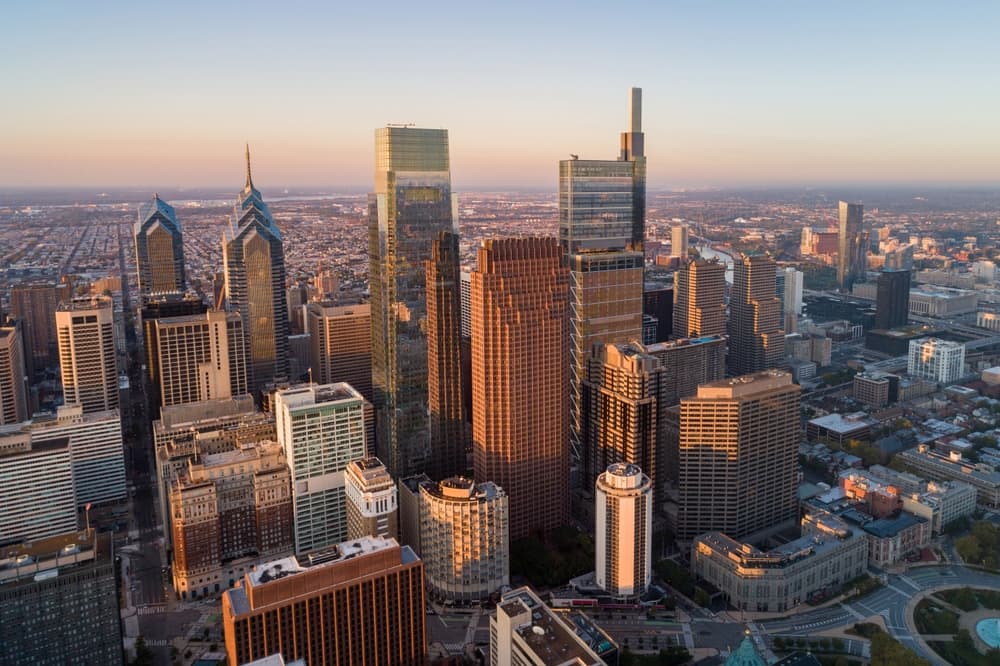
Philadelphia, nicknamed "Philly," is the birthplace of American independence. It was in Independence Hall, inscribed on the UNESCO World Heritage List, that the Declaration of Independence and the American Constitution were signed. Just nearby, don't miss the famous Liberty Bell, a symbol of freedom.
An open-air gallery, Philadelphia will charm you with its thousands of murals decorating building facades. Art lovers won't regret discovering the Barnes Foundation, renowned for its Impressionist collection. Don't skip the Philadelphia Museum of Art either, where the famous steps climbed by Rocky stand. For gastronomy, try the Philadelphia cheesesteak, the local culinary specialty.
Finally, if you enjoy shopping, head to Valley Forge, home to the gigantic King of Prussia Mall. The cherry on top: no tax on clothing or shoes in Pennsylvania. A good excuse for a guilt-free shopping spree!
2. Lancaster and the Amish Communities
Want to travel back in time? Include the Amish Country in the Lancaster County on your road trip. Here, time seems to have stopped. Residents live without electricity, cars, or telephones. Their way of life, inherited from the 18th century, is based on simple values and strong community cohesion.
Amish communities reject modern technologies. You can encounter them in horse-drawn carriages on country roads or visit their artisanal farms. Some offer guided tours to better understand their daily life, their language (a Germanic dialect), and their spirituality.
3. Harrisburg, the Capital
Often overshadowed by its larger neighbors, Harrisburg is nonetheless an interesting stop. The city, nestled along the Susquehanna River, enchants with its blend of green spaces, peaceful promenades, and charming historic buildings. Its Capitol, inspired by St. Peter's Basilica in Rome, is an architectural gem worth visiting.
Harrisburg will also delight you with its fine museums, such as the State Museum of Pennsylvania, which traces the state's natural and cultural history, or the National Civil War Museum, which helps you understand the issues of the American Civil War.
4. Hershey, Chocolate Capital of the États-Unis
Do you love chocolate? Then you'll love Hershey! Founded by Milton S. Hershey, the city was built around his chocolate factory and still breathes the love of cocoa today. Visit Hersheypark, a must-see attraction with a chocolate theme that combines thrills, playful discoveries, and sweet treats for all ages.
For a nature moment, head to Hershey Gardens, a beautiful botanical garden, or ZooAmerica, a zoo featuring North American species. Also take a trip to Hershey Farm Restaurant & Inn to taste local products and homemade specialties.
5. Pittsburgh, the Green City
Pittsburgh has turned the page on its industrial past to reinvent itself. Today, it's a green, creative metropolis looking toward the future. It even boasts the highest number of trees per square meter of all major American cities.
The downtown harmoniously blends contemporary skyscrapers and historic bridges, while the South Side neighborhood vibrates with trendy establishments, independent shops, and nightlife.
Culturally, Pittsburgh pays homage to its local icon, Andy Warhol, through a seven-story museum dedicated to pop art. The Carnegie Museum of Art, the Clayton House (the historic Frick residence), and the Mattress Factory round out the artistic offerings.
Sports enthusiasts will also be thrilled when visiting Pittsburgh. The Pittsburgh Steelers, the Pirates (baseball), and the Penguins (hockey) attract delirious crowds.
6. Centralia, the Ghost Town
Unique in its kind, Centralia intrigues as much as it fascinates. This mining village, located in the northeastern part of the state, is now almost deserted because of an underground fire that has been burning since the 1960s. The fire spread through coal veins, destabilizing the ground and forcing residents to leave.
Today, only a few scattered houses remain, cracked and graffitied roads, including the famous Graffiti Highway, now closed but still symbolic. Centralia fascinates the curious, urban explorers, lovers of unusual places, or post-apocalyptic narratives. A timeless visit, to be approached with caution.
7. Pennsylvania and Its Natural Landscapes
Beyond its iconic cities, Pennsylvania also appeals with the richness of its nature and the diversity of outdoor activities it offers.
In the north, Lake Erie invites both relaxation and adventure. Water sports, boat rides, or refreshing swims mark the beautiful days. Right in the heart of the state, Pine Creek Gorge—nicknamed the Grand Canyon of Pennsylvania—impresses with its wooded cliffs and spectacular hiking trails.
Further south, Ohiopyle State Park spreads nearly 80 km² of forests, waterfalls, and rapids perfect for rafting or hiking. For cycling enthusiasts, a bike trail of over 300 km, the Great Allegheny Passage, connects Pittsburgh to Washington D.C. through varied landscapes.
Practical Information
When to Visit Pennsylvania?
Pennsylvania can be visited year-round. However, the best time is autumn, from September to November, when the climate is mild and the landscapes are vibrant.
Pennsylvania is easily accessible by air via Philadelphia (PHL) and Pittsburgh (PIT) airports. Flights from Paris and other European cities are available. Ground connections from New York or Washington D.C. are served by Amtrak trains and buses (Megabus, FlixBus, Greyhound). Departures are regular.
Thanks to a wide choice of transportation, it's easy to get around Pennsylvania. Throughout the state, you'll find fixed-route buses, suburban trains, light rail, and ride-sharing services. In Philadelphia, SEPTA facilitates travel with a comprehensive network of buses, subways, streetcars, and regional trains, all accessible with easy-to-use passes and cyclist-friendly infrastructure. For intercity trips, Amtrak and several bus companies connect major cities.
FAQ
Where is Pennsylvania Located?
Pennsylvania is located in the northeastern part of the États-Unis. It shares borders with six states: New York to the north, New Jersey to the east, Delaware to the southeast, Maryland and West Virginia to the south, and Ohio to the west. It is strategically positioned between the East Coast and the Midwest.
What Are the Main Cities in Pennsylvania?
Among the largest cities are Philadelphia, renowned for its history and culture; Pittsburgh, known for its architecture, museums, and industrial past; and Harrisburg, quieter but rich in heritage. You can also mention Allentown and Erie.
How Many People Live in Pennsylvania?
Pennsylvania has approximately 13 million residents, making it one of the most populous states in the country.
What Is Pennsylvania's Culinary Specialty?
Pennsylvania is known for the Philly cheesesteak, a sandwich with meat and melted cheese. You'll also savor soft pretzels, scrapple (a dish of German origin made from pork and corn), and of course Hershey chocolates, produced locally. Amish cuisine, simple and generous, is also worth discovering.
Want to discover this destination?
Our local advisors design your tailor-made trip.