Volcanoes National Park
Volcanoes National Park
UNESCO-listed, Volcanoes National Park is home to Kilauea and Mauna Loa on Hawaii's Big Island, 45 minutes from Hilo. Complete visitor's guide.
Volcanoes National Park covers 1,308 km² in the southeast of Hawaii's Big Island, approximately 50 km from Hilo. Inscribed as a UNESCO World Heritage Site, it is home to Kilauea and Mauna Loa, two of the world's most active volcanoes. The site combines constantly evolving volcanic landscapes, endemic biodiversity, and Hawaiian cultural heritage spanning more than 1,500 years.
Why Visit Volcanoes National Park
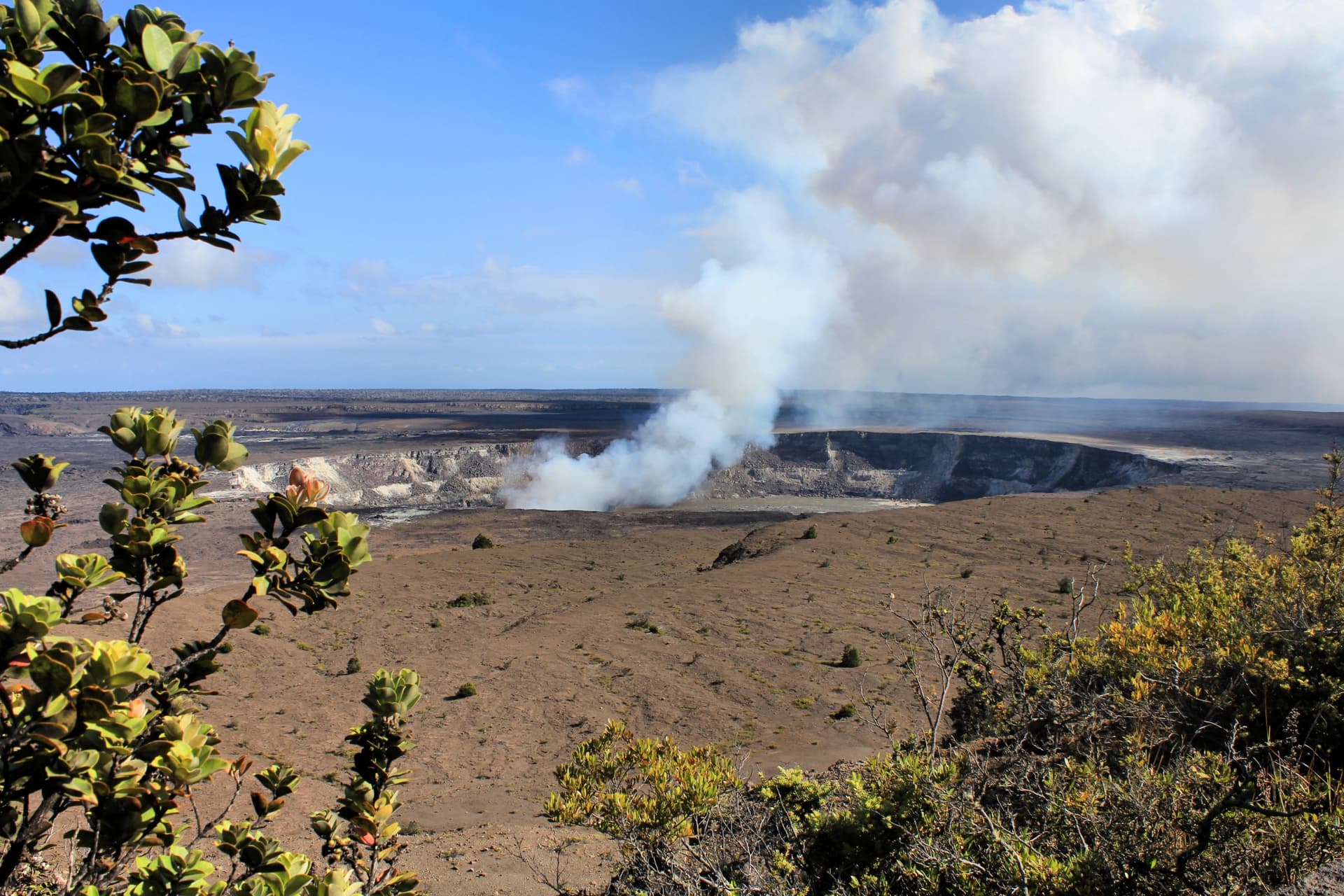
Few parks offer such a concentration of active geological phenomena: recent lava flows, fumaroles, lava tubes, and smoldering craters. Kilauea, regarded in Hawaiian mythology as the home of Pele, goddess of fire, continuously shapes the southern part of the island. Beyond the volcanic spectacle, the park protects over 1,000 plant species (90% endemic) and more than 200 animal species (80% endemic), an ecosystem found nowhere else on Earth.
Historical and Cultural Roots
The region bears witness to continuous human presence for over 1,500 years. Archaeological remains scattered throughout the park outline the contours of this ancient occupation:
- petroglyphs, engravings on lava representing symbols or scenes from daily life;
- heiau, sacred temples dedicated to deities or ancestors;
- stone walls, which demarcated territories and cultivated plots.
Kilauea retains sacred status for Hawaiians. According to tradition, Pele resides there and shapes the earth through her eruptions. Residents still leave offerings—flowers, fruits, shells—at the crater's edge, in homage or to seek her protection. Respecting these gestures is part of the park's visitor ethics.
What to See and Do
The Crater Rim Trail
This trail circles the Kilauea crater for approximately 17 km. It allows visitors to observe fumaroles, ancient lava flows, tubes, and cinder cones, with sweeping views of the caldera. Several short sections are accessible from Crater Rim Drive pullouts, for a walk lasting one to two hours without requiring the entire route.
Chain of Craters Road
This 30 km road descends from the summit of Kilauea to the coast. It crosses ancient and recent lava fields that trace the volcano's eruptive history. It culminates at the Holei Sea Arch, a natural arch sculpted by waves in cooled lava. Allow a half-day round trip with stops at viewpoints.
Endemic Fauna and Flora
On the flora side, you'll observe the ohia lehua, a flowering tree with red blooms that pioneer recent lava flows, the hapuu, a tree fern of humid forests, and the silversword, a silvery alpine plant. On the fauna side, the nene (Hawaiian goose, the state emblem), the palila (Hawaiian honeycreeper), the happy face spider recognizable by the pattern on its abdomen, the io (Hawaiian hawk), and the hawksbill turtle frequent different areas of the park.
Practical Information
The park is open year-round, 24 hours a day. An entrance fee applies per vehicle or per person, valid for seven days; entry is free for young visitors and America the Beautiful Pass holders. Certain areas may close temporarily depending on volcanic activity or weather conditions—consult the National Park Service official website before departure.
For lodging on-site, two notable options:
- Volcano House: a historic establishment whose hotel origins on the site date back to 1846 (the current building is more recent). Direct views of the Kilauea crater, 33 rooms, restaurant and bar. High rates, advance reservations strongly recommended.
- Namakanipaio Campground: camping 4 km from the park entrance, in a wooded setting, with sites, toilets, and showers. Moderate rates.
When to Visit
The park can be visited year-round. Climate varies significantly with altitude: it is hotter and drier on the coast, cooler and more humid at higher elevations, where daily temperature fluctuations can be pronounced. The wettest season runs from November to March. Snow can occasionally dust the summit of Mauna Loa (4,169 m). Wind, fog, and showers can occur anytime: dress in layers, bring a waterproof jacket, and wear sturdy closed-toe hiking shoes for lava trails.
How to Get There
The park has two main entrances: in the northeast, near Volcano village, accessible from Hilo in approximately 45 minutes; in the southwest, near Pahala, more convenient from Kona. Hilo is connected to Honolulu by regular interisland flights. A rental car is essential for exploring the park and the Big Island as a whole.
Nearby Attractions
The Big Island offers more than just the park. A few complementary sites are worth the detour:
- Mauna Kea: the island's highest peak at 4,205 meters, famous for its astronomical observatory. Climbing requires an appropriate vehicle and altitude acclimatization.
- Pu'uhonua o Honaunau National Historical Park: an ancient refuge where fugitives and offenders could escape penalties according to Hawaiian custom. The site concretely illustrates pre-contact social and religious structures.
- Hawaii Tropical Botanical Garden: a botanical garden north of Hilo, along the coast, that houses tropical plants from around the world on a natural site overlooking the ocean.
To further explore America's protected wilderness areas, the Crater Lake National Park in Oregon offers another striking example of volcanic landscape.
Frequently Asked Questions
Frequently asked questions
Planning Your Trip
Volcanoes National Park fits naturally into an itinerary focused on the Big Island, or even multiple islands of the archipelago. To build a custom itinerary combining volcanoes, beaches, hiking, and Hawaiian heritage, explore our tours in the États-Unis.
Interested in this visit?
We can include it in your personalised itinerary.