Theodore Roosevelt National Park
Theodore Roosevelt National Park
In the badlands of North Dakota, Theodore Roosevelt National Park offers free-roaming bison, wild horses, and the history of a president's ranch.
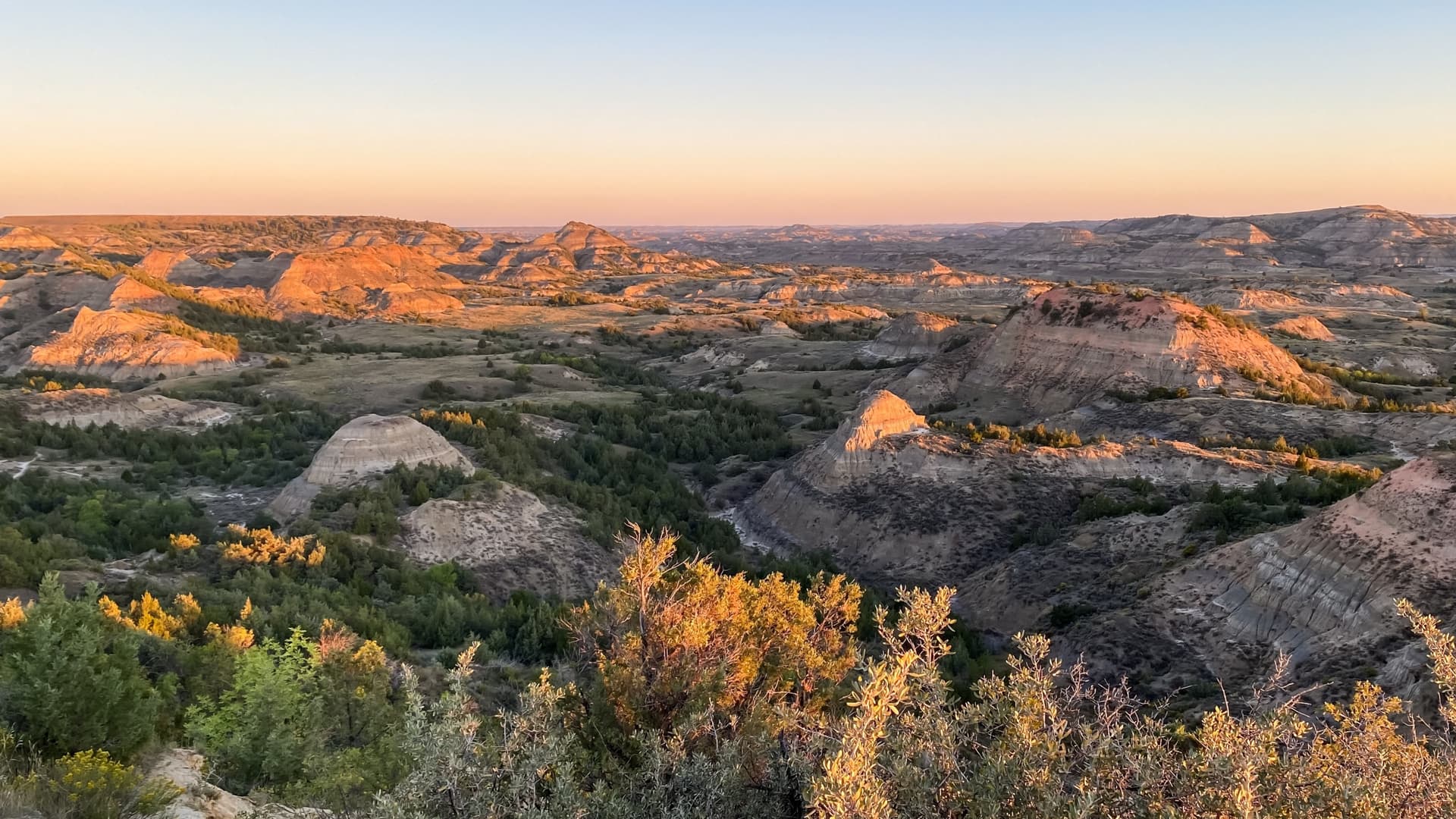
The Theodore Roosevelt National Park spans 285 km² across the badlands of North Dakota, around the small town of Medora. Three distinct units — South Unit, Elkhorn Ranch Unit and North Unit — comprise this park established in 1978 as a tribute to the American president who shaped his conservation vision here. Free-roaming bison, wild horses, eroded prairies and the foundations of a presidential ranch: a site far less crowded than Yellowstone or the Grand Canyon, yet rich in wildlife and history.
Why Visit Theodore Roosevelt National Park
- Abundant and accessible wildlife: bison, wild horses, bighorn sheep, pronghorns and prairie dogs are often spotted from the scenic drive.
- Badlands landscapes that are less visited, sculpted by the Little Missouri River.
- Strong historical dimension tied to Theodore Roosevelt's time in the region starting in 1883.
- Three distinct units allowing you to tailor your visit to the time available.
- A worthwhile stop on a road trip connecting the Midwest to the Rockies or Yellowstone.
A History Tied to Theodore Roosevelt
In 1883, young Theodore Roosevelt, then a New York city dweller, discovered the badlands of North Dakota during a bison hunting expedition. He invested in ranching and returned regularly.
After the sudden deaths of his mother and wife on the same day in 1884, he retreated here to rebuild his life. His experience as a rancher in these harsh lands shaped his vision of nature: becoming president in 1901, he would go on to establish five national parks, 18 national monuments and protect over 200 million hectares across the United States.
The site, initially designated Memorial Park in 1947, achieved its official status as a national park in 1978. The foundations of Roosevelt's ranch still stand today in the Elkhorn Ranch Unit, the most remote and least visited of the three units.
What to See and Do in the Park
South Unit: The Main Gateway
The South Unit, accessible from Medora, draws the majority of visitors. Painted Canyon Overlook is reached directly from Interstate I-94 and provides an immediate view of the colorful badlands strata.
The 58 km scenic drive (Scenic Loop Drive loop) passes through the main points of interest: Prairie Dog Town, a vast prairie dog colony that alerts with whistles as visitors approach; Wind Canyon Overlook, which overlooks a bend in the Little Missouri River; and Buck Hill, a short 0.6 km climb to the unit's highest point.
North Unit: Wilder and Quieter
Located about 1 hour 15 minutes north of Medora by car, the North Unit receives significantly fewer visitors. The 22 km road leads to the Oxbow Overlook, passing through River Bend Overlook which reveals a spectacular bend in the river.
You'll also find the Cannonball Concretions, spherical rock formations created by mineral cementation, as well as the Sperati Point Trail (2.4 km from Oxbow Overlook). The most challenging trail is the Petrified Forest Loop (16.6 km), which traverses one of the largest concentrations of petrified wood in the United States.
Elkhorn Ranch Unit: The Historical Pilgrimage
Halfway between the other two units, this isolated site preserves the foundations of Roosevelt's personal ranch. The access road is unpaved and a vehicle with good ground clearance or 4WD is recommended after rain. No services on site: bring water and plan for self-sufficiency.
Wildlife to Observe
Bison roam freely, sometimes crossing the road. You'll also encounter herds of wild horses (only in the South Unit), bighorn sheep on the cliffs, and pronghorns, the fastest North American antelope. Among birds: magpies, golden eagles, falcons and numerous prairie species.
When to Visit the Park
The main season runs from May to September, with daytime temperatures generally ranging between 15 and 30 °C, and very active wildlife. The months of June and September often offer the best balance between weather, moderate crowds and animal watching.
Summer (July-August) can be hot with afternoon thunderstorms. Winter (November to March) partially closes the North Unit scenic drive, and temperatures drop well below freezing. Spring brings bison calves and the start of the tourist season.
How to Get There
The south entrance is located in Medora, 213 km west of Bismarck via I-94. The north entrance is 22 km south of Watford City, on US-85. Elkhorn Ranch Unit is only accessible via secondary roads, midway between the two.
Two main airports serve the area:
- Bismarck Airport (BIS): approximately 2 hours drive from the south entrance, this is the best served option for domestic flights.
- Williston Basin International Airport (XWA): closer to the North Unit, but with fewer flight options.
A rental car is essential. The park's main roads are paved and well-maintained; only access to Elkhorn Ranch requires a suitable vehicle.
Practical Information
- Duration of visit: plan at least half a day for the South Unit, a full day to combine South and North Units, two to three days to explore all three sections.
- Fees: paid entry per vehicle, valid for 7 days; the America the Beautiful annual pass is accepted. Check fees on the official National Park Service website before departure.
- Accommodations: campgrounds in the South Unit (Cottonwood) and North Unit (Juniper); hotels and lodges in Medora.
- What to bring: plenty of water, sunscreen, binoculars, fill up on gas before entering the park.
- Wildlife safety: maintain at least 25 meters distance from bison and wild horses.
Nearby Attractions
Medora, at the south entrance, is a former cowboy village turned tourist town: Chateau de Mores museum, Medora Musical outdoor shows in summer, restaurants and shops. Bismarck, the state capital, is home to the North Dakota Heritage Center and the Capitol. To the northwest, the Williston Basin region gives access to Lake Sakakawea and the history of the Lewis and Clark Expedition.
To extend a road trip through American wide-open spaces, you can combine this visit with other national parks such as Crater Lake National Park in Oregon, or with more unusual stops like Cadillac Ranch in Texas and Cave of the Winds in Colorado.
Frequently Asked Questions
Frequently asked questions
Half a day is enough to drive the South Unit scenic loop. To also visit the North Unit, add a full day. Enthusiasts can spend three days including Elkhorn Ranch and several hikes.
Yes, bison are numerous and often visible from the scenic drive, especially early morning and late afternoon. Wild horses are found only in the South Unit.
May to September, with a preference for June and September: mild temperatures, active wildlife and reasonable crowds. Winter is harsh and some roads are closed.
Not for the South and North Units, whose main roads are paved. However, access to Elkhorn Ranch Unit uses unpaved roads that become difficult after rain: a vehicle with good ground clearance or 4WD is then recommended.
Yes. The South Unit scenic loop can be driven with numerous short stops, and several trails like Buck Hill (0.6 km) are accessible to children. Maintaining a safe distance from bison remains essential.
Plan Your Trip
Theodore Roosevelt National Park fits naturally into an itinerary through the great plains or on the way to the Rockies. To build a custom itinerary including this stop, explore our trips to the United States.
Interested in this visit?
We can include it in your personalised itinerary.