Broadway (Nashville)
Broadway (Nashville)
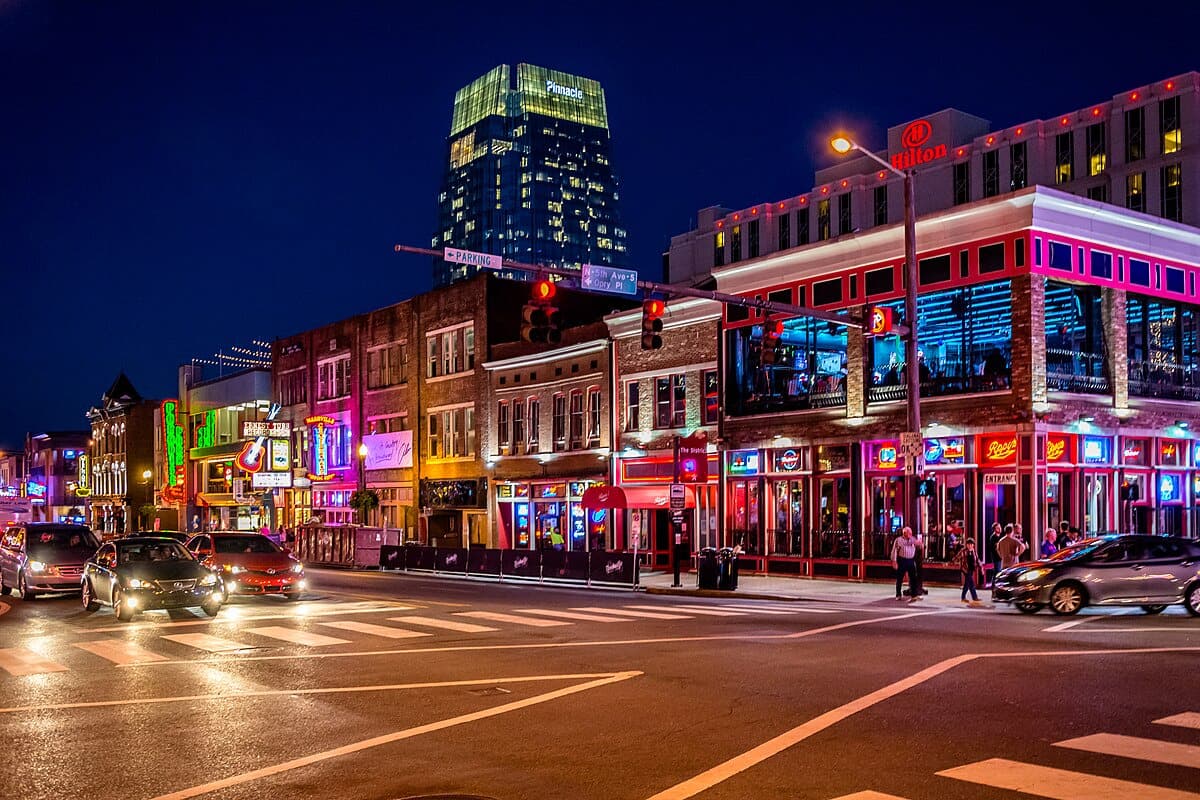
Broadway in Nashville concentrates over 1.6 km the honky-tonks, historic venues and museums that have built the reputation of the world capital of country music.
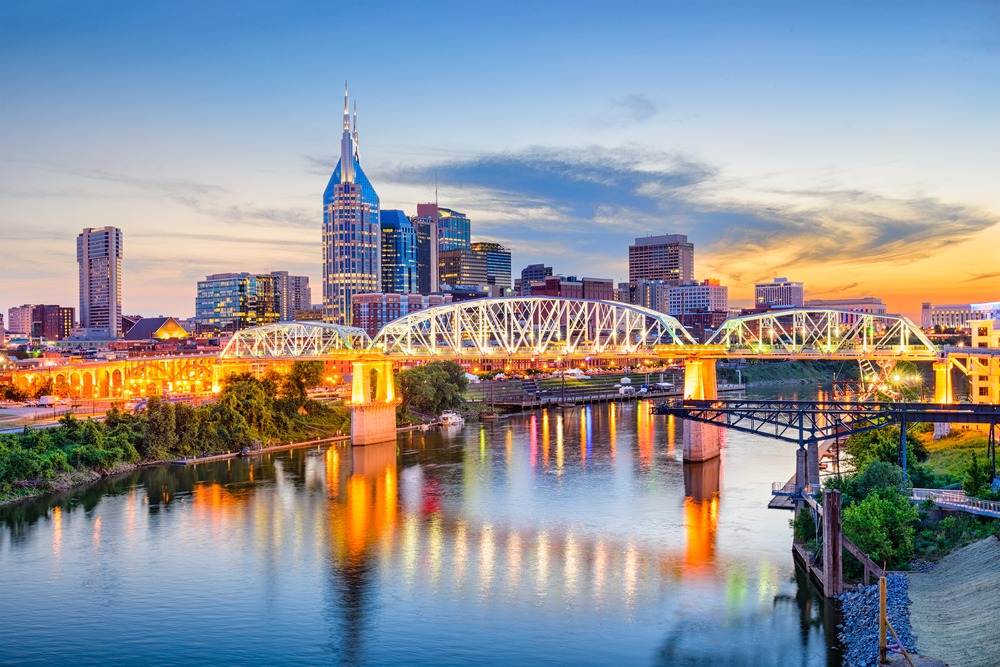
Broadway concentrates over 1.6 km the musical identity of Nashville, the Tennessee capital nicknamed Music City. Between the Cumberland River and Music Row stand around thirty honky-tonks (bars where country music plays continuously), historic concert halls and several museums dedicated to figures of American country music.
Why visit Broadway
Broadway ranks among the busiest thoroughfares in the American South: the avenue and its surroundings welcome several million visitors each year, drawn by continuous live music programming. Local estimates cite more than 180 weekly performances spread across the sector's bars and venues, from morning until late-night closing.
The avenue has seen or launched the careers of Hank Williams, Patsy Cline and Johnny Cash. Today, it remains a place where aspiring musicians, established bands and tourists from around the world intersect. The neon signs, the smell of barbecue and guitars filtering from open doorways create an atmosphere recognizable from your first steps.
History of Broadway
In the nineteenth century, Broadway was merely a commercial route linking downtown Nashville to the Cumberland River. The avenue's trajectory shifted in the 1920s with the creation of radio station WSM and its Grand Ole Opry broadcast, transmitted nationwide. This programming anchored Nashville firmly in the country music landscape.
The first honky-tonks opened along the thoroughfare in the 1940s and served as springboards for traveling musicians. Tootsie's Orchid Lounge, opened in 1960 just steps from the Ryman Auditorium that then housed the Grand Ole Opry, became a gathering point for musicians between performances.
The neighborhood experienced sharp decline in the 1970s and 1980s, linked to the departure of recording studios toward other sections of the city. Extensive urban renovation launched in the 1990s revitalized the avenue. Since then, Lower Broadway, nicknamed the Honky Tonk Highway, has established itself as one of downtown's most active sectors.
What to see and do on Broadway
The honky-tonks of Lower Broadway
A few city blocks concentrate most of the historic music bars:
- Tootsie's Orchid Lounge: opened in 1960, recognizable by its facade and purple walls covered with memorabilia and autographed photos.
- Honky Tonk Central: one of the avenue's largest establishments, sprawling across three levels with programming ranging from traditional country to Southern rock.
- Robert's Western World: old-school venue known for its vintage cowboy boots displayed in the shop and regular jam sessions.
- Nudie's Honky Tonk: tribute to tailor Nudie Cohn, famous for the sequined costumes worn by country stars, with displays of original pieces.
- The Stage on Broadway and Legends Corner: two stages appreciated for the quality of their live programming.
Johnny Cash Museum
The museum houses the world's largest private collection of artifacts dedicated to Johnny Cash, nicknamed The Man in Black. Costumes, manuscripts, instruments and personal items trace the artist's career. Allow approximately 1 to 1.5 hours for your visit.
Ryman Auditorium
Built in 1892, the Ryman is nicknamed the Mother Church of country music. It hosted the Grand Ole Opry for 31 years before the program moved to a larger venue. Guided tours provide backstage access; current programming includes concerts of country, folk, rock and bluegrass.
Frist Art Museum
Housed in an Art Deco building, the former central post office, the Frist features temporary exhibitions of modern and contemporary art. A useful pause to vary the pace between concerts.
Walk of Fame Park
This small park along the avenue honors figures who shaped Nashville's music scene through stars embedded in the ground and commemorative plaques.
Local cuisine and shopping
Broadway concentrates a dense array of restaurants serving Tennessee specialties: hot chicken (spicy fried chicken), smoked barbecue and local whiskey. The avenue's shops offer handcrafted boots, Stetson hats, guitars and vinyl records.
Practical information
Broadway is best explored on foot. The avenue stretches approximately 1.6 km between the Cumberland River to the east and the Music Row neighborhood to the west, making it easy to move from one honky-tonk to another. Parking is paid and limited; several public and private parking lots surround the area, with rates increasing significantly during concert evenings. Advance reservation is recommended during festivals.
Accommodations range from boutique hotels in historic buildings to international chains and youth hostels. Rates on Broadway itself remain higher than in neighboring quarters.
When to visit Broadway
Broadway comes alive year-round, but certain periods merit attention:
- Spring (April-May): pleasant temperatures, moderate crowds.
- Early June: the CMA Fest, a major country music festival, draws tens of thousands of fans; accommodation prices rise sharply.
- Summer: humid heat, packed terraces, outdoor concerts.
- Fall (September-October): comfortable conditions, quieter midweek atmosphere.
- Winter: indoor programming maintained, year-end illuminations downtown.
Thursday through Saturday evenings concentrate the crowds; early-week visits offer a more relaxed atmosphere.
How to get there
Nashville International Airport (BNA) sits approximately 15 km east of downtown. Several options allow you to reach Broadway:
- Rideshare or taxi: journey of about twenty minutes outside peak hours.
- WeGo bus: line connecting the airport to downtown, the most economical option.
- Car: interstates I-40 and I-65 converge toward downtown, facilitating access from Memphis, Knoxville or Louisville.
Once there, walking remains the best way to explore the avenue.
Nearby
- Nashville: to extend your visit with the Country Music Hall of Fame, Tennessee State Capitol or the Music Row neighborhood.
- Broadway (New York): another legendary thoroughfare, in a theatrical register this time, to compare for enthusiasts of iconic urban scenes.
- Bullock Museum: for a cultural detour focused on American history.
FAQ
Frequently asked questions
Plan your trip
Broadway serves as a natural entry point for discovering the music culture of the American South. To integrate Nashville into a broader itinerary, consult our États-Unis travel guide and our suggestions for circuits around Tennessee.
Interested in this visit?
We can include it in your personalised itinerary.