Florida
At the southernmost tip of the États-Unis, the Florida peninsula is surrounded by islands, sun-drenched beaches, and world-class diving sites. A summer destination highly recommended for any trip to the États-Unis.
At the southernmost tip of the États-Unis, the Florida peninsula is surrounded by islands, sun-drenched beaches, and world-class diving sites. A summer destination highly recommended for any trip to the États-Unis.
A holiday of sunshine, leisure, and the sea
Everyone knows Miami and its art museums. We hear about Palm Beach, the dreamy beach frequented by celebrities. Orlando's theme parks are no strangers to the spotlight, with their roller coasters, sea lion and dolphin shows, and film studios delighting thousands of children. We're all too familiar with the space shuttle on Merritt Island. But who can claim to have exhausted Florida's attractions? Separated from Cuba by the Straits of Florida, the peninsula is a concentrate of islands, bays, coral reefs, and sandy beaches. Beyond the overhyped tourist sites, don't overlook the golf courses, breweries, luxury hotels, and terrace restaurants where couples can enjoy a romantic dinner. Visitors would do well to opt for tailor-made vacations, given the seemingly endless possibilities for excursions and leisure activities in Florida. Don't waste another moment! Take flight to Florida today and enjoy extraordinary vacations on the Atlantic coast.
Florida's History
Precolumbian Period
Florida was the cradle of Native American culture that arrived in North America around 12,000 years before the Christian era. These primitive tribes lived off the products of gathering and fishing. The funeral mounds scattered along the Atlantic coasts bear witness to this distant epoch. The sambaqui, shells heaps erected by Native Americans, also carry its traces. Corn cultivation flourished in the region from the 4th century onward. Three indigenous peoples dominated: the Apalachee, the Calusa, and the Timucua.
Colonial Period
European invasion was initiated by Spanish conquistadors. After a long period in which Spain, England, and France vied for control of Florida, the state became an English possession in 1763 under the Treaty of Paris. Many lords settled in St. Augustine and Pensacola, obtaining land rights to the most fertile terrain. Cotton plantations thrived in the colony. The American Revolution from 1775 to 1783 was a blow to Florida. The state sided with the Crown, incurring Spain's wrath, which sent a military detachment there. From 1819 onward, Florida was admitted as a member of the Union.
The Contemporary Era
After the dark years marked by conflicts between North and South and racial segregation, Florida recovered by developing its tourism industry. With its high-quality coastline, invested early on by grand hotels, restaurants, and cruise operators, the gamble paid off.
Today: A Region in the Midst of a Tourism Boom
There is no shortage of good reasons to travel to Florida. Bordered to the east by the Atlantic Ocean and to the west by the Gulf of Mexico, the peninsula offers endless stretches of white sand beaches. The tropical climate explains the generous sunshine, the wealth of biodiversity, and the proliferation of lakes, rivers, and wetlands. Florida positions itself as a premier beach destination in the États-Unis. Its official capital is Tallahassee. Jacksonville is the largest city by population, but the greatest metropolitan area is Miami.
Florida is a territory of incredible diversity. World-class cities like Miami, St. Petersburg, and Orlando are developing luxury tourism. Others show a vocation for ecotourism: Crystal River, the manatee sanctuary; Merritt Island, where the ballet of waterfowl, shorebirds, and songbirds captivates anglers; Florida City, home to the famous Everglades National Park. Beach tourism drives the South: from South Beach to Palm Beach, from Naples to Fort Myers, from Delray Beach to Key Largo, vacation resorts line the coast, enough to seduce any pleasure-seeker. Each destination has its own charm and distinct geographical characteristic. That said, wherever you go in Florida, you'll notice that neighborhoods share family resemblances: a passion for golf, beer, and shopping.
What to See and Do in Florida
With countless outdoor activities, Florida promises an active stay. The coast offers abundant sunshine and beaches, while the interior abounds with sites, historical monuments, and art museums to visit. No matter how long your vacation, you won't have time to get bored.
The Best Beach Resorts in Florida
Miami
Beach, fine sand, and palm trees… A Polynesian setting awaits you at South Beach, the famous American Riviera. Take a stroll in your bikini along the shoreline, push your limits with a jet ski, windsurfing, surfing, or another water sport. Miami's nightclubs are legendary, with live music, delicious cocktails, and impeccably dressed bartenders. On your way back from the beach, wander down Miami's avenues and admire Art Deco buildings in pastel colors. Art museums abound, displaying masterpieces from Italian, German, French, and American schools.
Jacksonville
On Florida's northern coast, Black Rock Beach offers a magical sunrise over the Atlantic. After a boat excursion on the St. Johns River, gallop on horseback along Amelia Island's shoreline and enjoy the luxury hotels of Fernandina Beach. The most spectacular beaches are concentrated on the Emerald Coast.
Clearwater
Nestled in the Gulf of Mexico, Clearwater seduces with its colorful harbor, clear-water beaches, and cultural festivals held throughout the year. The resort is heavily focused on surfing.
Siesta Key
Named twice as the best beach in the États-Unis, Siesta Key beach is surrounded by turquoise waters. The tides are gentle, much to the dismay of surfers and the delight of snorkeling enthusiasts. A more family-oriented atmosphere.
Fort Myers
Fort Myers, the City of Palms, is a jewel of the Gulf Coast. Many tourists take it easy on its beaches and islands, the most important being Captiva and Sanibel. Don't overlook the city's historical monuments, such as the winter residences of Thomas Edison and Henry Ford.
Architectural and Historical Heritage
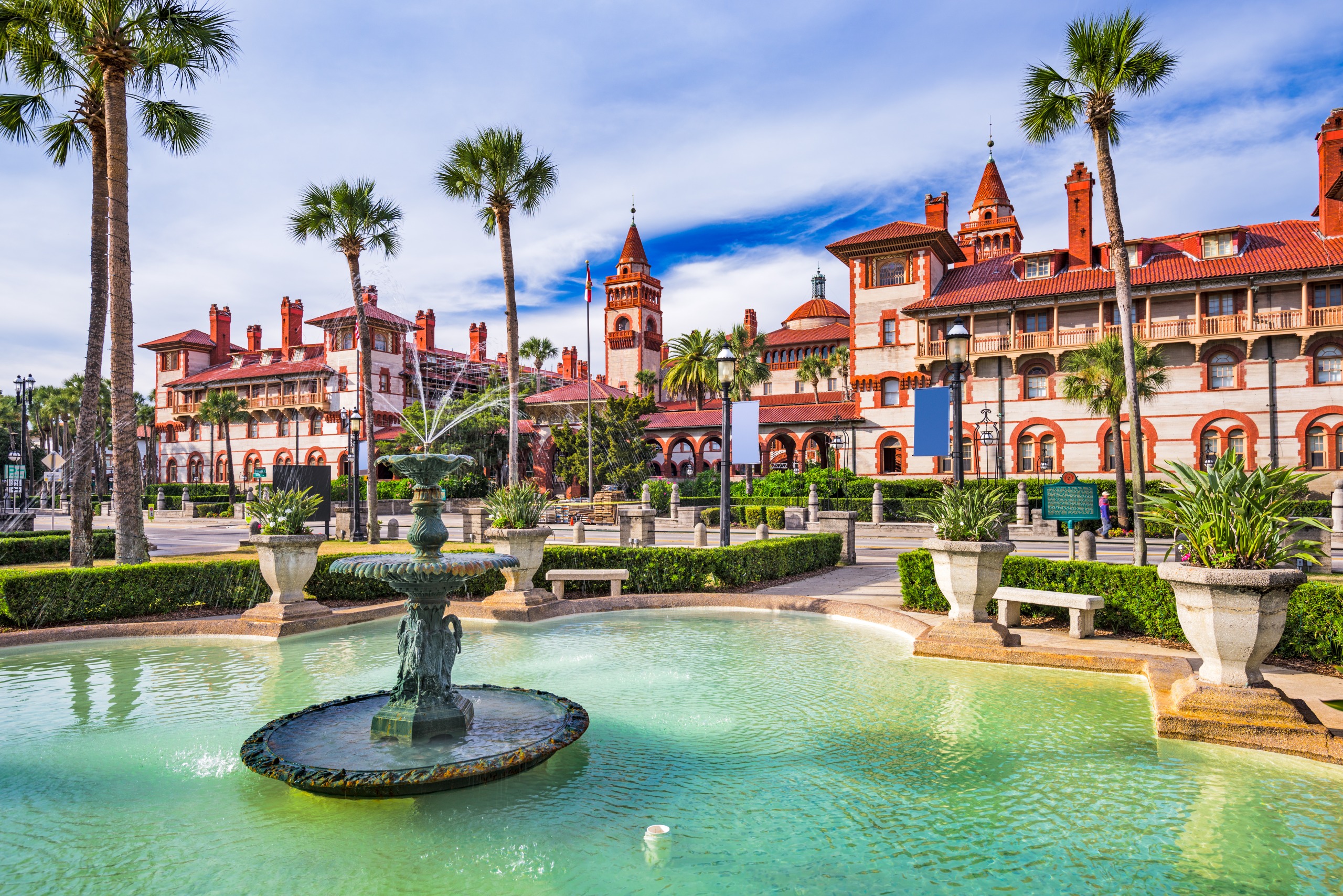
History and culture enthusiasts are encouraged to visit St. Augustine, which could be described as the "mother city of Florida." The former Spanish colony has retained its 17th-century architecture. You'll find this era in the cobblestone streets lined with museums and places of memory, such as the San Marcos Fortress, the Fountain of Youth, and the wooden college.
Natural Heritage
Everglades National Park
A UNESCO World Heritage site, the Everglades jungle is a rich ecosystem of mangroves, bordered by lagoons and salt marshes. Migratory birds thrive here. You'll also encounter manatees and alligators, the two ambassador species of Florida.
Merritt Island National Wildlife Refuge
Merritt Island National Wildlife Refuge is a vast bird sanctuary. Manatees are visible alongside migratory wading birds. After seeing enough birds, head to the Kennedy Space Center, where numerous rockets are launched.
Parks and Museums
Orlando, Tampa, and St. Petersburg rank at the top of family vacation destinations in Florida. Combine business with pleasure by visiting world-renowned museums, art galleries, and theme parks.
The Dali Museum
Located in St. Petersburg, on the campus of the University of South Florida, the Dali Museum is dedicated to Surrealism. It honors the paintings of Salvador Dali, the father of the Surrealist movement.
Walt Disney Park
A half-hour drive from Orlando, Walt Disney Park is ready to welcome families for a day filled with thrills. And how could it be otherwise when fantastic rides spin beneath children's excited screams, when you visit Disney, Pixar, and Lucasfilm studios, and exotic creatures from the far corners of the world parade before your eyes at Disney's Animal Kingdom!
Busch Gardens Tampa Bay
Like Walt Disney Park, Busch Gardens captivates with its thematically decorated roller coasters and its collection of animals gathered from around the globe. After leaving Busch Gardens, you can spend an evening partying in Ybor City.
Florida's Climate
The fact that Florida is close to the Gulf of Mexico has a positive effect on the climate. Summers are hot and humid, just as in tropical countries. Winters are cold (between 50 and 86°F), even though the region doesn't experience snowfall.
Best Time to Visit
Rain is not the biggest concern when planning a tourism-focused trip to Florida. The risk of natural disasters should be taken into account. Keep in mind that Florida is occasionally struck by hurricanes and tornadoes. These disasters typically occur between mid-August and late October. Check the weather forecast before you fly.
Solid air infrastructure supports Florida's tourism growth. Four airports accommodate international flights:
- Orlando Airport, which is the recommended landing strip if you plan to visit attractions in central Florida, such as Walt Disney's theme park for example;
- Miami Airport, which serves southern beach resorts, such as Miami or Fort Myers;
- Tampa Airport, very convenient for travelers from Mexico, Canada, or the Cayman Islands;
- Fort Lauderdale-Hollywood Airport, which offers affordable flights to the Everglades cruise port.
You'll Love
- Perfecting your tan at South Beach;
- Admiring the Art Deco buildings of Miami;
- Swimming alongside manatees, sea turtles, and birds;
- Planning a family day at Busch Gardens Tampa Bay;
- Visiting Orlando's theme parks;
- Taking a speedboat ride through the Everglades;
- Strolling through museums for an educational and cultural experience.