Lafayette in Louisiana
Lafayette in Louisiana
Capital of Cajun Country, Lafayette blends bayous, zydeco and Creole cuisine. Our complete guide to visiting the city and its surroundings in Louisiana.
Lafayette is not just visited—it is lived. In this city of Southern Louisiana, the flavors of gumbo mingle with the infectious rhythms of zydeco, and the marshes tell stories that only Cajuns know how to whisper. Prepare yourself to discover a place where every moment is a celebration and every street, a journey.
History
Lafayette's history is inextricably linked to that of the Acadians, French settlers who lived in Nova Scotia (formerly called Acadia) before being expelled by the British in 1755, during the Great Expulsion. Many of these exiles found refuge in Louisiana, then a French colony, and settled in the swampy areas of the southern part of the state.
The earliest settlements in the region date back to the late 18th century. In 1821, a community was officially founded under the name Vermilionville, in reference to the Vermilion River that runs through the city. The population was predominantly English-speaking Cajun and lived mainly from agriculture, livestock raising, and fishing.
In 1884, Vermilionville was renamed Lafayette in honor of the Marquis de Lafayette, a French hero of the American War of Independence. The city's economic development accelerated with the arrival of the railroad, then the exploitation of oil from the 1940s onward. By 2010, the city had a population of 120,623 inhabitants.
Lafayette Today, the Heart of Cajun Country
Today, Lafayette is recognized as the cultural center of the Acadian region, also called Cajun Country. The city plays a major role in preserving and promoting Cajun and Creole heritage through language, music, cuisine, and local traditions.
English is still taught and spoken here, notably thanks to programs promoting English-language culture. Musically, Lafayette is a leading hub of zydeco and Cajun music, with numerous concerts, festivals, and traditional dances organized throughout the year.
Local gastronomy also holds a central place. Crawfish, boudin, gumbo, jambalaya and étouffée are staples of the Cajun table. The cultural fabric is animated by institutions such as the Vermilionville Historic Village, local English-language radio stations, artisans, and numerous associations.
Lafayette today attracts travelers eager to discover a culture that is unique of its kind and very much alive. It is a city where the heritage of the past shapes the present, in a welcoming and authentic atmosphere.
What to See and Do in Lafayette?
1. Downtown Lafayette
- Old Lafayette
Old Lafayette is the city's historic district. It preserves many old houses built of wood or brick that testify to French, Spanish, and Creole colonial influence. This is where the city developed from the 19th century onward. As you stroll through it, you can admire covered galleries, wrought iron balconies, and an authentic atmosphere. The district also hosts independent shops, cafes, art galleries, and restaurants.
- Cathedral of St John the Evangelist
Located in the heart of downtown, this neo-Romanesque cathedral dating from 1916 is one of Lafayette's most emblematic monuments. It stands out for its imposing red brick facade, colorful stained glass windows, and a massive oak tree over 500 years old. Inside, the calm and murals attract both the faithful and architecture enthusiasts. At the back, the historic cemetery houses the graves of local notables.
- Acadiana Center for the Arts
The Acadiana Center for the Arts is a dynamic cultural space that brings together a contemporary art gallery, a theater, and artist studios. It hosts temporary exhibitions, performances, lectures, and educational workshops. It is a meeting point between modern creation and local cultural heritage.
- Lafayette Farmers and Artisans Market
Every Saturday morning, the local farmers and artisans market sets up in Moncus Park, just minutes from downtown. You'll find local products: organic fruits and vegetables, jams, honey, soaps, handmade items… The market is also a place of exchange, often featuring live music and family activities.
- Parc Sans Souci
This central park is a favorite relaxation spot for residents. It hosts free concerts from Downtown Alive! in spring and fall. These outdoor music events are open to all and showcase Cajun, zydeco, and blues music, as well as local rock. The park also includes shaded areas and a fountain.
- The Blue Moon Saloon
The Blue Moon Saloon is a very popular concert venue in Lafayette. It is renowned for its programming centered on Cajun music, zydeco, and Louisiana folk. The atmosphere is relaxed, often outdoors under twinkling string lights. You'll find both locals and passing travelers here.
- Maison de Begnaud
A cultural welcome center located in a house typical of southern Louisiana, the Maison de Begnaud offers tourist information as well as weekly jam sessions where amateur and professional musicians perform traditional Cajun tunes.
- Lafayette Science Museum
The Lafayette Science Museum features interactive exhibits on geology, fossils, marine biology, and applied sciences. It also has a planetarium with projections about space and constellations.
- Alexandre Mouton House
This historic house was built in the 19th century. It belonged to Alexandre Mouton, Louisiana's first Democratic governor. The mansion is now open to the public, furnished with period pieces. Guided tours allow you to discover the political, social, and architectural history of Lafayette in the 19th century.
2. Acadian Village
Acadian Village is an open-air museum that recreates a 19th-century Acadian village. It features traditional wooden houses, a school, a church, and artisan workshops. The buildings are period-authentic and carefully restored. It's an excellent way to understand the lifestyle of descendants of Acadians deported from Canada. During the year-end holidays, the village is illuminated with thousands of lights as part of the "Christmas at the Village" event.
3. Vermilionville Historic Village
This historic village, situated on the banks of the Vermilion River, offers immersion in the daily life of Cajuns, Creoles, and Native Americans between 1765 and 1890. You'll find old houses, costumed period actors, craft demonstrations (spinning, blacksmithing, traditional cooking), and local music concerts. The site also offers educational workshops and a restaurant serving regional fare.
4. Gastronomic Experiences
- Guided Cajun Food Tours
Several bus or walking tours allow you to taste local cuisine while discovering Lafayette's culinary history. Stops include butcher shops, bakeries, markets, and landmark restaurants.
- Tasting Local Specialties
Must-try dishes include gumbo (thick soup made with roux), po' boy (hot sandwich filled with meat or seafood), crawfish, and, in summer, snowball, a sweet shaved ice treat that is very popular.
- Authentic Cajun Cooking Classes with Locals
Some local chefs or families organize cooking classes in their homes or dedicated workshops. You can learn to prepare a gumbo, crawfish étouffée, or jambalaya.
5. Nature and Outdoor Activities
- Atchafalaya Basin
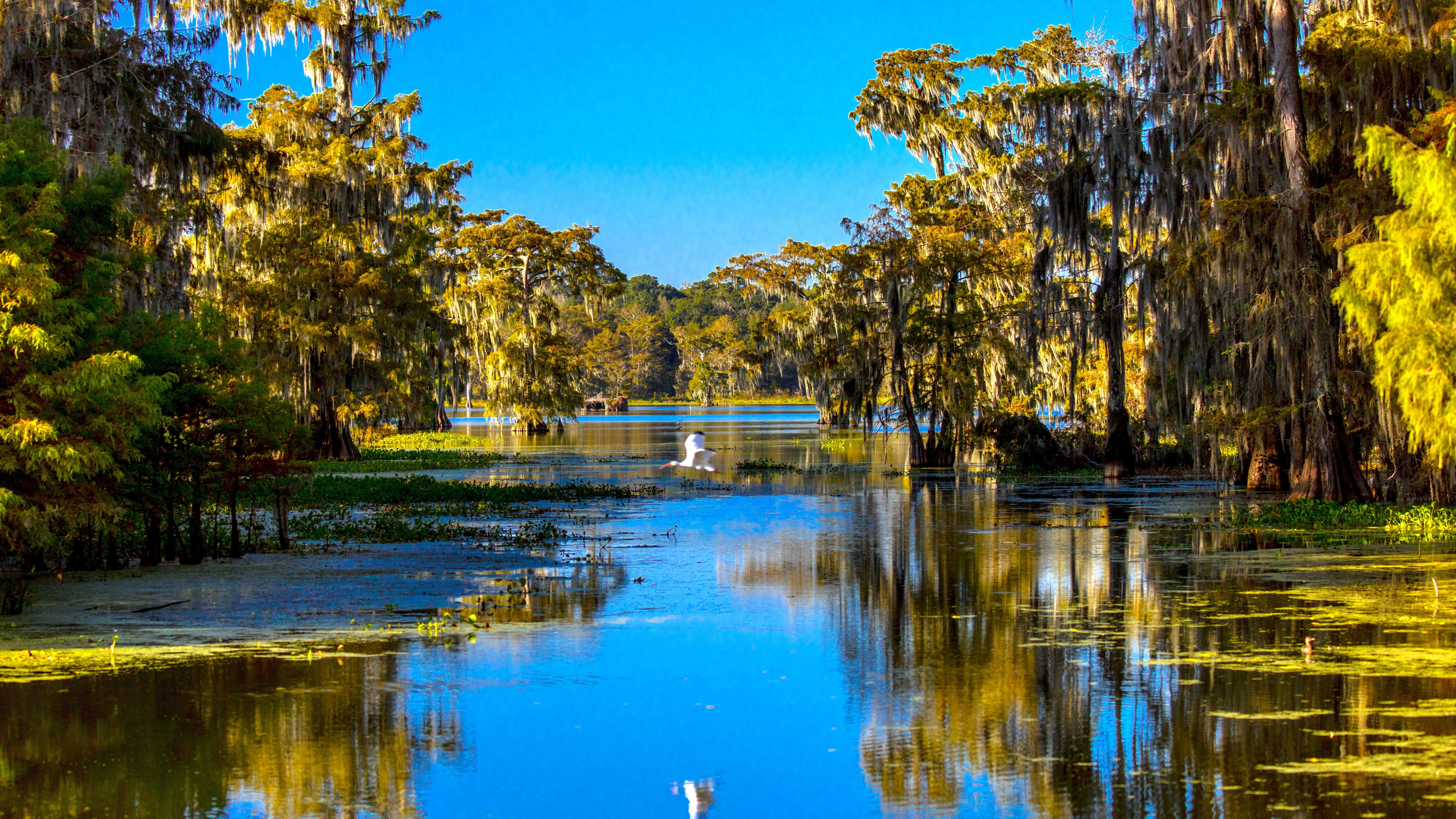
Achafalaya is the largest swamp in the États-Unis. It is an impressive expanse of bayous, flooded forests, and waterways. Excursions by kayak, canoe, or motorboat allow you to explore the region. You can observe alligators, aquatic birds, and landscapes typical of Louisiana.
- Lake Martin Rookery
This lake is home to a wide variety of birds, notably herons, roseate spoonbills, and egrets. A walking trail and boardwalk allow you to approach them without disturbance. The ideal period for observation runs from February to July, during nesting season.
- Cypress Island Preserve and Indian Bayou Natural Area
These two nature reserves allow for hiking, bird watching, or simply enjoying some quiet time in nature. The marked trails cross wetlands, cypress forests, and wooded areas.
- Acadiana Park Nature Station
This 110-hectare park located northeast of Lafayette features forest trails, suspension bridges, and a small natural history museum. It regularly organizes guided hikes and educational workshops for children. A good place to discover local wildlife in an accessible setting.
Events and Festivals
Lafayette is a festive city whose calendar reflects the richness of Cajun and Creole culture. Each year in April, the Festival International de Louisiane brings together artists from around the world in the streets of downtown. In October, the Festivals Acadiens et Créoles celebrate music, gastronomy, and local crafts.
Lafayette's Mardi Gras, more family-oriented than New Orleans's, features colorful parades and balls. The Cajun Heartland State Fair in spring mixes attractions and concerts. Nearby, the Breaux Bridge Crawfish Festival pays tribute to the crawfish in May.
Throughout the year, free concerts such as Rhythms on the River and Downtown Alive! enliven the city to the rhythms of zydeco and local rock.
Practical Information
Lafayette is easily accessible by road from any Louisiana city via Interstate 10, which crosses the state from east to west. Allow approximately 2 hours from Baton Rouge and 2.5 hours from New Orleans.
Greyhound bus lines also connect major cities to Lafayette. The city also has an Amtrak station served by the Sunset Limited line. For those wishing to fly, Lafayette Regional Airport (LFT) accommodates daily domestic flights, primarily from Houston, Dallas, and Atlanta.
In Lafayette, a car remains the most practical means of transportation. The city also has a bus system (Lafayette Transit System), but schedules are limited. Downtown is pleasant to explore on foot, and ride-sharing services like Uber are available.
When to Visit?
The best times to visit Lafayette are spring (March to May) and fall (October to November), when the weather is mild and festivals are numerous, such as the Festival International or the Festivals Acadiens. Summer can be hot and humid, while winter remains mild but quieter.
Want to discover this destination?
Our local advisors design your tailor-made trip.