Baton Rouge
Baton Rouge
An often-overlooked capital of Louisiana, Baton Rouge blends English-speaking history, plantations, rich museums, and Cajun Creole cuisine between Houston and New Orleans.
Bathed by the Mississippi River, Baton Rouge is the capital of Louisiana, a state in the South of the United States. It owes its name to the large red poles planted by Native Americans to mark their territorial boundaries. A major industrial metropolis, Baton Rouge remains relatively unknown to foreign visitors as a tourist destination. Many travelers indeed overlook its attractions in favor of New Orleans, Cajun Country, or the Creole Nature Trail. Yet as a city steeped in history and museums, Baton Rouge is well worth the detour.
History
Baton Rouge's history dates back to 1699, when French navigator Pierre Le Moyne d'Iberville received a commission from Louis XIV to explore the Mississippi and claim Louisiana for France. Louis XIV sought to outpace England's Jacques II.
While Cavalier de la Salle met a tragic end, Pierre Le Moyne successfully carried out his mission. In 1718, he built a fort where colonists could seek refuge in case of Native American attacks. Baton Rouge was formally established in 1749.
The explorer noted in his travel journals the presence of large red poles that marked the boundary between the hunting territories of the Bayougoula and Houmas Indians. Bear and fish skulls were suspended from them. This is how the name "Istrouma" or "baton rouge" came to be, christening the colony by Pierre Le Moyne.
The French did not long rejoice in their conquest. The colony yielded only meager financial returns. Disappointed, Louis XIV ceded Louisiana to Spain, but after a few years, Spain returned it to France.
In 1763, Baton Rouge was incorporated into the Government of West Florida under the Treaty of Paris, which ended the Seven Years' War. Later, cotton fever swept the region. Elias Beauregard, a wealthy French farmer, launched large-scale cotton production.
Rather than hire laborers, he chose to acquire enslaved workers. Other colonists followed suit. The city's port became infamously linked to the slave trade.
Today
Baton Rouge was officially designated Louisiana's capital in 1849. The city, home to nearly 220,236 residents, stands at the heart of a metropolitan area of 834,159 people, the largest in Louisiana after New Orleans.
Industry thrives here: oil refineries, salt extraction plants, and natural gas operations. Thanks to its strategic location, the Port of Baton Rouge ranks 10th nationally in cargo tonnage.
Beyond being a major economic hub, Baton Rouge serves as the intellectual, cultural, and religious center of the state. Despite this, it has managed to preserve the charm of a living museum.
What to See and Do in Baton Rouge?
1. The Louisiana State Capitol
An imposing skyscraper standing 137 meters tall with 34 stories, the Louisiana State Capitol is the tallest state capitol building in the United States. Built in 1932 in Art Deco style, it commands attention. Don't miss the observatory on the 27th floor, which offers panoramic views of Baton Rouge and the Mississippi. Admission is free, and guided tours are available as schedules permit.
2. Louisiana's Old State Capitol
Built in the mid-19th century, the Old State Capitol stands out for its Gothic Revival architecture reminiscent of a medieval castle. This magnificent neogothic building now houses a free museum dedicated to the state's political history. Its spiral staircase and stunning stained-glass dome make it one of Baton Rouge's most iconic landmarks, with unobstructed views over the river.
3. Museums
Baton Rouge boasts several museums that chronicle Louisiana's history, culture, and sciences. Here are the must-sees during your visit.
— Louisiana Art & Science Museum
Located in a former railroad depot, this museum merges art and science. It features varied exhibitions, a planetarium, and a unique centerpiece: an Egyptian mummy dating from 300 BCE. Educational programs enhance the experience.
— LSU Rural Life Museum
A true open-air museum, the LSU Rural Life Museum preserves the vernacular architecture and culture of rural 18th and 19th-century Louisiana. Over 30 historic buildings and a remarkable collection of period artifacts are displayed within the lush Windrush Gardens.
— USS KIDD Veterans Museum
This World War II destroyer, moored on the Mississippi, functions as a museum ship. Visitors explore crew quarters, decks, and technical spaces, guided by vivid testimonies of naval history.
— Capitol Park Museum
Situated near the Capitol, it traces Louisiana's identity through modern, interactive exhibits. You'll discover the state's political history, the legacy of slavery, and its rich musical heritage, from New Orleans jazz to zydeco.
4. Nature and Surroundings
The Baton Rouge region offers numerous places to reconnect with nature.
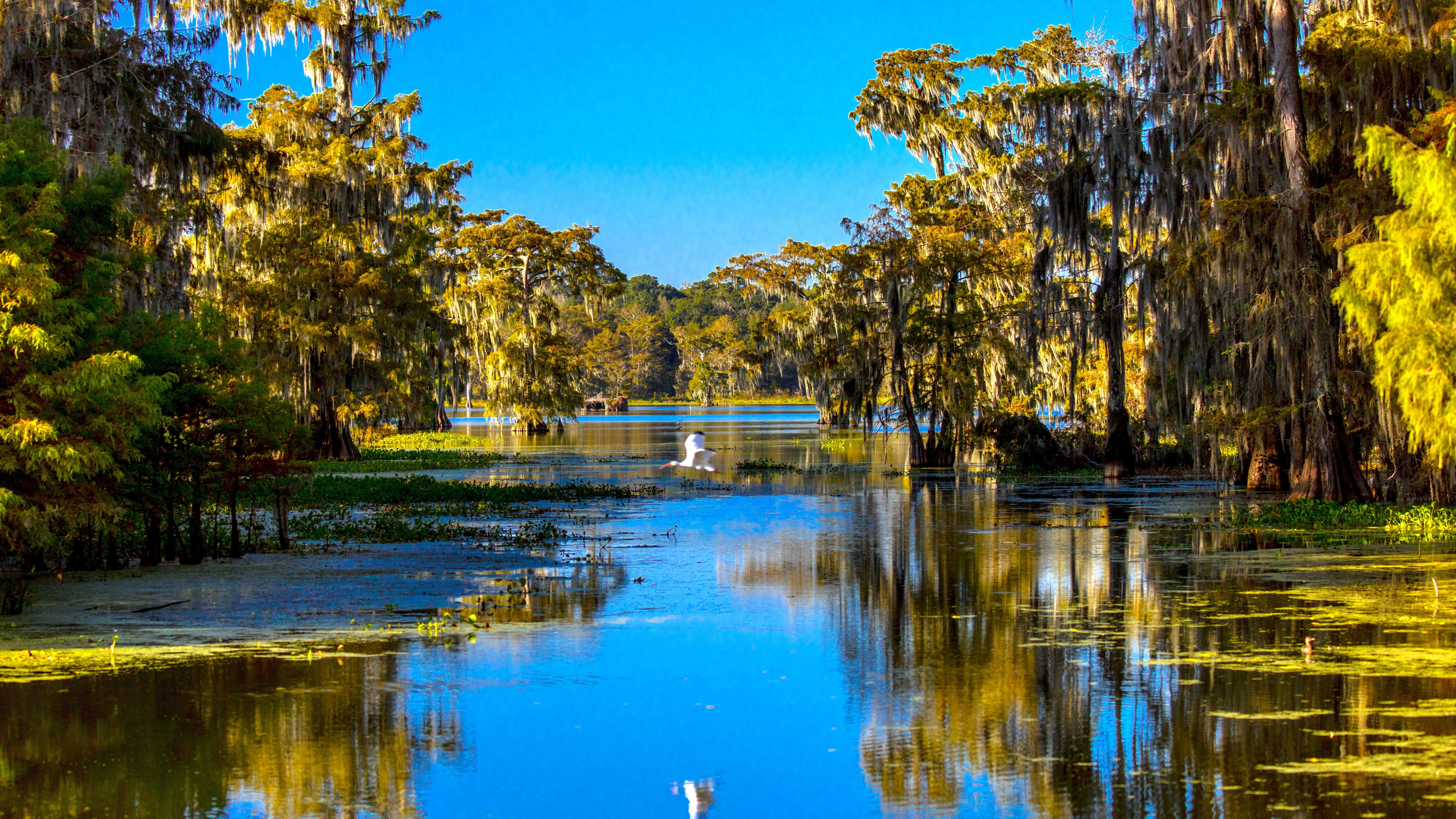
The Bluebonnet Swamp Nature Center, a nature conservation facility, harbors fascinating wildlife and flora. Visitors can traverse the elevated 1.6-km trail to explore the marsh and hardwood forest.
The Riverfront Plaza & City Dock, located near downtown, affords magnificent views of the Mississippi and the USS KIDD warship.
Also visit the region's historic plantations. Rosedown and Oak Alley are among the best-known.
5. Local Life
Baton Rouge is a vibrant city. If you enjoy sports, head to Tiger Stadium, home to Louisiana State University's (LSU) football team. The atmosphere is festive, especially on game nights.
The Red Stick Farmers Market is a gathering spot for locals and tourists alike. Fresh produce, local goods, and prepared meals await.
Finally, don't miss Zeeland Street, an African American restaurant landmark named among the New York Times' 50 best restaurants in 2024, or Coffee Call, for excellent coffee and beignets.
When to Visit Baton Rouge?
Baton Rouge enjoys a subtropical climate, an asset shared across the Southeast. The best time to visit is during spring or autumn. Weather conditions are pleasant during these seasons (16 to 20°C). Avoid May, June, July, and August, when summers can be stormy, and September, when tornadoes strike.
How to Get There?
Baton Rouge is served by Baton Rouge Metropolitan Airport (BTR), with domestic flights from Atlanta, Houston, and Dallas. Most international travelers connect through New Orleans Airport (MSY), located 120 km away, then reach Baton Rouge by car, bus, or shuttle. The city is also accessible via Interstate 10, a major highway connecting Houston and New Orleans.
Getting Around
A car remains the most convenient way to explore Baton Rouge and its surroundings, particularly plantations and natural sites. Downtown, the CATS bus network provides regular service, complemented by taxis and rideshare options (Uber, Lyft). Biking and walking are pleasant for exploring the historic district and Mississippi riverbanks.
FAQ
Is it safe to stay in Baton Rouge?
Baton Rouge is generally safe for visitors, especially in tourist zones and downtown areas. As everywhere, it's wise to avoid isolated neighborhoods at night and remain vigilant.
Is the cost of living in Baton Rouge high?
The cost of living in Baton Rouge is reasonable. Restaurants and accommodations are affordable compared to other major American cities, though some upscale dining and lodging options can be pricier.
What festivals take place in Baton Rouge?
The city hosts several major events including the Baton Rouge Blues Festival, Bayou Country Superfest, and Mardi Gras celebrations. Other cultural and musical events punctuate the year, reflecting local richness.
How many days do you need to visit Baton Rouge?
Two to three days allow you to visit Baton Rouge's main attractions: capitols, museums, plantations, and the riverfront. It's also enough time to soak up the Cajun-Creole atmosphere and discover local gastronomy.
Want to discover this destination?
Our local advisors design your tailor-made trip.