Valley of Fire State Park
Valley of Fire State Park
An hour northeast of Las Vegas, Nevada's oldest state park concentrates red sandstone formations, Ancestral Puebloan petroglyphs, and desert trails.
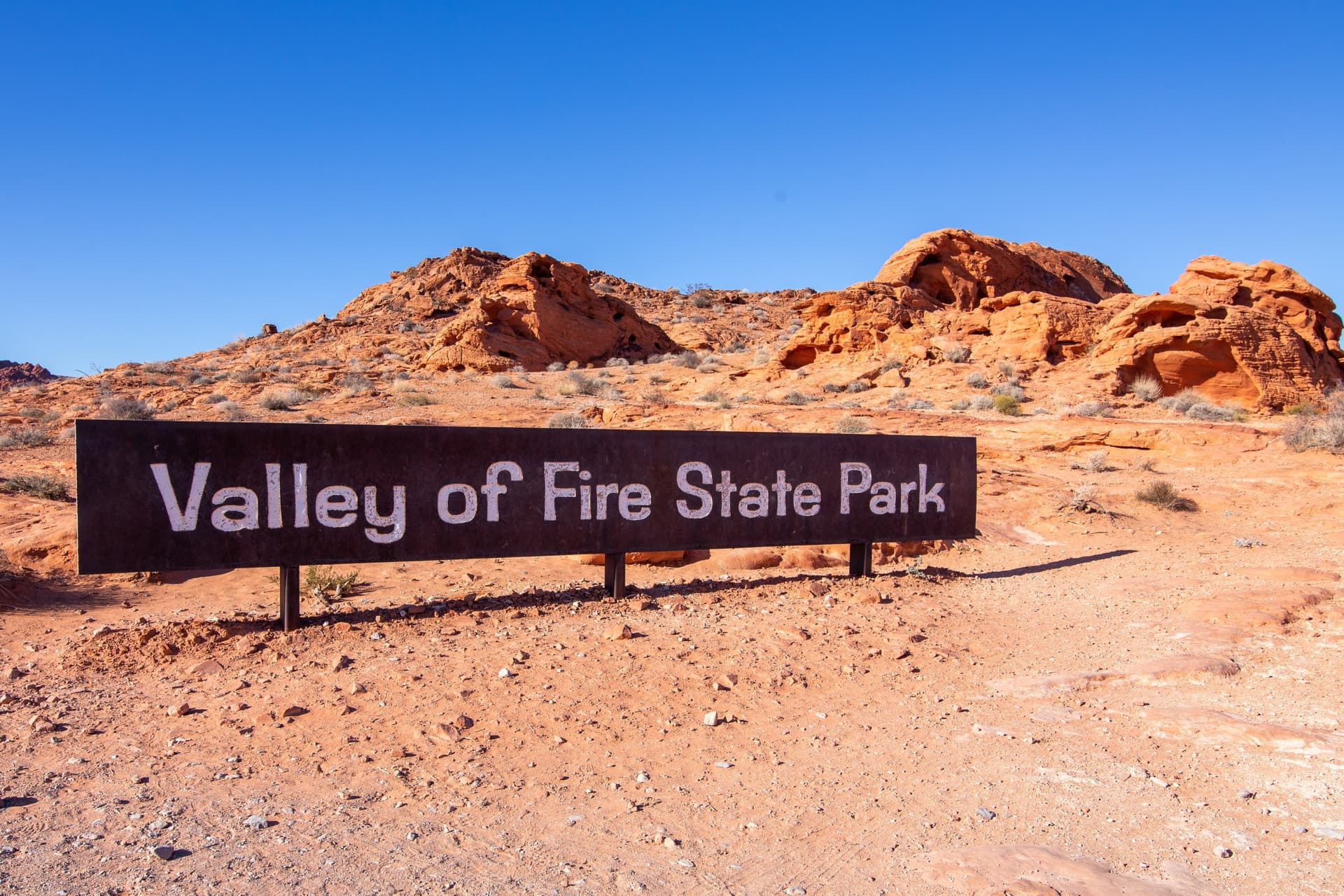
About 80 km northeast of Las Vegas, Valley of Fire State Park unfolds its red sandstone formations across nearly 170 km² of the Mojave Desert. Nevada's oldest state park, it takes its name from the flamboyant hues of its sedimentary rocks dating from the Mesozoic era, sculpted by wind and water over millions of years. The contrast between the red cliffs and blue sky intensifies at sunrise and sunset, the park's most photographed moments.
Why visit Valley of Fire
The park concentrates several reasons to stop within a modest area:
- Rock formations with distinctive silhouettes, named by rangers: the white elephant, the beehive, the grand piano.
- Tangible Native American heritage with petroglyphs over two thousand years old.
- About ten marked trails, all accessible in a half-day.
- Observable desert wildlife, including the bighorn sheep, Nevada's emblem.
- Direct proximity to Las Vegas, making it a one-day excursion manageable without heavy logistics.
A land inhabited for two millennia
The Valley of Fire area has been inhabited for over two millennia. The first known occupants are the Anasazi, a Native American people also called Ancestral Puebloans, who frequented the region for hunting and rituals. They left hundreds of petroglyphs carved into rock walls: animal silhouettes, geometric motifs, hunting scenes, representations of atlatls (dart throwers used before the bow).
Two sites concentrate these engravings and remain accessible to the public: Atlatl Rock, equipped with a wooden platform for close observation, and Mouse's Tank, where inscriptions line a sandy trail. The park was officially established in 1935, becoming Nevada's first state park.
What to see and do in the park
The majority of visitors explore the park via its hiking trails, short and well-marked. Four itineraries stand out.
Fire Wave Trail
A 2.4 km round-trip loop with no significant elevation change. It leads to the Fire Wave, an undulating formation striped in red, pink, and white, which has become the park's most widely circulated image. Avoid in peak summer: no shade on the trail.
White Domes Trail
A varied 2 km loop that crosses sand dunes, a narrow slot canyon, and natural arches. You'll spot remnants from the filming of The Professionals (1966), deliberately left in place.
Mouse's Tank Trail
An easy 1.6 km round trip through a sandy canyon. The trail's name comes from a 19th-century outlaw who allegedly hid near the natural basin at the end of the hike. A significant concentration of petroglyphs lines the walls.
Atlatl Rock and Rainbow Vista
Atlatl Rock is reached in a few minutes from the parking area via a metal staircase. Rainbow Vista, further east, overlooks a panorama of colored geological layers. Climbers will find a few routes, provided they respect protected areas.
Fauna and flora
Coyotes, foxes, rabbits, antelope squirrels, and desert tortoises live in the park. Bighorn sheep can occasionally be spotted on the heights, especially early and late in the day. Vegetation consists of cacti, yuccas, agaves, and creosote bushes.
Practical information
The park is open year-round, generally from sunrise to sunset. An entrance fee per vehicle is charged at each access point, with a reduced rate for vehicles registered in Nevada; an annual pass valid across all state parks exists for regular visitors. Check current fees on the Nevada State Parks official website before departing.
A visitor center near the west entrance features exhibits on geology, Native American history, and local wildlife, as well as a shop. Two campgrounds, Atlatl Rock Campground and Arch Rock Campground, operate on a first-come, first-served basis: picnic tables, barbecues, facilities.
A few rules to follow: stay on marked trails, take nothing (rock, plant, artifact), do not carve or paint walls, do not feed wildlife, light fires only in designated areas.
When to visit
Spring (March–May) and fall (October–November) offer the best windows: daytime temperatures between 15 and 25 °C, clear light, manageable crowds. Summer is challenging, with peaks reaching 40 °C and a real risk of heat stroke on exposed trails; if you visit then, start at dawn and bring several liters of water per person. In winter, days are mild but nights drop to 0 °C, something to anticipate if you're camping.
How to get there from Las Vegas
Allow about an hour's drive from the Strip. Take I-15 north, exit toward Valley of Fire Highway (Route 169), then follow it for about twenty kilometers to the park's west entrance. Check the exit number on your GPS before leaving, as some road signs have changed. No public transportation serves the park: a rental car is essential, unless you opt for an organized excursion departing from Las Vegas.
Nearby combinations
Valley of Fire lends itself well to an expanded itinerary in the American Southwest. Lake Mead and Hoover Dam are about an hour's drive south, on the same loop from Las Vegas. To extend your experience of wide-open spaces, Crater Lake National Park or Cave of the Winds rank among the country's most striking natural sites. Road trip enthusiasts will appreciate a detour to Cadillac Ranch in Texas.
Frequently asked questions
Frequently asked questions
Allow 3 to 5 hours to hike the main trails (Fire Wave, White Domes, Mouse's Tank) and visit the visitor center. A full day allows you to add Atlatl Rock, Rainbow Vista, and several viewpoints without rushing.
Early morning and late afternoon: the low-angle light intensifies the reds of the rocks and the heat remains bearable. At midday in summer, exposed trails become dangerous.
The scenic drive allows you to see the main formations from the car. The visitor center and several observation areas (including Atlatl Rock via the platform) are accessible. Most trails, however, traverse sandy or rocky terrain, poorly suited for wheelchairs.
No public transportation serves the park. Your only options are a rental car or an organized day excursion from Las Vegas.
Planning the rest of your trip
Valley of Fire fits naturally into a circuit across the American West combining national parks, deserts, and iconic cities. To build a custom itinerary, consult our travel ideas for the United States.

Interested in this visit?
We can include it in your personalised itinerary.