Waipio Valley
Waipio Valley
Birthplace of Hawaiian civilization between 600-meter cliffs, waterfalls and taro fields, Waipio Valley is discovered mainly from its overlook, 80 km from Hilo.
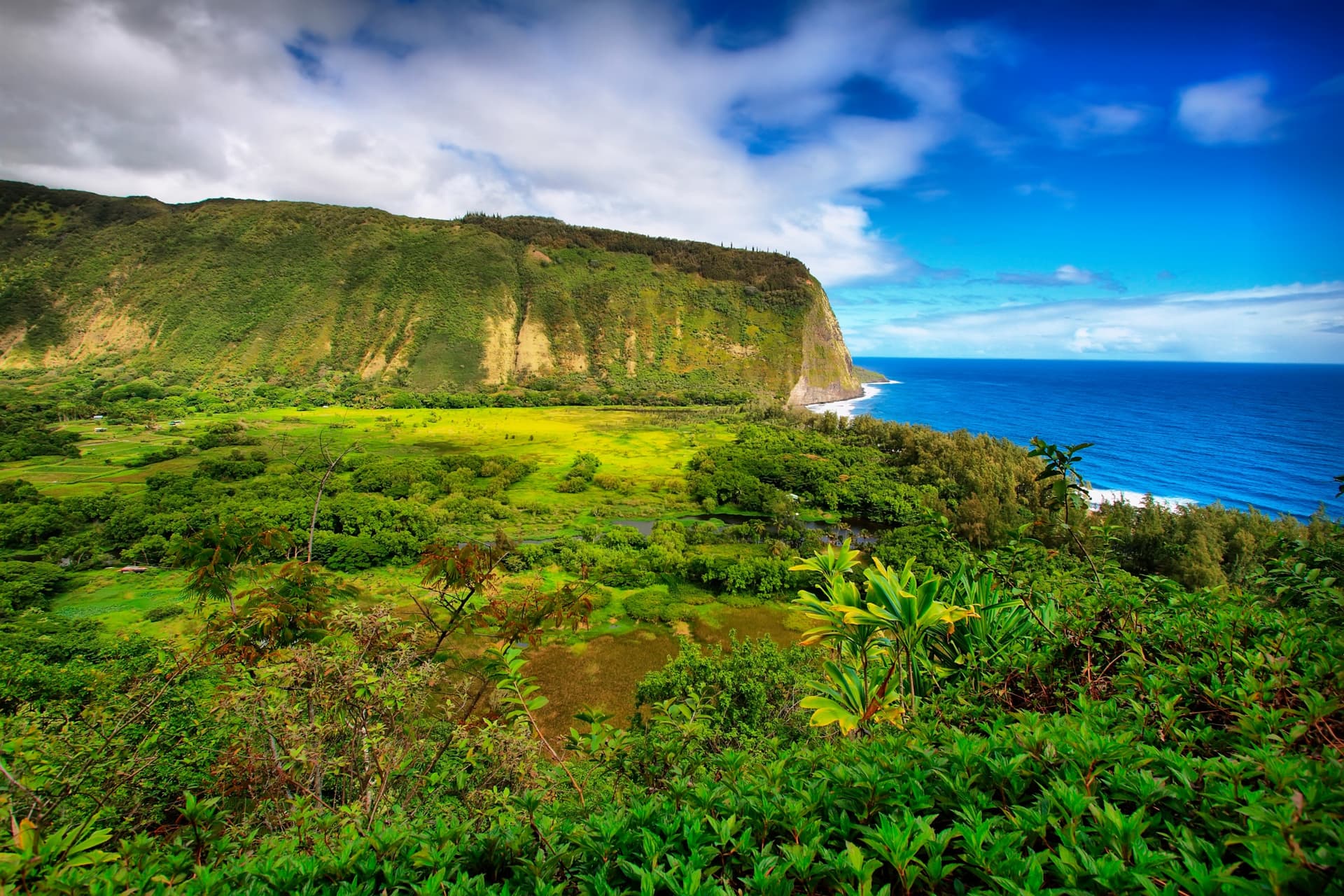
Waipio Valley stretches between cliffs rising over 600 meters on the northeast coast of Hawaii's Big Island, roughly 80 km from Hilo. Nicknamed the "Valley of the Kings," it holds sacred significance for Hawaiians and remains one of the most history-laden sites in the archipelago. Taro fields, black sand beach, vertiginous waterfalls, and free-roaming horses compose a landscape shaped as much by geology as by Polynesian culture.
Why visit Waipio Valley
The valley concentrates several facets of Hawaii rarely found in one place: a sacred site in Hawaiian cosmology, living agricultural heritage centered on taro cultivation, waterfalls ranked among the highest in the United States, and a volcanic sand beach. The atmosphere remains preserved thanks to geographic isolation and controlled visitor numbers.
Good to know: since 2022, access to the valley floor has been regulated by Hawaii County and restricted to residents and authorized persons. The overlook at the top of Highway 240 remains open and offers the most iconic view of the valley. Check the current access status before planning your visit.
History and sacred dimension
Waipio is considered one of the birthplaces of Hawaiian civilization. It was here that the future King Kamehameha I spent part of his youth before unifying the islands in the late 18th century. The valley was a major political and spiritual center, home to heiau (temples) and several royal residences.
In Hawaiian mythology, the valley is associated with Lono, the god of fertility and rain, and Kāne is linked to the creation of the first humans. The war god Kūkaʻilimoku, whose image Kamehameha carried during his campaigns, is also connected to this territory.
Today, roughly 50 people live in the valley. They cultivate taro using traditional methods, preserve the Hawaiian language, and perpetuate practices such as hula dancing and chanting, which transmit oral history.
What to see in the valley
Hiilawe Falls
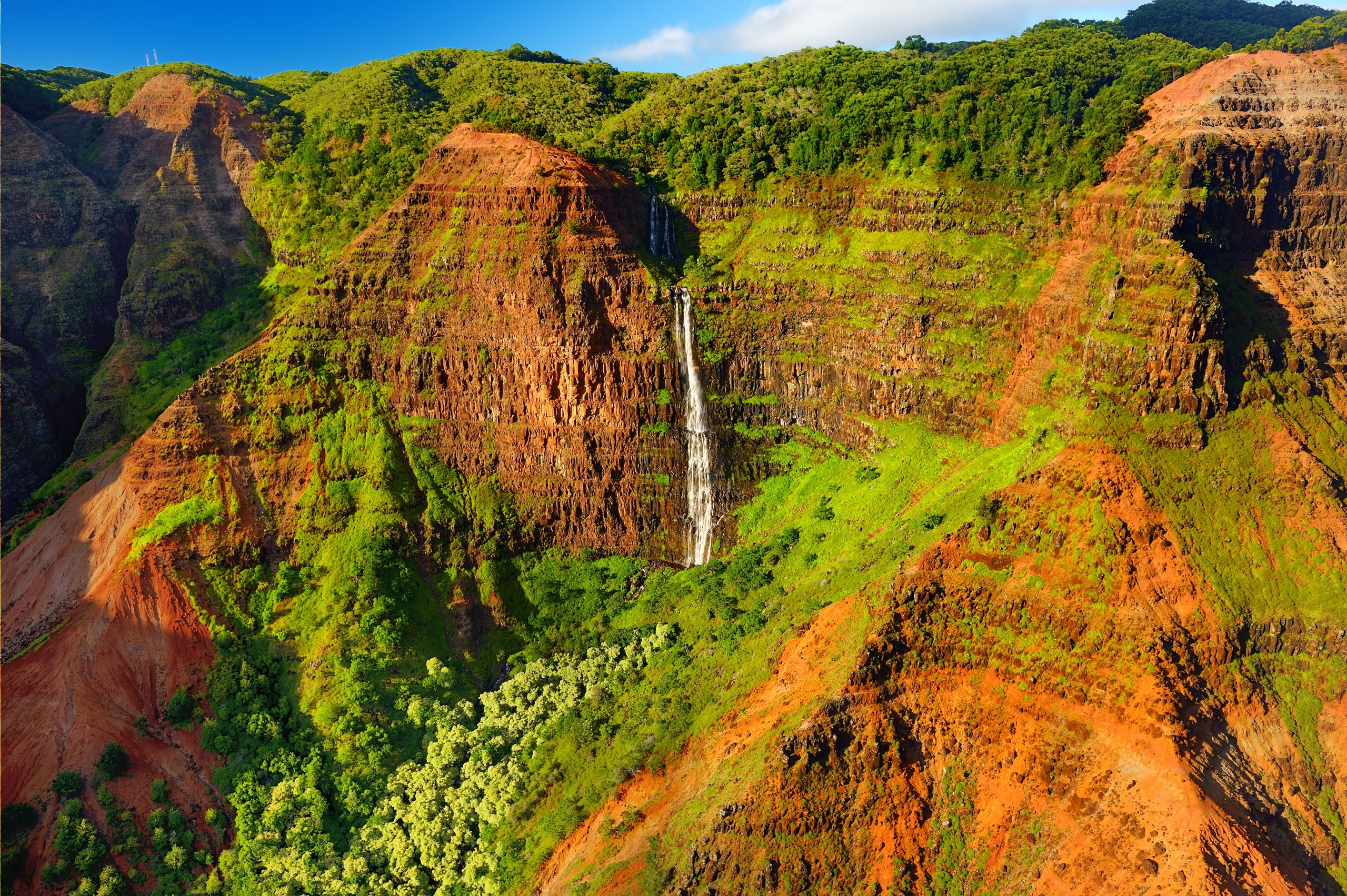
Hiilawe Falls rank among Hawaii's highest waterfalls. Visible from the valley floor, they cascade down the cliff in an almost continuous stream when water flow is sufficient. Viewing them from trails remains subject to current access regulations.
Waiulili Waterfalls
More secluded, Waiulili Waterfalls are accessible via a steep trail through tropical vegetation. The terrain can be slippery and requires sturdy footwear.
Black sand beach
The black sand beach stretches for roughly one kilometer, bordered by volcanic rocks. Facing west, it is prized for its sunsets. Currents are strong and swimming is best left to experienced swimmers; surfing is occasionally practiced by experienced locals.
Free-roaming horses
Horses descended from herds introduced by Europeans in the 18th century roam freely through the taro fields. They are an integral part of the landscape and respected by residents. From a distance, they can be easily spotted from the overlook or authorized trails.
Wailoa Stream and taro fields
Wailoa Stream flows through the valley and feeds the loʻi, the irrigated plots dedicated to taro cultivation. This agricultural mosaic structures the valley floor and testifies to an ancestral activity still thriving today.
Practical information
- Access to the valley floor: restricted since 2022, verify with local authorities before your visit.
- Overlook (Waipio Valley Lookout): freely accessible, main viewpoint at the end of Highway 240.
- Descent road: steepest in the United States, average grade of 25% with sections reaching 45%, theoretically reserved for 4x4 vehicles and authorized walkers.
- Recommended equipment: hiking boots, sun protection, insect repellent, adequate water supply.
- Accommodation: no hotels in the valley. Honoka'a and Waimea nearby offer lodges and hotels.
- Dining: Honoka'a farmers market Saturday mornings, restaurants in Honoka'a and Waimea.
- Respect for the site: the valley is inhabited and sacred, do not enter private property, do not pick anything.
When to visit
The valley is accessible year-round. The dry season, May to October, offers the most stable conditions with average temperatures around 25°C. The wet season (November to April) swells the waterfalls but makes trails muddy and roads slippery. Mornings are generally clearer than afternoons, which are often clouded over.
How to get there
From Hilo, expect about 1.5 hours of driving via the Hawaii Belt Road (Highway 19) then Highway 240 to the Waipio overlook. From Kona on the west coast, the journey takes about 2 hours via Waimea. Highway 240 ends at the overlook parking area, the starting point for any exploration.
Access to the valley floor is no longer free: depending on current rules, you must be a resident, accompanied by an authorized operator, or have specific authorization. Several operators offer guided tours (on foot, by 4x4, or by helicopter) subject to authorization.
Nearby attractions
The Hamakua coast, which runs along the Big Island's northeast, extends your visit with other notable sites. Akaka Falls, standing 135 meters high, is reached via a marked trail in Akaka Falls State Park. The historic village of Honoka'a, about twenty kilometers away, retains the atmosphere of an early 20th-century sugar town. Farther inland, Mauna Kea rises to 4,205 meters and is Hawaii's tallest volcano. To the north, the neighboring Waimanu Valley, accessible only by an extended hike, offers an even more remote landscape.
Other natural sites in Hawaii deserve a visit, such as the Manoa Falls on the island of Oahu.
Frequently asked questions
Frequently asked questions
Since 2022, access to the valley floor has been restricted by local authorities for safety and preservation reasons. The overlook remains open. Visitors wishing to descend must go through an authorized operator or obtain authorization. Check the regulations in effect just before your visit.
The road is officially the steepest in the United States, with grades reaching 45%. It requires a well-maintained 4x4 vehicle and experience driving steep grades. On foot, the return climb is exhausting in hot weather.
Swimming is discouraged due to strong currents and lack of lifeguards. The site remains beautiful for walking and observation, and is occasionally frequented by experienced local surfers.
For the overlook alone, allow about 30 minutes. A guided tour of the valley floor typically takes a half day, helicopter included. Combined with Hamakua coast sites, plan a full day from Hilo or Kona.
Plan your trip
Waipio Valley is part of a broader itinerary around the Big Island and other islands in the archipelago. To build your customized journey, consult our États-Unis travel suggestions.
Interested in this visit?
We can include it in your personalised itinerary.