Custer State Park
Custer State Park
In the Black Hills of South Dakota, Custer State Park is home to 1,500 free-roaming bison, three scenic drives, and the state's highest peak.
Southwest of the Black Hills, Custer State Park sprawls across more than 280 square kilometers of granite peaks, ponderosa pine forests, prairie grasslands, and mountain lakes. It shelters around 1,500 free-roaming bison, a network of scenic drives, and South Dakota's highest point, Black Elk Peak.
Why visit Custer State Park
The park combines three distinctive assets that set it apart in the Black Hills region. First, wildlife: one of the largest bison herds in the United States, along with pronghorn antelope, bighorn sheep, mountain goats, elk, coyotes, red foxes, and more elusive black bears.
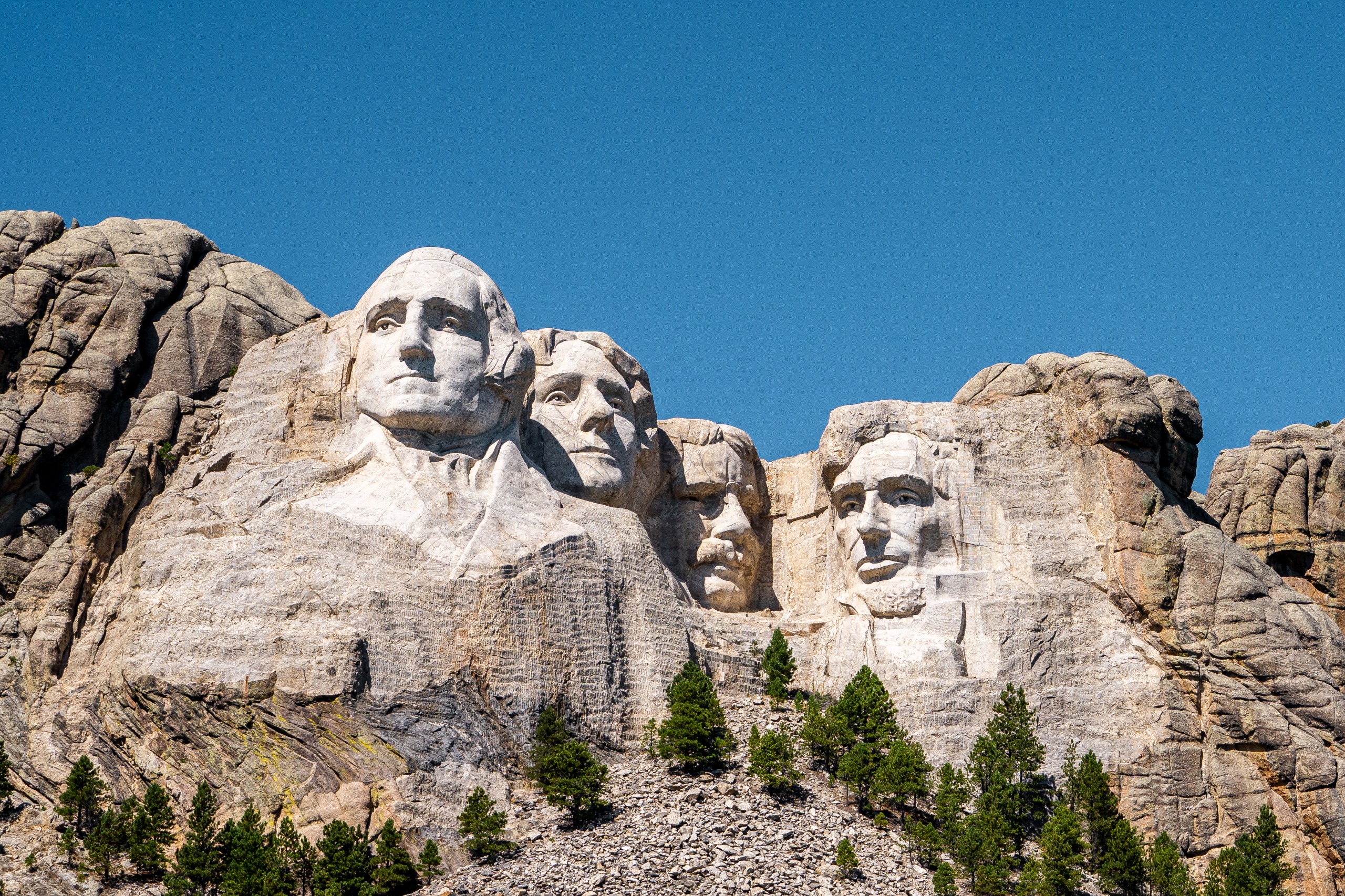
Second, three scenic drives (Wildlife Loop Road, Iron Mountain Road, Needles Highway) that can be completed over one to two days and offer viewpoints aligned with Mount Rushmore, narrow tunnels, and granite spires characteristic of the massif.
Third, a range of outdoor activities (hiking, climbing, horseback riding, water sports on the lakes) across a territory less crowded than the major neighboring national parks, yet comparable in scenic quality.
A brief history of the park
The park's territory was long inhabited by the Crow and later by the Lakota, for whom the Black Hills hold profound spiritual significance. Custer State Park was established in 1919, shortly after several forest reserves were set aside in South Dakota. The state reintroduced bison, then nearly extinct from the Great Plains, along with several other species as part of a conservation strategy.
During the 1920s and 1930s, the park expanded and gained visitor facilities: marked trails, picnic areas, campgrounds, log bridges, and artificial lakes (including Sylvan Lake). This dual mission—wildlife conservation and visitor accommodation—continues to shape the site's operations today.
What to see and do
Observe the bison herd
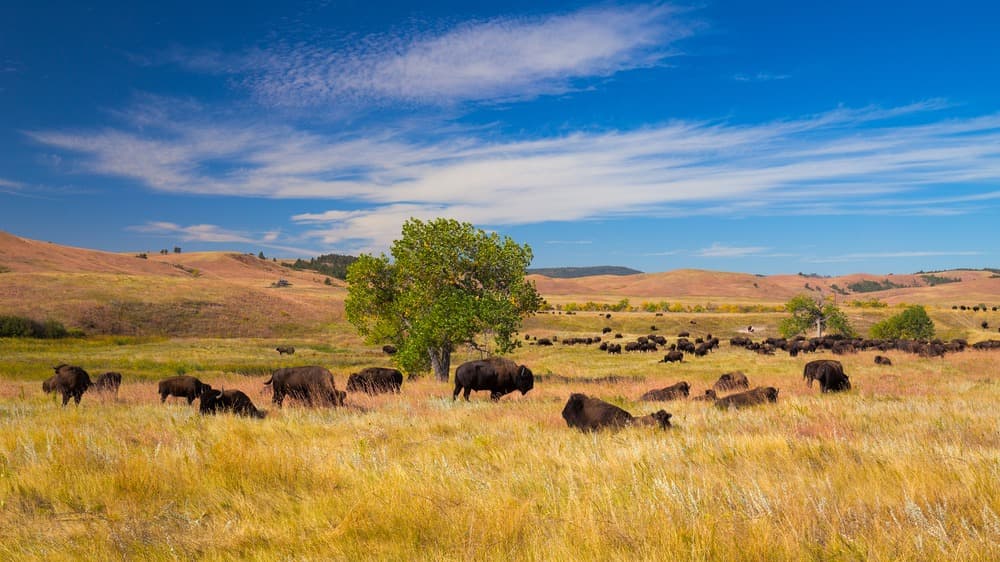
Approximately 1,500 bison roam the park, sometimes forming groups of up to two hundred individuals. They regularly cross the roads, particularly on Wildlife Loop Road, and have the right of way. Though they appear calm, they can charge: stay in your vehicle or maintain a safe distance on foot.
The Buffalo Roundup, an annual gathering held in late September, allows visitors to watch rangers on horseback herd the bison into pens for veterinary checks. It is the park's most attended calendar event.
Wildlife Loop Road
A 29-kilometer loop that crosses the park's southern pastures, the heart of bison territory. You'll also encounter pronghorn antelope, deer, and the famous burros—descendants of domestic donkeys released in the early 20th century, now semi-wild and habituated to visitors. Best driven early morning or late afternoon, when wildlife is most active.
Iron Mountain Road
A winding drive studded with narrow tunnels and pigtail bridges—wooden spiral bridges that allow the road to descend back on itself. Three tunnels frame Mount Rushmore, which appears framed in the rock as you approach.
Needles Highway
Roughly 22 kilometers through granite country sculptured into slender spires (the Needles), featuring the Needles Eye Tunnel, a tight passage carved through rock, and arriving at Sylvan Lake, a mountain lake ringed by granite boulders that serves as a trailhead for several hikes.
Hiking and outdoor activities
- Black Elk Peak: trail to South Dakota's highest point (formerly Harney Peak), crowned by a stone observation tower.
- Climbing: bolted routes in the Needles area on granite, for various skill levels.
- Water sports: swimming, kayaking, and paddleboarding on Sylvan Lake and Legion Lake.
- Horseback riding: equestrian trails and outfitters offering guided rides.
- Camping and picnicking: multiple developed campgrounds and family picnic areas.
- Ranger programs: guided walks during peak season on wildlife, flora, and Black Hills history.
Cinema note
Several productions have used the park as a filming location, including How the West Was Won (1962), which leveraged its prairie and granite formations to recreate 19th-century American West.
When to visit
The park is open year-round, 24/7. Summer (July-August) offers the warmest conditions but also the heaviest crowds. Spring (May-June) and early fall (mid-September to early October, Buffalo Roundup season) are often considered the best compromise: active wildlife, moderate temperatures, lighter visitation. Winter snow can temporarily close Needles Highway and Iron Mountain Road.
Practical information
An entrance permit is required per vehicle, valid for seven consecutive days. As a state park, the federal America the Beautiful pass is not accepted. Fees and visitor center hours vary seasonally; check before you go.
Key rules to remember:
- Do not feed wildlife, including bison and burros.
- Maintain a safe distance from bison (at least 25 meters); never approach for photographs.
- Yield to animals on the road and remain in your vehicle when herds cross.
How to get there
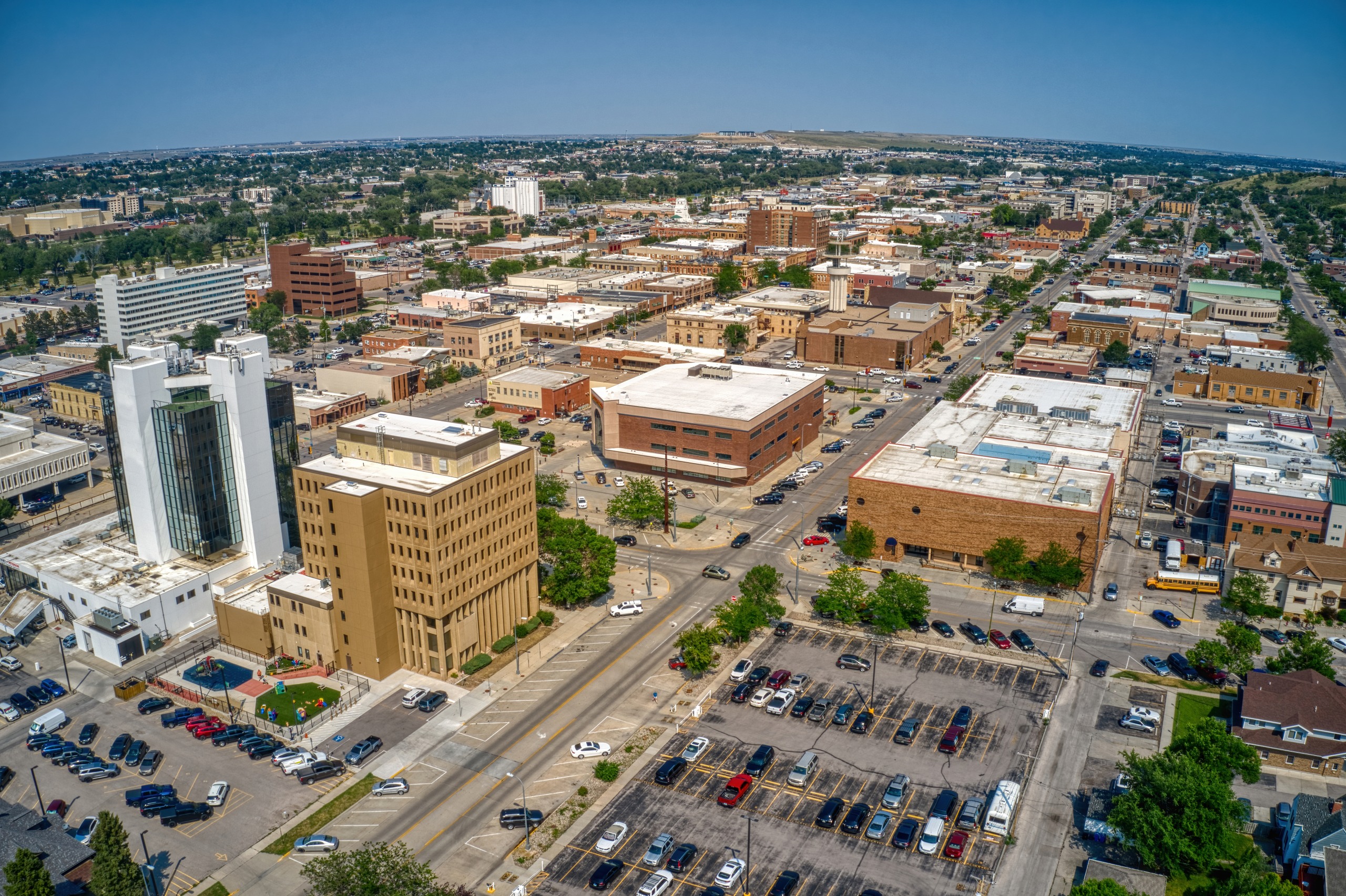
The park lies approximately 40 kilometers southwest of Rapid City, roughly 40 minutes to an hour's drive depending on traffic and route. Rapid City's regional airport (RAP) is the most convenient entry point. The park is best explored by personal or rental vehicle; no regular public transit serves the scenic drives.
Three main entrances provide access depending on your direction of arrival: north (Iron Mountain Road), west (town of Custer), or south (Wildlife Loop Road).
Nearby attractions
- Rapid City: gateway to the Black Hills and a logical base for park exploration.
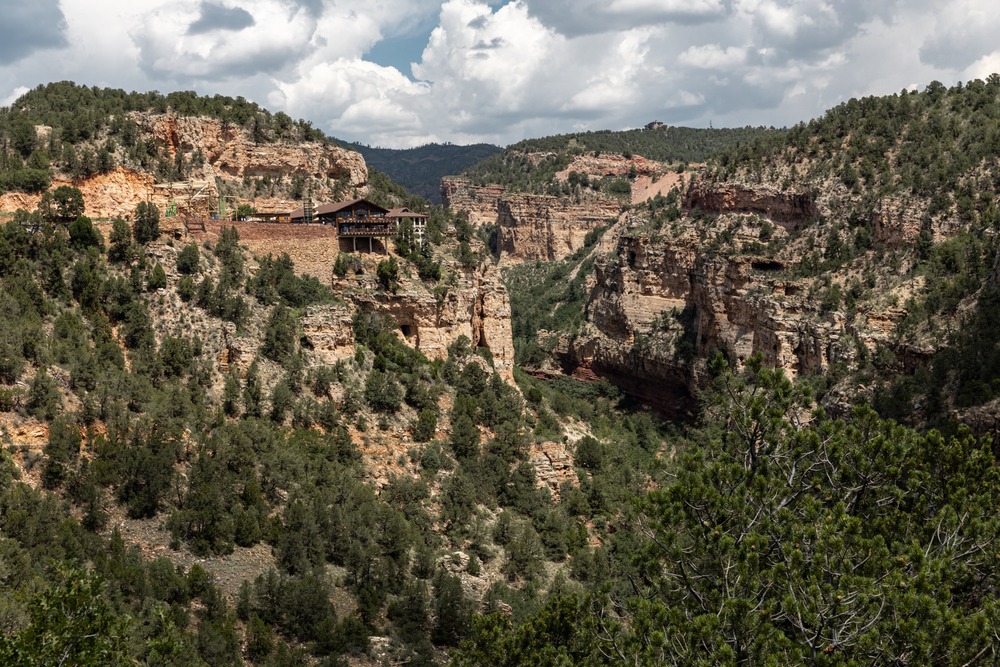
- Cave of the Winds: limestone cave system in neighboring Colorado, ideal for a broader road trip.
- Bryce Canyon National Park: another mineral landscape of the American West, several days' drive away.
- Cadillac Ranch: iconic Route 66 stop for those heading further south.
FAQ
Frequently asked questions
Yes, especially if you combine it with the Black Hills, Mount Rushmore, and the Badlands. The park stands out for its free-roaming bison herd and three scenic drives.
Budget two to three days: one for the scenic drives and wildlife viewing, and one to two for hiking (Black Elk Peak, Sylvan Lake) and other outdoor pursuits.
No. A vehicle entrance permit is required, valid for seven consecutive days. The federal America the Beautiful pass is not accepted, as this is a state park.
The park served as a filming location for How the West Was Won (1962) and other productions. Its prairie and granite formations were used to recreate 19th-century American West landscapes.
Chances are high on Wildlife Loop Road, especially early morning or late afternoon. No sighting is guaranteed, but the 1,500-strong herd makes encounters very frequent.
Plan your trip
Custer State Park fits naturally into a Black Hills and American West itinerary. To build a custom trip, explore our États-Unis travel ideas.
Interested in this visit?
We can include it in your personalised itinerary.