Niagara Falls
Niagara Falls
Practical guide to Niagara Falls on the American side: waterfalls, iconic attractions, gorge State Parks and access from New York.
On the American side of the border, Niagara Falls is a city in New York State that overlooks one of the world's most visited waterfalls. Part of the Buffalo metropolitan area in Niagara County, it faces its Canadian twin of the same name, separated by the Niagara River. The American city combines direct access to the falls, State Parks along the gorge, and an industrial heritage still visible in its urban fabric.
Why visit Niagara Falls?
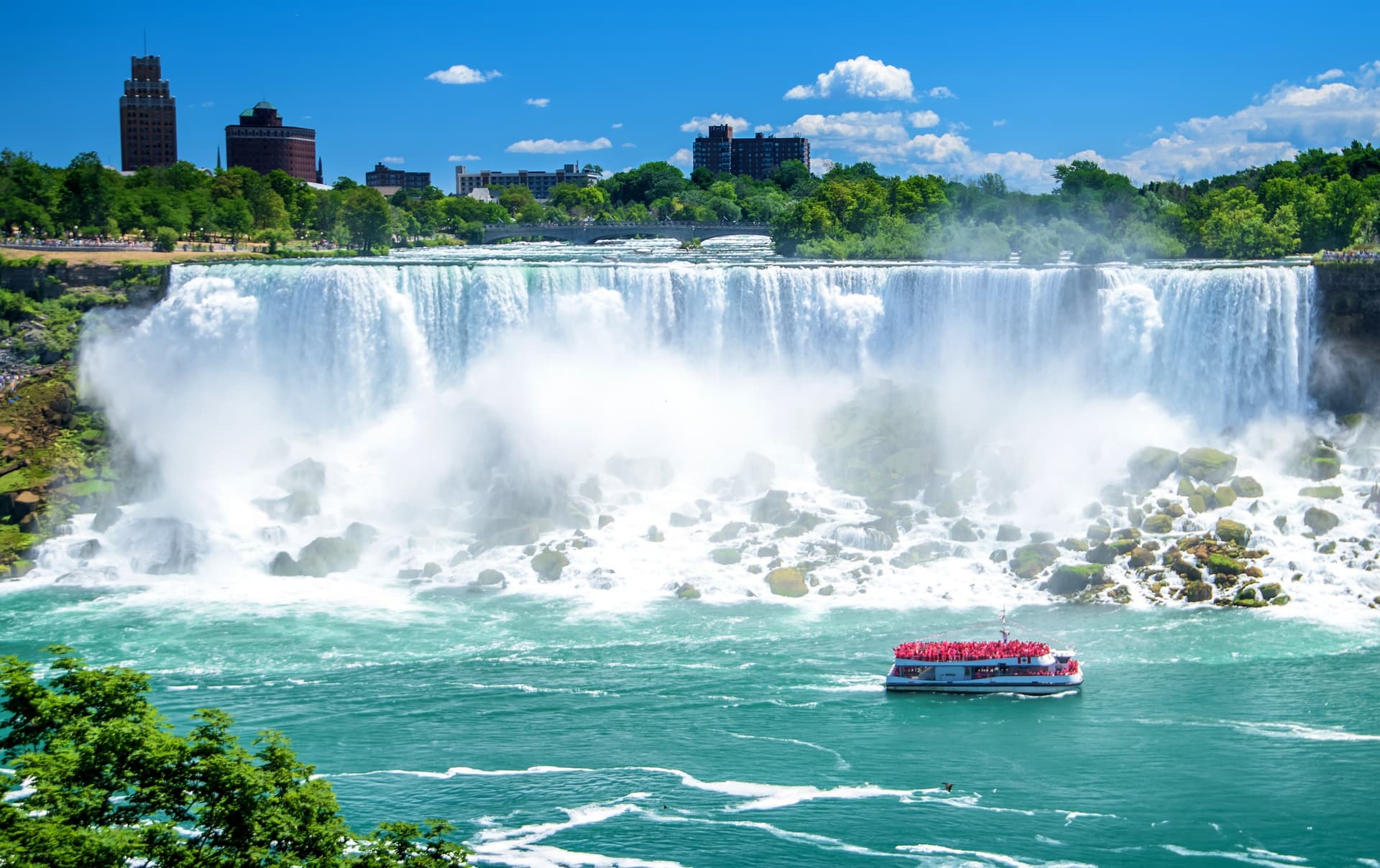
The city offers pedestrian access to the falls via Niagara Falls State Park, the oldest State Park in the United States. Unlike the Canadian side, which is oriented toward front-facing panoramas, the American side allows you to get closest to the current and the brink line of American Falls and Bridal Veil. The gorge downstream, dotted with State Parks (Devil's Hole, Whirlpool), extends the visit through hiking trails overlooking the rapids. The city itself remains modest, but serves as a practical base for exploring the Great Lakes region.
History
Niagara Falls was incorporated on March 17, 1892 through the merger of the villages of Manchester and Suspension Bridge. Thomas Vincent Welch, a New York State legislator, played a key role in this creation by bringing the incorporation project to Albany. The city rapidly established itself as a major industrial center thanks to the hydraulic power of the Niagara River, with petrochemical and metallurgical production that structured its economy for several decades.
In 1927, Niagara Falls annexed the village of La Salle, named in honor of French explorer Robert de La Salle who had traveled up the river in the 17th century. By the late 1960s, the city experienced marked industrial decline, linked to the relocation of factories to less costly sites. The tourism-focused redevelopment, initiated around the falls, is today the primary economic driver for the community.
What to see and do
Up close to the falls
- Maid of the Mist Boat Tour: cruise at the base of the falls, in the heart of the mist lifted by the impact of water. Boarding from the American side.
- Cave of the Winds: elevator descent into the gorge then wooden walkways to within a few meters of Bridal Veil Falls. Ponchos provided.
- Rainbow Air Helicopter Tours: aerial view of both sides of the falls for a comprehensive overview of the Canadian horseshoe and the gorge.
Parks and nature
- Devil's Hole State Park: trails descending into the gorge with views of the rapids downstream.
- Whirlpool State Park: panorama of the natural whirlpool formed by the river at a sharp bend.
In the city
- Niagara Aquarium: Great Lakes aquatic wildlife and educational presentations, suitable for families.
- First Presbyterian Church: religious building representative of local architectural heritage.
- Old Falls Street: pedestrian thoroughfare connecting downtown to the State Park, lined with restaurants and shops.
- Seneca Niagara Casino: gaming complex and hotel operated by the Seneca Nation, minutes from the falls.
Practical information
Plan a full day to combine the iconic attractions (Maid of the Mist, Cave of the Winds, Niagara Falls State Park). A second day allows you to explore the gorge State Parks and, optionally, cross into Canada via the Rainbow Bridge (passport required). In the city, travel is on foot in the downtown area, by bus for major sites, or by taxi. Car rental is recommended to venture toward nearby parks and the Finger Lakes region.
When to visit
High season runs from June through September, with long days, mild temperatures, and all attractions open (Maid of the Mist and Cave of the Winds operate only from late spring to early fall). Crowds are heavy in July-August: aim for June or early September for a better balance. Winter, snowy but with frequent thaw cycles, transforms the falls into an impressive ice landscape, but some activities are closed. The climate is humid continental, with summers when approximately 38% of precipitation falls as thunderstorms. Niagara Falls receives less snow than Buffalo or Rochester.
How to get there
- By plane: the fastest option from New York. Flight of about 1h25 to Buffalo Niagara International Airport, then shuttle or rental car to the falls (≈ 30 km).
- By car from New York: route via I-90 then roads 290 and 190, and finally the Robert Moses Parkway to downtown. Plan a full day of driving (approximately 640 km).
- By bus: long-distance connections operated by several companies from New York, Toronto, or Buffalo. More economical but significantly longer journey.
- By train: Amtrak serves Niagara Falls station from New York via the Empire Service line.
Nearby attractions
- Finger Lakes: lake region in central New York State, vineyards and villages to the southeast.
- Central Park and Broadway in New York, to combine on an itinerary in the State.
Frequently asked questions
Frequently asked questions
Both offer complementary perspectives: the Canadian side provides the front-facing view of the horseshoe, the American side lets you get closest to the top of the falls and descend into the gorge. For a complete visit, cross the Rainbow Bridge (passport required).
One day is enough for the main attractions on the American side. Two days allow you to add the gorge State Parks and a trip to Canada.
No, cruises operate only from late spring to early fall, when the river is not frozen.
Yes, access to Niagara Falls State Park and its viewpoints is free. Individual attractions (boat, Cave of the Winds, helicopter, observation tower) are paid.
Plan your trip
Niagara Falls fits naturally into a circuit in eastern États-Unis, between New York, the Great Lakes, and New England. To build a custom itinerary, consult our suggestions for travel to États-Unis.
Interested in this visit?
We can include it in your personalised itinerary.