Manatee Park
Manatee Park
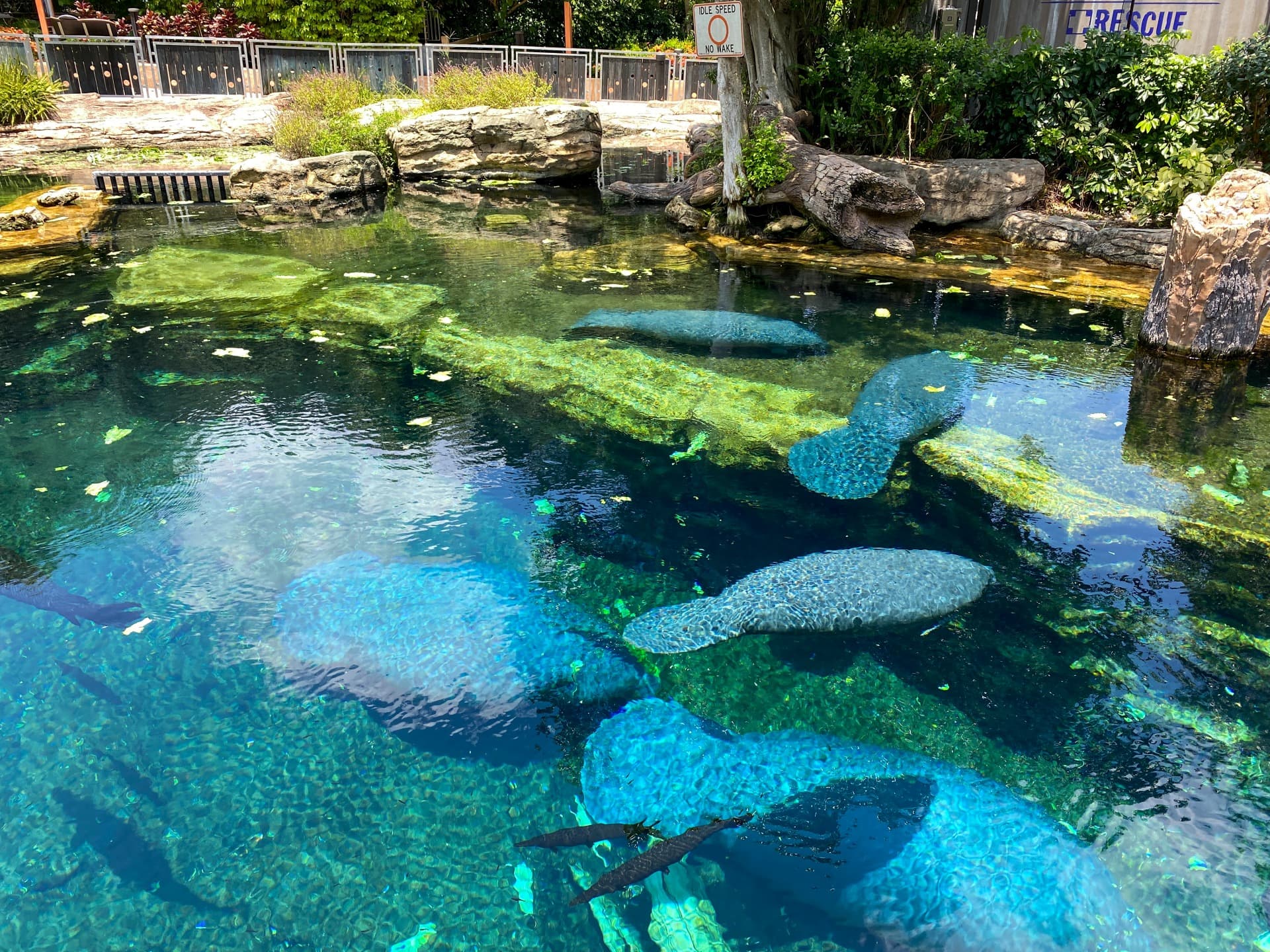
A natural refuge east of Fort Myers, Manatee Park allows you to observe Florida manatees from viewing platforms along a warm canal.
Manatee Park is a natural refuge located east of Fort Myers, in Lee County, Florida. The site is one of the most accessible manatee observation points in the state: no boat or long hike is needed to spot these large marine mammals from the developed banks of a canal tributary of the Caloosahatchee River.
Why Visit Manatee Park
The park occupies a 17-acre property bordering a canal fed by warm water discharge from the neighboring Florida Power and Light power plant. This hydrological feature makes it a winter refuge for Florida manatees, which flee the cold waters of the Gulf of Mexico between November and March.
The site is free to enter, welcomes more than 200,000 visitors annually, and combines several points of interest within a compact area: viewing platforms, an ethnobotanical trail dedicated to the uses of the Calusa tribes, a butterfly garden, and picnic areas. Plan for 1 to 2 hours of visiting depending on your interest in wildlife and botany.
Park History and Development
Manatee Park was inaugurated in 1996, the result of a public-private partnership now typical in Florida. The 17-acre property is owned by Florida Power and Light, which made it available immediately adjacent to its power plant. The Lee County Visitor and Convention Bureau funded the public facilities: boardwalks, platforms, visitor center, and parking.
The botanical development was entrusted to The Coccoloba Chapter of the Florida Native Plant Society, a local association specializing in native flora. This influence is evident today in the ethnobotanical trail and in the choice of native species throughout the site.
What to See and Do
Observing Manatees
Nicknamed "sea cows," manatees are herbivorous marine mammals and completely harmless. Without gills, they regularly surface to breathe but can remain submerged for about 20 minutes. From the park's boardwalks and viewing platforms, they can be spotted by their loud exhalations when they emerge. Telescopes are provided. For closer encounters, the park offers kayak rentals on-site, though animals remain protected from direct contact under federal regulations.
The Ethnobotanical Trail
Outside manatee observation season, the ethnobotanical trail becomes the main attraction. It showcases plants used by the Calusa tribes and other indigenous groups of southwestern Florida for food, medicine, or utilitarian purposes: cabbage palms, Jamaican dogwoods, marsh apples, among others.
Butterfly Garden and Family Areas
A butterfly garden planted with native nectar-producing species complements the visit, with good diversity of pollinating insects in season. Picnic and play areas make the site family-friendly. The visitor center houses exhibits on manatee biology and park history, as well as a gift shop.
Fishing is permitted on the canal, provided you hold a valid Florida fishing license.
When to Visit
Manatee observation season runs from November to March. During this period, the canal's warm waters attract dozens of individuals, sometimes visible simultaneously from the viewing platforms. Conversely, once outside temperatures consistently exceed the canal's temperature, manatees return to estuaries and the Gulf: sightings are rare or nonexistent from April to October. Since calves can be born year-round, mother-calf pairs are commonly observed during peak season.
Practical Information
Park admission is free. Only parking is paid, at a modest daily rate. The site is open daily, generally from morning until sunset — verify hours on the official website before your visit. Bring a hat, water, and insect repellent during the humid season.
How to Get There
Manatee Park is located at 10901 Palm Beach Boulevard, east of downtown Fort Myers. By car from Interstate I-75, take exit 141, then head east on SR-80 for about a mile: the entrance is marked on the right. LeeTran bus lines serve the area for visitors without vehicles.
Nearby Attractions
The park is easily visited as part of a stay in Fort Myers, which combines beaches, the historic Edison and Ford neighborhood, and access to the barrier islands of Sanibel and Captiva. To extend an itinerary in the American wilderness, you can combine this stop with other natural parks like the Canyonlands National Park or Bryce Canyon National Park, in the West.
Frequently Asked Questions
Frequently asked questions
From November to March, when manatees gather in the canal's warm waters to escape the cold of the Gulf. Outside this period, sightings are rare.
Admission is free. Only parking is paid, at a modest rate.
Sightings are never guaranteed: they depend on water temperature and weather. Chances are very high during peak winter season and low in summer.
Yes, kayaks are available for rent on-site. Approaching manatees is governed by federal regulations that prohibit direct contact.
Yes, provided you hold a valid Florida fishing license.
Planning Your Trip
Manatee Park fits naturally into a trip to the États-Unis focused on Florida and the Southeast, complementing Gulf beaches and the Everglades.
Interested in this visit?
We can include it in your personalised itinerary.