Lake Powell
Lake Powell
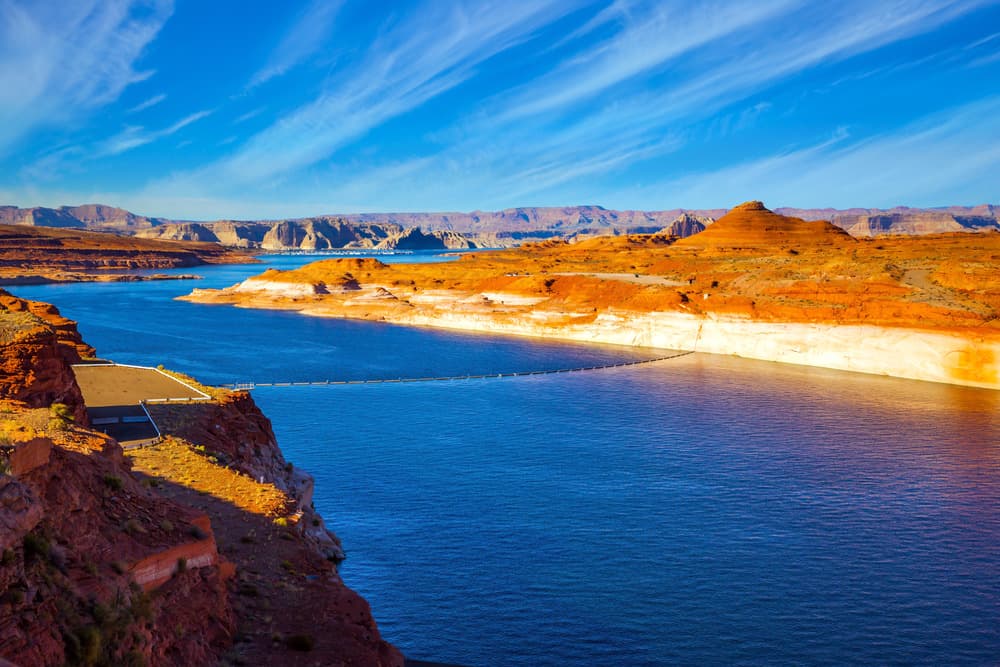
The second-largest artificial lake in the États-Unis, Lake Powell stretches across 3,150 km of shoreline between Arizona and Utah, around Page.
Lake Powell spans between Arizona and Utah, along the Colorado River regulated by the Glen Canyon Dam. This vast reservoir, the second-largest artificial lake in the États-Unis behind Lake Mead, unfolds over 3,150 km of shoreline (more than the American west coast) amid towering red sandstone cliffs. The town of Page, Arizona, serves as its primary gateway.
Why Visit Lake Powell
The lake covers approximately 660 km² with a maximum depth of 170 meters. Its turquoise waters penetrate 90 submerged canyons, accessible only by boat or kayak, and the deeply indented shoreline alternates between sandy beaches and sheer rock faces. The site is home to Rainbow Bridge, the world's largest known natural arch.
The immediate surroundings concentrate several major sites in the Southwest: Horseshoe Bend, Antelope Canyon, and Glen Canyon Dam. The high annual evaporation rate and frequently clear skies make it an acclaimed destination for photography and astronomy.
History and Context
Glen Canyon Dam, completed in 1963, was built to regulate the Colorado River and generate electricity. It took 17 years for the reservoir to reach its maximum level. The gradual submersion of Glen Canyon fueled intense environmental controversy, still ongoing today: the lake remains a symbol of the ongoing debate between hydraulic resource exploitation and natural heritage preservation.
Part of the lake and its shores lie on Navajo Nation lands. Several sites, including Rainbow Bridge, are considered sacred and their visitation is regulated by tribal authorities. Antelope Canyon, for example, can only be visited with a Navajo guide.
What to See Around the Lake
Rainbow Bridge National Monument
The world's largest known natural bridge, Rainbow Bridge is a sacred site for the Navajo. Access is by boat from the lake's marinas, or via a lengthy hike starting from Navajo Mountain.
Antelope Canyon
This narrow sandstone canyon near Page is renowned for its undulating walls and the interplay of light filtering through crevices. Visits are permitted only with a Navajo guide, for safety reasons (flash floods) and preservation.
Horseshoe Bend
A few kilometers south of Page, this horseshoe-shaped meander of the Colorado River is admired from an overlook perched over 300 meters above the water. The trail from the parking area is approximately 1.5 km.
Glen Canyon Dam and Carl Hayden Visitor Center
The visitor center, situated on the riverbank, presents the history of the dam's construction and its environmental implications. Guided tours of the structure are available.
Wahweap Overlook and Alstrom Point
Wahweap Overlook towers above the main marina and offers expansive views of the lake. Alstrom Point, accessible only by 4x4 track, overlooks Padre Bay and Gunsight Butte; the viewpoint is particularly striking at day's end.
Padre Bay and Lone Rock Beach
Padre Bay is the lake's largest bay, prized for swimming at the foot of the mesas. Lone Rock Beach is one of the few areas where you can drive to the water's edge, making it a popular spot for camping and van trips.
Activities on Site
- Swimming: water around 25°C in summer, 7 to 10°C in winter. Best spots include Lone Rock Beach, Warm Creek Bay, Padre Bay, and Bullfrog Bay.
- Kayaking: exploration of narrow canyons such as Labyrinth Canyon, Face Canyon, or the lake section of Antelope Canyon.
- Boat or houseboat rental: available at Wahweap and Bullfrog marinas. Houseboats provide several days of autonomy in isolated bays.
- Jet ski and motorboats: possible in open areas; registration and permits required.
- Hiking: trails to Hanging Garden, Hole-in-the-Rock, or the Alstrom Point area.
- Camping: permitted on certain beaches (Lone Rock, Wahweap) and in developed campgrounds.
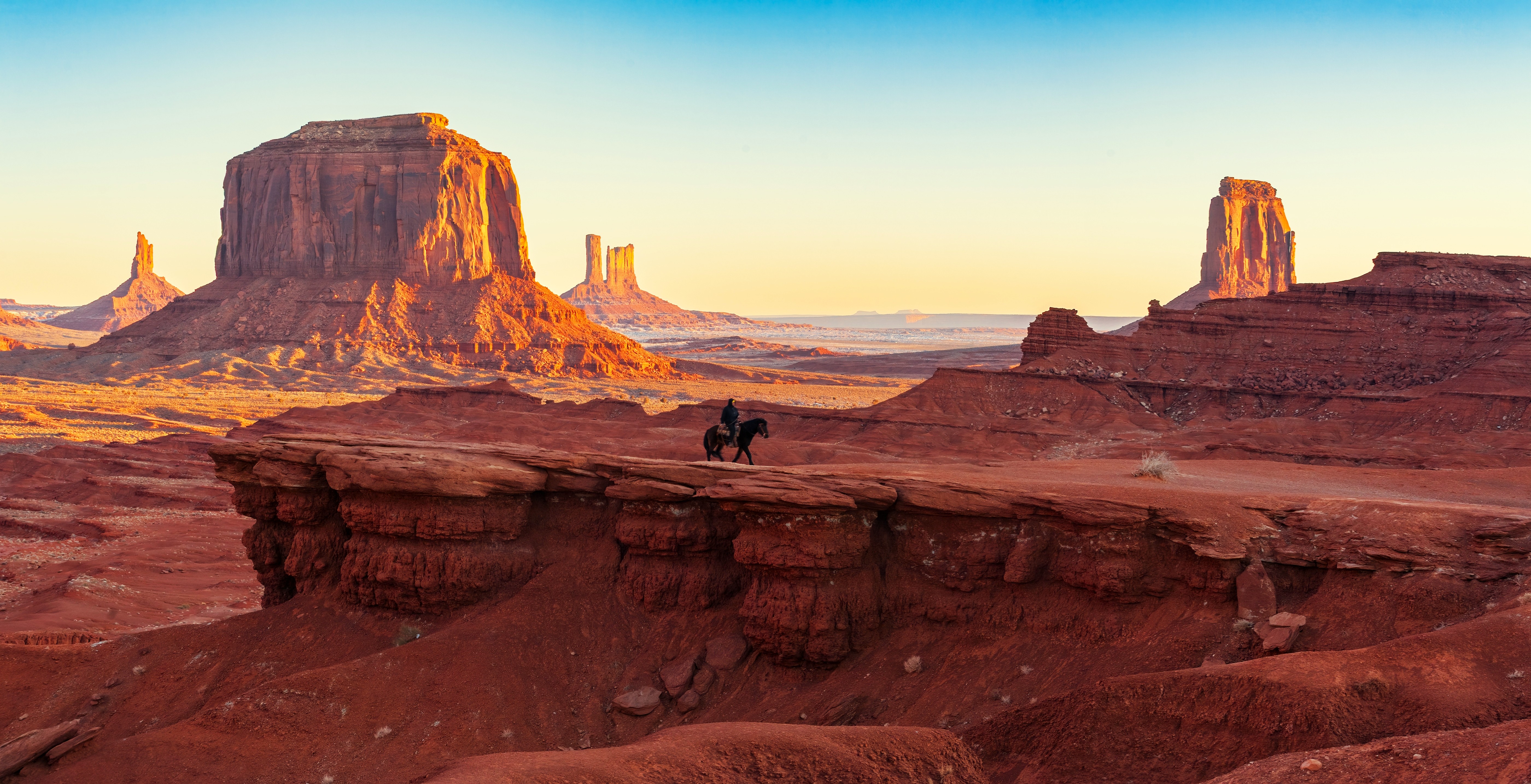
- Scenic flights: panoramic flights departing from Page, sometimes combined with Monument Valley.
Practical Information
The lake is part of the Glen Canyon National Recreation Area. Entrance is fee-based and the America the Beautiful pass is accepted. Part of the shoreline belongs to the Navajo Nation: certain access points, notably Antelope Canyon, require a tribal guide and separate entry fee. For motorized navigation, vessels must be registered and a permit is required; check with marinas. Swimming is permitted but unmonitored, outside restricted areas (marinas, dam vicinity).
Main visitor centers: Carl Hayden Visitor Center near the dam, Wahweap and Bullfrog marinas for maps, rentals, and fuel.
When to Visit
The best period extends from April to October. For swimming and water activities, June through September offer optimal water temperatures (around 25°C). Spring and fall are more suitable for hiking: comfortable temperatures and fewer crowds. In winter, water is cold (7-10°C) and some services operate on reduced hours, though marinas generally remain accessible.
How to Get There
The town of Page, Arizona, is the primary gateway. Allow approximately 2.5 hours by car from Flagstaff, 4.5 hours from Las Vegas, and 4 hours from Moab. Page has a small regional airport; most travelers arrive by car as part of a Southwest road trip. The lake fits naturally into an itinerary between Bryce Canyon, Monument Valley, and the Grand Canyon.
Nearby
Lake Powell fits naturally into a Southwest circuit. To the west and north, Bryce Canyon National Park and Canyonlands National Park extend the experience of sandstone landscapes and canyons. Further afield, Cadillac Ranch in Texas and Cave of the Winds in Colorado complete an itinerary spanning the American West.
Frequently Asked Questions
Frequently asked questions
Yes, for motorized boats: registration and navigation permits are mandatory, with a specific fee. These procedures are handled by local marinas.
Yes, but with reduced services in winter. Marinas operate on limited hours; some secondary roads may close depending on weather.
Yes. Swimming in calm water, camping on beaches, and boat rides suit families well. Bring sunscreen, hats, and plenty of water, as the climate is desert-like.
Prices vary by duration and itinerary (combinations with Antelope Canyon or Monument Valley are more expensive). Plan a substantial budget; Page tour operators provide current rates.
Swimming is permitted in most areas, except marinas and the immediate vicinity of the dam. No lifeguards are present: caution is advised, especially with children.
A full day suffices for the main sites around Page (Horseshoe Bend, Antelope Canyon, dam). To explore the lake by boat or houseboat, allow 3 to 5 days.
Preparing Your Trip
Lake Powell integrates beautifully into an itinerary through the American Southwest combining national parks, Navajo lands, and road trip exploration. To build this custom route, consult our États-Unis vacations.
Interested in this visit?
We can include it in your personalised itinerary.