Grand Teton National Park
Grand Teton National Park
1,300 km² of peaks, glacial lakes and wild landscapes in Wyoming, 8 km from Jackson Hole. Practical guide to Grand Teton National Park.
Grand Teton National Park protects 1,300 km² of meadows, alpine ridges, glacial lakes and waterfalls in northwestern Wyoming, 8 km from Jackson Hole. Created in 1929, it owes its name to English-speaking trappers who hunted beaver in the region and identified three distinctive peaks. Grand Teton, the chain's highest point, reaches just under 4,200 meters in elevation.
Why visit Grand Teton
The park stands out for the dramatic verticality of its range, which rises without foothills directly from the Jackson Hole valley. This compact geography allows you to see peaks, glacial lakes and wildlife in a single day's drive, unlike its neighbor Yellowstone, which is much more sprawling.
Biodiversity here is dense: bison, elk, mule deer, mountain lions, wolves, black bears, grizzlies and over 300 bird species. The park is also home to protected species like the yellow-billed cuckoo and the Canada lynx, which hunts the abundant snowshoe hares in the understory.
Park history
The name "Teton" dates back to early 19th-century English-speaking Canadian trappers who came to the region for beaver pelts. They named the range after its three peaks visible from the west.
The national park was officially established in 1929 to protect the massif itself. Its current size results from successive expansions that incorporated the valley and former ranches. Early climbers made Grand Teton a training ground for American alpinism from this period onward.
Ancient human presence is visible at Mormon Row, a line of farms established in the 1890s by a Mormon community. The Moulton Barn, photographed at the foot of the peaks, has become one of the most visited viewpoints in the park.
What to see and do
Craig Thomas Discovery and Visitor Center
The visitor center is the logical starting point for your visit. Pick up maps, trail conditions and information on seasonal closures. It's also the best place to plan your itinerary based on available time.
Teton Park Road
Teton Park Road hugs the base of the massif for about sixty kilometers and concentrates the main viewpoints: Snake River Overlook, Mount Moran Turnout, Cathedral Group. It's the route to prioritize if you only have a day and want to photograph the range from different angles.
Glacial lakes
- Taggart Lake: 4.8 km loop trail, elevation gain under 200 m, suitable for families and casual hikers.
- Jenny Lake: named after a Shoshone woman married to an English guide, it serves as a base for several hikes. A ferry crosses the lake and allows you to skip 3.2 km of walking on the 9 km trail leading to Hidden Falls.
- Jackson Lake: the largest of the three, popular for canoeing, sailing and trout fishing.
Viewpoints around Jenny Lake overlook Mt. Moran, Mt. St. John, Storm Point, Cascade Canyon, Symmetry Spire and Rockchuck Peak.
Snake River
The Snake runs through the park from east to west. Several outfitters offer raft trips, either in a contemplative version (calm waters, wildlife viewing from banks) or a sportier version on the rapid sections downstream. Fly fishing is also popular here.
Mormon Row
Access is via Highway 191, taking Antelope Flats Road. The site is known to photographers for the wooden barns lined up in front of the range, especially at sunrise. Bison and pronghorn antelope are frequently observed in the surrounding meadow.
Practical information
Park entry is paid (vehicle, motorcycle or pedestrian pass, valid for one week). Rates are posted at the entrance and revised regularly. The annual America the Beautiful inter-park pass pays for itself if you combine Grand Teton with Yellowstone, Bryce Canyon or other national parks.
The Jackson Hole tramway, located outside the park at Teton Village, operates seasonally and provides access to the summit of Rendezvous Mountain. Its fee is separate from park entry.
Lodging inside the park is available at a few historic lodges (Jenny Lake Lodge, Jackson Lake Lodge) or at campgrounds. Advance reservations are strongly recommended for peak season.
When to visit
The widest window runs from May through October, with optimal conditions in July-August. During this period, all trails, secondary roads and raft outfitters are operational.
- May-June: wildflowers, high river flow, snow still present at altitude.
- July-August: peak season, trails open, maximum crowds.
- September-October: fall colors, elk rut, lower crowds, early snow possible by late October.
- November-April: cross-country skiing and snowshoeing, several roads closed to vehicle traffic.
How to get there
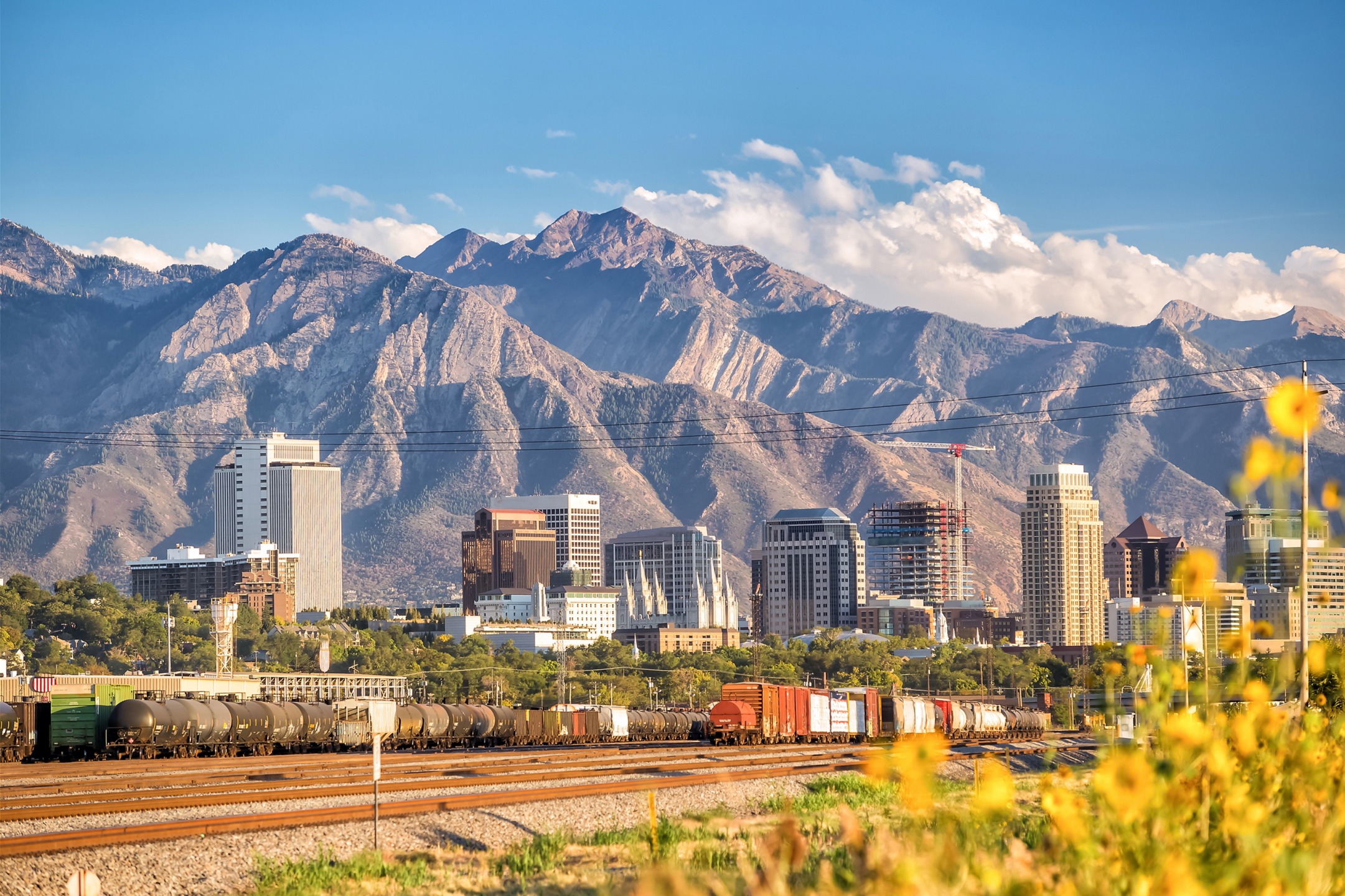
Jackson Hole Airport is about 10 minutes' drive from the park's south entrance, making it the most direct option. Salt Lake City Airport in Utah is 5 hours away and offers more international flights at often lower fares.
A rental car remains essential: there is no structured public transport inside the park, and distances between points of interest make walking impractical for a full visit.
Nearby attractions
Grand Teton naturally combines with Yellowstone National Park, located immediately to the north and connected by the John D. Rockefeller Jr. Memorial Parkway. Bridger-Teton National Forest, which borders the park to the east, offers less crowded trails. In winter, the National Elk Refuge, near Jackson, welcomes thousands of migrating elk.
For a broader road trip through the American West, you can extend to Bryce Canyon National Park or Canyonlands National Park in neighboring Utah.
Frequently asked questions
Frequently asked questions
One day allows you to drive Teton Park Road and hike a short trail like Taggart Lake. Plan two to three days to combine hiking, a raft trip on the Snake and a visit to Mormon Row in favorable conditions.
Yes, the two parks are adjacent and connected by a direct road. Most itineraries in the American West combine them over 4 to 6 days total.
The park is part of the Greater Yellowstone Ecosystem, where grizzlies are present. Sightings are more frequent in spring and early summer, along roads at dawn and dusk. Carrying bear spray is recommended when hiking.
Yes, but with restricted access. Teton Park Road is closed to vehicle traffic and used for cross-country skiing and snowshoeing. Services are concentrated in Jackson and Teton Village.
Yes, park lodges and campgrounds are booked months in advance for June-September. Otherwise, Jackson Hole offers a wider range of hotels within short distance.
Plan your trip
Grand Teton fits into most itineraries covering parks in the American West. To build a custom itinerary including Yellowstone, Wyoming and neighboring parks, explore our trips to the États-Unis.
Interested in this visit?
We can include it in your personalised itinerary.