Fisherman's Wharf Pier
Fisherman's Wharf Pier
A former Italian fishing port in San Francisco turned major tourist district: Pier 39, sea lions, departure point for Alcatraz, historic ships, and clam chowder in sourdough bread.
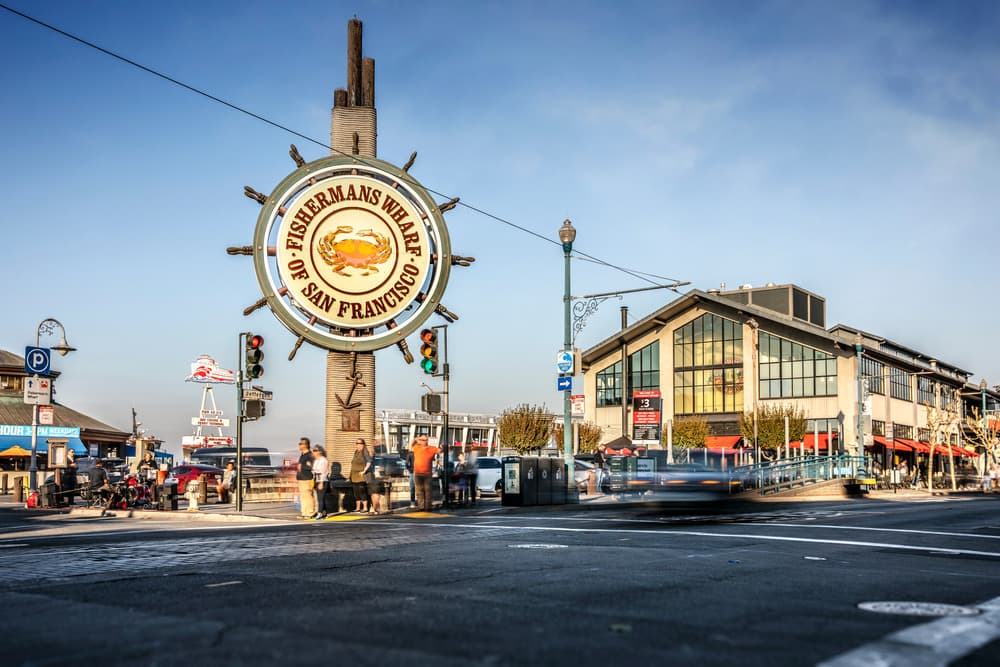
Once a working fishing harbor now transformed into a waterfront tourist district, Fisherman's Wharf concentrates within a few city blocks much of San Francisco's maritime identity: the aroma of boiled crab, California sea lions at Pier 39, the silhouette of Alcatraz in the distance, and historic ships moored along the docks.
Why visit Fisherman's Wharf
The district brings together in one location several major San Francisco attractions: boarding for Alcatraz from Pier 33, viewing California sea lions at Pier 39, floating maritime museums, a historic chocolate maker, and an ideal starting point for reaching the Golden Gate Bridge by bicycle. It's also a good entry point if you're discovering the city, with direct public transit from Union Square and an unobstructed view of the bay.
The district remains heavily visited and commercial: you come here for history and activities, less so for the authenticity of an active fishing port.
History of the district
Fisherman's Wharf took shape in the mid-19th century, when Italian immigrants from Liguria settled in San Francisco to make their living from fishing. They used traditional boats called feluccas, recognizable by their triangular sails, to catch fish and especially Dungeness crab, which remains the neighborhood's historic specialty.
For several decades, the port operated at full capacity, with its canneries, fish markets, and warehouses. After World War II, fishing activity declined and the infrastructure gradually converted to shops, restaurants, and museums. A handful of fishing boats still return to port at dawn.
What to see and do
Pier 39 and the sea lions
On the east side of the district, Pier 39 has housed a colony of California sea lions on floating docks since 1990. Viewing is free from the walkways. The Sea Lion Center, a free educational space, explains the behavior of these marine mammals and why they settled at this particular spot in the bay.
Alcatraz
Alcatraz Island lies about 2 km from the coast, directly across from the district. A former military fortress turned maximum-security federal penitentiary, it once housed famous inmates like Al Capone and Robert Stroud, nicknamed "the Birdman." The tour is conducted with an audio guide through buildings preserved as they were (cells, corridors, courtyard). Ferries depart from Pier 33, a ten-minute walk from Pier 39. Advance reservations are essential, particularly several weeks ahead during peak season.
Historic ship museums
Two historic vessels can be toured at Pier 45. The USS Pampanito is a World War II submarine where you can walk through the crew's quarters, torpedo room, and engine compartment. Right next to it, the SS Jeremiah O'Brien is one of the last Liberty Ships still in working condition; it participated in the D-Day landings in 1944.
Ghirardelli Square and Boudin Bakery
On the west side of the district, Ghirardelli Square occupies the red-brick buildings of a former chocolate factory founded in 1852 by an Italian immigrant. The Ghirardelli shop still offers chocolate bars and hot fudge ice cream. On the food side, Boudin Bakery, founded in 1849, is renowned for its sourdough bread and serves clam chowder in a hollowed-out loaf — the local version of this thick clam soup.
Mechanical Museum
Located at Pier 45, the Mechanical Museum houses a collection of working antique mechanical games from the early 20th century: automata, arcade machines, pinball games. Admission is free; the machines operate with a few coins.
Cycling to the Golden Gate
Several bike rental shops line Jefferson Street. A bike path connects Fisherman's Wharf to the Golden Gate Bridge, which you can cross to reach Sausalito on the other side of the bay. The return is by ferry, with your bike aboard. Budget half a day for the full route.
When to visit
The district is worth visiting year-round, though seasonal variations merit attention. Summer (June to August) is the most crowded period and, paradoxically, one of the foggiest: coastal fog (Karl the Fog) can obscure Alcatraz and the Golden Gate for several hours daily. September and October typically offer the clearest skies. Sea lions are present year-round, with larger populations in winter. For Alcatraz, book several weeks in advance between May and September.
How to get there
- By cable car: the Powell-Hyde line departs Union Square and ends near Ghirardelli Square. Scenic journey, long lines during the day.
- By Muni bus: lines 8, 30, 39, and 47 serve the district (check for any service changes before departing).
- F-Market streetcar: historic line connecting the Castro and Embarcadero to Fisherman's Wharf, with restored vintage streetcars.
- On foot: from Union Square, allow about 30 to 40 minutes via Chinatown and North Beach, two neighborhoods worth exploring along the way.
- By car: not recommended. Parking exists but is expensive and often full.
Practical information
- Time needed: half a day to explore the district, a full day if you add Alcatraz or a bay cruise.
- Main street: Jefferson Street, running along the waterfront.
- Accommodation: the district offers mostly comfortable chain hotels, with prices climbing in summer. For more affordable options, look at North Beach or Russian Hill, within walking distance.
- Dining: seafood stalls, fish restaurants along Jefferson Street, clam chowder at Boudin, chocolates at Ghirardelli Square.
Nearby
- North Beach: former Italian neighborhood, bars, cafés, and Beat heritage.
- Russian Hill: residential hills and the famous Lombard Street.
- Coit Tower: panoramic tower on Telegraph Hill, clear views of the bay.
- Chinatown: on the way to downtown, one of the oldest in the United States.
- Embarcadero and Ferry Building: waterfront in the direction of the Bay Bridge, renowned food market.
Frequently asked questions
Frequently asked questions
Yes, as long as you book several weeks in advance. The tour (audio guide included) lasts about 2.5 hours including ferry time and ranks among San Francisco's most striking sites, both for its prison history and the crossing with views of the city.
Plan half a day to explore the district (Pier 39, Pier 45, Ghirardelli Square) and a full day if you add Alcatraz, a bay cruise, or a bike loop to the Golden Gate.
The local standard is Boudin Bakery, founded in 1849, which serves its clam chowder in a hollowed-out sourdough loaf. Several competitors on Jefferson Street offer equivalent versions.
Yes. The colony that settled at Pier 39 in 1990 remains present year-round, with larger populations in winter. Viewing is free and open from the docks.
The Powell-Hyde cable car is the most scenic but often crowded. The F-Market streetcar and Muni buses 8 or 30 are faster. On foot, allow 30 to 40 minutes via Chinatown and North Beach.
Plan your trip
Fisherman's Wharf fits easily into a two- to four-day visit to San Francisco, itself part of a larger tour along the west coast. To build your itinerary, consult our États-Unis travel guide.
Interested in this visit?
We can include it in your personalised itinerary.